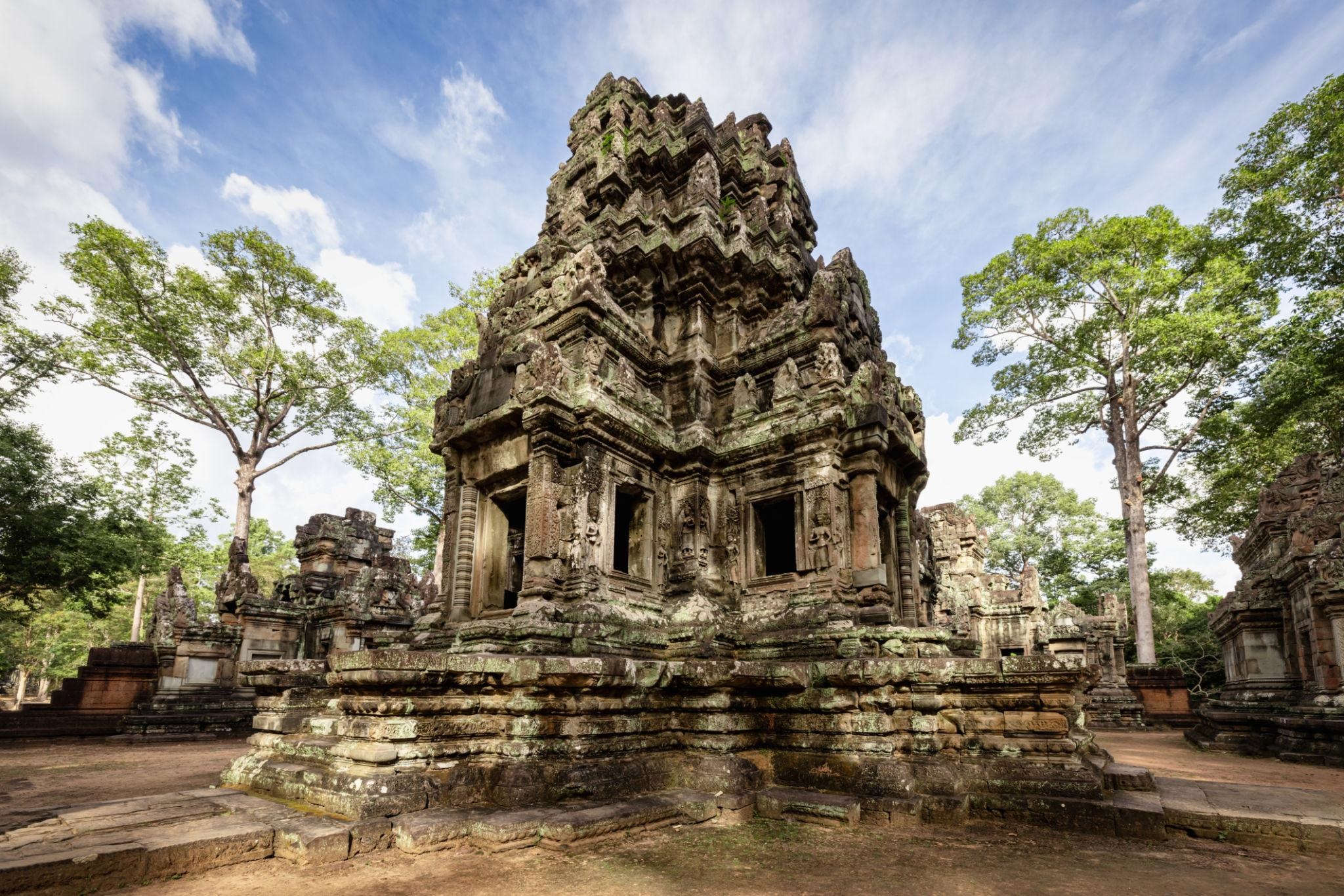

Not every temple in Angkor needs enormous towers or giant stone faces to be worth visiting. Chau Say Tevoda is a smaller, elegant temple near Angkor Thom, known for its sandstone architecture, detailed carvings and close resemblance to the style of Angkor Wat.
Located opposite Thommanon Temple, Chau Say Tevoda is a convenient stop for travelers exploring the Angkor Archaeological Park. It is also an interesting place to observe how Cambodian conservation teams and international experts have worked to restore the region's ancient monuments.
If you are planning a temple tour in Siem Reap, here is what to know before visiting Chau Say Tevoda.
1. History of Chau Say Tevoda Temple
Chau Say Tevoda was built around the middle of the 12th century, during the Angkorian period associated with King Suryavarman II. Its architectural style closely resembles that of Angkor Wat, suggesting that it belongs to the same broad period of Khmer artistic development.
The temple was originally dedicated to Hindu religious worship. Its surviving carvings include scenes from Hindu mythology, while some architectural details also reflect Buddhist imagery.
Unlike the monumental scale of Angkor Wat, Chau Say Tevoda is a relatively compact temple complex. Its layout includes a central sanctuary, entrance structures, galleries and connecting passages.
Over time, sections of the temple collapsed and many stones became scattered. The monument later underwent a major conservation and restoration project supported by Chinese specialists. Work began around the turn of the 21st century, and the restoration was completed in 2009.
The project involved identifying and reassembling fallen stones, strengthening structural elements and improving drainage. Today, Chau Say Tevoda offers visitors a chance to see both Angkorian architecture and the results of modern heritage conservation.
2. What Makes Chau Say Tevoda Special?
Elegant Angkor Wat-style architecture
The temple's sandstone structures, central sanctuary and decorative details reflect the architectural style associated with the Angkor Wat period.
Its smaller scale makes it easier to appreciate individual architectural features without feeling overwhelmed by the size of the complex.
Detailed carvings from Hindu mythology
Look closely at the lintels and pediments around the doorways. Some depict characters and episodes from Hindu epics, including scenes associated with Shiva, Parvati and the monkey heroes of the Ramayana tradition.
These carvings are valuable examples of the storytelling traditions found in Khmer religious architecture.
A temple beside Thommanon
Chau Say Tevoda and Thommanon stand on opposite sides of the road near the Victory Gate area of Angkor Thom. Their similar styles make them an interesting pair to visit together.
Comparing the two temples allows visitors to notice differences in their condition, decoration and surviving architectural elements.
A restoration story worth knowing
Chau Say Tevoda suffered significant deterioration before its restoration. The conservation project returned many fallen architectural pieces to their original positions and strengthened parts of the structure.
Visitors may notice that some restored stonework looks cleaner or differs in colour and texture from older surfaces. These differences provide a reminder that preserving an ancient monument often involves balancing historical authenticity, structural safety and public access.
3. Where Is Chau Say Tevoda Temple?
Chau Say Tevoda is located inside the Angkor Archaeological Park, near the Victory Gate of Angkor Thom and across the road from Thommanon Temple.
Location: Angkor Archaeological Park, Siem Reap Province, Cambodia.
Getting there: You can visit by tuk-tuk, private car, bicycle or an organized Angkor temple tour from Siem Reap town.
The temple is included in the Small Circuit, so it is easy to combine with Ta Keo, Ta Prohm, Bayon and other Angkor monuments.
4. Chau Say Tevoda Opening Hours and Entrance Fee
| Visitor information | Details |
|---|---|
| Typical opening hours | 7:30 AM–5:30 PM |
| Entrance fee | Covered by a valid Angkor Archaeological Park pass |
| Separate temple ticket | Normally not required |
| Suggested visit duration | Around 20–40 minutes |
| Best time to visit | Morning or late afternoon |
| Location | Near the Victory Gate of Angkor Thom |
| Recommended transport | Tuk-tuk, private car, bicycle or guided tour |
Ticket reminder: A valid Angkor Archaeological Park pass normally includes Chau Say Tevoda. Purchase your pass through Angkor Enterprise, the official ticketing authority, and confirm current requirements before your trip.
Opening hours and access arrangements can change. Check the latest visitor information from the APSARA National Authority before visiting.
5. Best Time to Visit Chau Say Tevoda
Morning: Best for a comfortable temple walk
Morning is a good time to explore the temple before the day becomes too hot. The softer light can also help bring out the texture of the sandstone and the details of the carvings.
Late afternoon: Best for warm architectural photography
The warmer light later in the day can highlight the temple's stone surfaces and decorative features. Make sure you have enough time to explore before closing.
Best season
Cambodia's dry season, generally from November to April, often offers convenient conditions for walking around the Angkor temples. During the rainy season, the surroundings can be greener, but wet stone surfaces may become slippery.
Because Chau Say Tevoda is a relatively compact site, it can fit comfortably into either a morning or afternoon temple itinerary.
6. What to See and Do at Chau Say Tevoda
Explore the central sanctuary. Observe the temple's layout and the relationship between its central structure and surrounding passages.
Study the carved doorways. Look for decorative lintels, pediments and columns featuring religious figures and floral patterns.
Notice the restored stonework. Compare older surfaces with reconstructed sections to understand the conservation work carried out at the temple.
Walk around the exterior. Viewing the temple from different sides helps reveal its layout and architectural proportions.
Visit Thommanon across the road. Comparing the two temples is one of the best ways to appreciate the variations within Angkorian architecture.
Take respectful photographs. The compact layout and detailed sandstone features offer good opportunities for architectural photography. Avoid climbing on structures or touching fragile carvings.
7. Practical Tips for Visiting Chau Say Tevoda
- Wear comfortable walking shoes with good grip.
- Bring drinking water, a hat and sun protection.
- Keep your Angkor pass available if it is checked.
- Respect religious heritage and dress appropriately.
- Do not climb on the temple structures or touch fragile carvings.
- Look carefully at the details around doorways and lintels; they are easy to miss if you walk too quickly.
- Combine the visit with Thommanon to make the stop more worthwhile.
- Consider a guide if you want explanations of the Hindu mythology depicted in the carvings.
- Follow any temporary barriers or conservation instructions at the site.
8. Places to Visit Near Chau Say Tevoda
| Nearby attraction | Why visit |
|---|---|
| Thommanon Temple | A compact temple with similar Angkor Wat-style architecture |
| Ta Keo Temple | A striking sandstone temple-mountain with steep stairways |
| Ta Prohm | Famous for large tree roots growing over ancient stone structures |
| Bayon Temple | Known for its monumental carved faces |
| Angkor Thom Victory Gate | A historic entrance associated with the ancient royal city |
| Baphuon Temple | A tiered temple-mountain with an elevated sandstone walkway |
| Angkor Wat | Cambodia's best-known temple complex |
Distances within the archaeological park are manageable by vehicle, but travel times vary with traffic, stops and access arrangements.
9. Suggested Angkor Small Circuit Itinerary
| Time | Activity |
|---|---|
| 7:30 AM | Begin the temple tour |
| 8:00 AM | Visit Chau Say Tevoda |
| 8:30 AM | Explore Thommanon Temple |
| 9:15 AM | Continue to Ta Keo |
| 10:00 AM | Visit Ta Prohm |
| 12:00 PM | Take a lunch break |
| Afternoon | Continue with other temples according to your interests and available time |
This is a sample itinerary rather than a fixed schedule. Adjust the timing to suit the weather, visitor levels and how long you want to spend at each monument.
10. Frequently Asked Questions
What is Chau Say Tevoda Temple famous for?
It is known for its compact sandstone architecture, Angkor Wat-style design, detailed Hindu mythological carvings and major restoration project completed in 2009.
Who built Chau Say Tevoda?
The temple is generally associated with the middle of the 12th century and the reign of King Suryavarman II. Its precise construction date is uncertain because the temple lacks a definitive foundation inscription.
Is Chau Say Tevoda near Angkor Thom?
Yes. It is located near Angkor Thom's Victory Gate, making it convenient to combine with other temples in the archaeological park.
Do I need a separate ticket for Chau Say Tevoda?
A valid Angkor Archaeological Park pass normally includes admission. Confirm ticket details with Angkor Enterprise before visiting.
How long should I spend at Chau Say Tevoda?
Around 20–40 minutes is usually enough for a short visit. If you enjoy architectural details and photography, you may want longer.
Can I visit Chau Say Tevoda and Thommanon together?
Yes. The two temples are directly opposite each other across the road and have similar architectural styles. Visiting them together makes it easier to compare their designs and carvings.
Is Chau Say Tevoda worth visiting?
Yes, especially for travelers interested in Khmer architecture, Hindu mythology and temple restoration. It is also a useful stop if you want to explore more of Angkor beyond its most famous monuments.
TravelKH Tip
Chau Say Tevoda is a short but worthwhile stop. Visit it together with Thommanon rather than treating it as a long standalone excursion. Take time to compare the two temples and look closely at the carved lintels and restored stonework.
For travelers exploring Angkor, these smaller monuments help tell the wider story of Khmer architecture beyond Angkor Wat and Bayon.