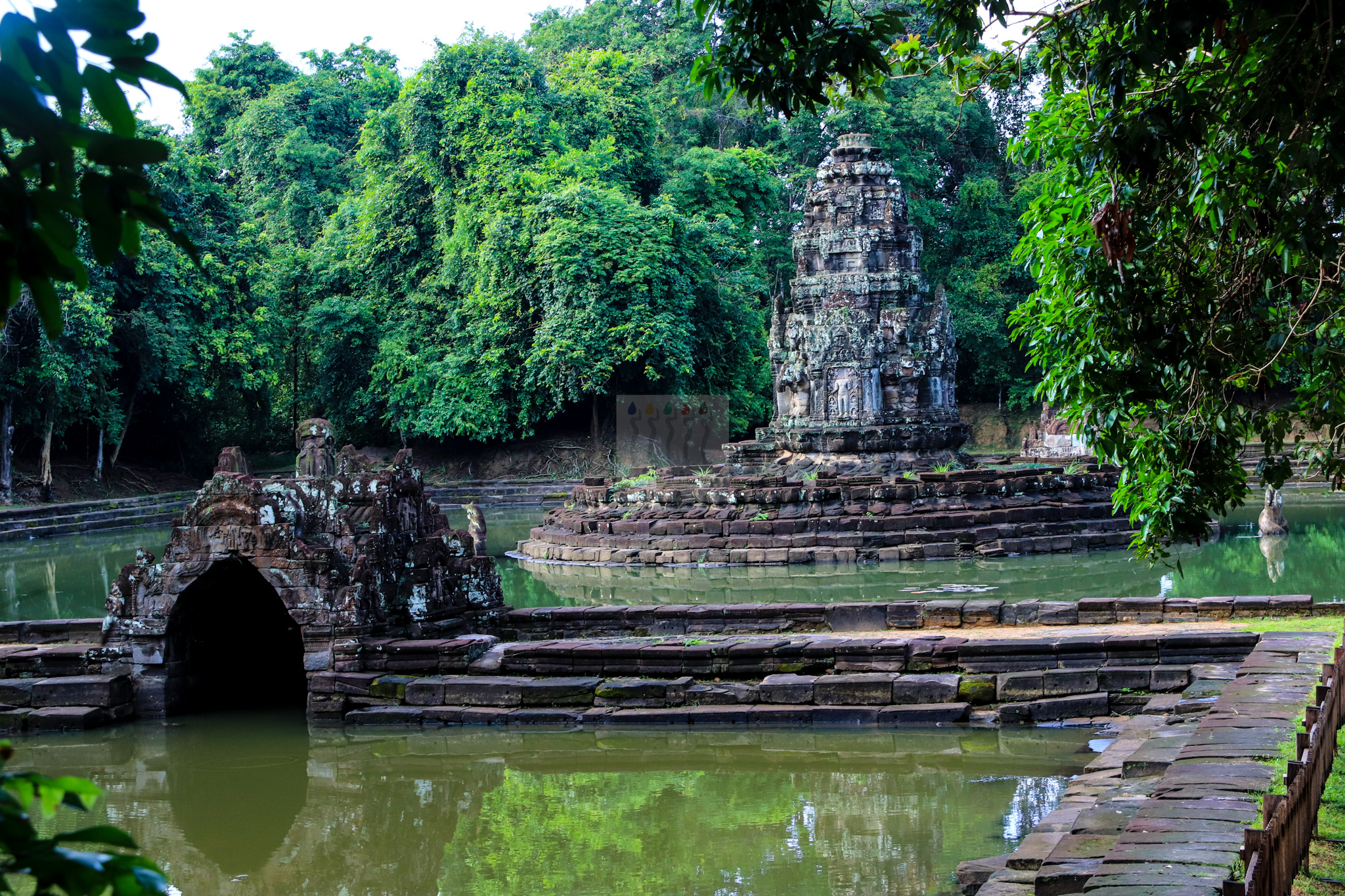
Among the many temples inside Angkor Thom, Baphuon stands out for its impressive elevated walkway, tiered pyramid structure and fascinating history. Built almost a thousand years ago, this ancient monument reflects the power and religious traditions of the Khmer Empire before Angkor Thom became the capital's great walled city.
Baphuon is sometimes overlooked by visitors who focus on Bayon Temple, but it deserves a stop on your Angkor itinerary. Its long sandstone approach, steep stairways and remains of a monumental reclining Buddha offer a different experience from the famous smiling faces of Bayon.
Here is everything you need to know before visiting Baphuon Temple in Siem Reap.
1. History of Baphuon Temple
Baphuon was built in the mid-11th century, during the reign of King Udayadityavarman II, and served as a state temple dedicated to Shiva, one of the principal deities of Hinduism.
The temple predates the establishment of Angkor Thom as the great royal city. Its size and elevated design reflected the king's religious and political authority. The temple-mountain concept symbolized Mount Meru, the sacred cosmic mountain in Hindu and Buddhist traditions.
Baphuon was constructed on a foundation of sandy soil. The combination of its enormous size and the nature of the ground contributed to structural instability, and substantial portions eventually collapsed.
During the late 15th century, the temple was converted for Buddhist worship. A monumental reclining Buddha was created on its western side, using stone from parts of the existing structure. The figure remains an important feature of the temple, although its outline can be difficult to recognize from certain viewpoints.
A remarkable restoration project
Baphuon underwent a major restoration effort beginning in the 1960s. The project involved dismantling and documenting enormous quantities of stone so that the temple could be reconstructed safely.
The work was interrupted during Cambodia's civil war, and the records needed to identify the original locations of the stones were lost. Restoration resumed in the 1990s under the leadership of French architect Pascal Royère and was completed in 2011.
The project became famous for its extraordinary complexity, sometimes described as a giant three-dimensional jigsaw puzzle. Today, visitors can appreciate both the ancient craftsmanship and the extensive conservation work that helped preserve the monument.
2. What Makes Baphuon Temple Special?
The long elevated sandstone walkway
One of Baphuon's most distinctive features is the long raised walkway leading toward the main temple. Walking along this approach gives visitors a dramatic view of the temple-mountain rising ahead.
It is also an excellent place to appreciate the scale of the structure and take photographs of its architectural symmetry.
The three-tiered temple-mountain
Baphuon rises through several levels, with stairways leading toward the upper structure. Its design reflects the temple-mountain tradition of Khmer architecture.
From different viewpoints, you can see how the terraces, galleries and central structure combine to create an impressive stepped silhouette.
The reclining Buddha
On the western side of Baphuon is a monumental reclining Buddha associated with the temple's later Buddhist period. The figure measures approximately 70 metres long and was formed from stonework incorporated into the existing temple structure.
Because parts of the Buddha blend into the surrounding masonry, visitors may need to look carefully to distinguish the figure. A guide can help explain its shape and historical significance.
The temple's carved stone details
Look for decorative lintels, carved panels and surviving architectural features around the galleries. These details reflect the artistic traditions of the Angkorian period and add depth to a visit beyond the main walkway.
3. Where Is Baphuon Temple?
Baphuon is located inside Angkor Thom, northwest of Bayon Temple and close to the southern enclosure of the former Royal Palace.
Location: Angkor Thom, Angkor Archaeological Park, Siem Reap Province, Cambodia.
Getting there: Most visitors arrive by tuk-tuk, private car, bicycle or an organized Angkor temple tour from Siem Reap town.
Baphuon is easy to combine with Bayon, the Terrace of the Elephants and other monuments within Angkor Thom. If you are hiring a driver, ask to include Baphuon as a dedicated stop rather than viewing it only from the road.
4. Baphuon Temple Opening Hours and Entrance Fee
| Visitor information | Details |
|---|---|
| Typical opening hours | 7:30 AM–5:30 PM |
| Entrance fee | Included with a valid Angkor Archaeological Park pass |
| Separate Baphuon ticket | Normally not required |
| Recommended visit duration | Around 45–60 minutes |
| Best time to visit | Early morning or late afternoon |
| Location | Angkor Thom, Siem Reap |
| Physical effort | Moderate; elevated walkway, stairs and uneven stone surfaces |
Important: Opening hours and access to particular areas can change for safety or conservation work. Confirm current visitor information before travelling.
A valid Angkor Archaeological Park pass normally covers Baphuon. Purchase your pass through Angkor Enterprise, Cambodia's official Angkor ticketing authority.
For safety reasons, access to the top of the pyramid is prohibited for children under 12 and pregnant women under the published visitor guidance. The stairs are steep, so visitors should follow all restrictions and staff instructions.
5. Best Time to Visit Baphuon Temple
Early morning
Morning is a good choice for cooler walking conditions and a more comfortable exploration of the temple. The elevated walkway is also attractive in softer light.
If you are visiting several Angkor temples in one day, starting early gives you more flexibility to spend time at Baphuon without rushing.
Late afternoon
The warmer afternoon light can highlight the texture and colour of the sandstone. However, allow enough time to explore and leave before closing.
Best season
Cambodia's dry season, generally from November to April, often provides convenient conditions for temple visits. During the rainy season, the surrounding vegetation may look greener, but wet steps and stone surfaces can become slippery.
Whichever season you choose, bring water and plan for the heat, especially if you intend to climb the temple's upper levels where access is permitted.
6. What to See and Do at Baphuon Temple
Walk the sandstone causeway. Take your time along the raised walkway and enjoy the view toward the temple. This is one of the most memorable parts of the visit.
Explore the lower terraces. Observe the layout of the temple-mountain and the way its different levels rise toward the center.
Look for the reclining Buddha. Explore the western side and ask a guide to point out the figure's outline and explain how it became part of the temple.
Study the surviving carvings. Look closely at the decorative stonework around the accessible galleries and doorways.
Photograph the architecture. The walkway, stairways and tiered structure offer opportunities for architectural photography. Be careful not to block narrow paths while taking pictures.
Learn about the restoration. Baphuon's conservation story is an important part of its identity. Understanding the restoration helps explain why some stones look different from others.
7. Practical Tips for Visiting Baphuon
- Wear comfortable shoes with good grip.
- Bring drinking water, a hat and sun protection.
- Take extra care on steep stairs and uneven stone surfaces.
- Respect all restricted areas and safety barriers.
- Do not climb on fragile structures or decorative carvings.
- Keep children close, especially around stairways.
- Dress respectfully when visiting Cambodia's religious heritage sites.
- Keep your Angkor pass available for inspection.
- Consider a guide if you want to understand the reclining Buddha and the temple's restoration history.
- Allow additional time if you plan to visit Bayon and the Royal Palace area on the same day.
8. Places to Visit Near Baphuon Temple
Baphuon's location makes it convenient to explore several major monuments within Angkor Thom.
| Nearby attraction | Why visit |
|---|---|
| Bayon Temple | Famous for its monumental carved stone faces |
| Terrace of the Elephants | A historic royal platform decorated with elaborate reliefs |
| Terrace of the Leper King | Known for its detailed carvings and unusual terrace structure |
| Phimeanakas | An ancient temple within the former Royal Palace enclosure |
| Angkor Thom South Gate | A monumental entrance lined with figures associated with the Churning of the Ocean of Milk |
| Ta Prohm | Famous for enormous tree roots growing around ancient stone structures |
| Angkor Wat | Cambodia's best-known temple complex, with galleries, towers and bas-reliefs |
The first five attractions can be combined into a visit focused on Angkor Thom. Ta Prohm and Angkor Wat may require additional travel and time, depending on your itinerary.
9. Suggested Angkor Thom Itinerary Featuring Baphuon
| Time | Activity |
|---|---|
| 7:30 AM | Arrive in the Angkor Thom area |
| 8:00 AM | Explore Bayon Temple |
| 9:30 AM | Walk along Baphuon's elevated sandstone walkway and explore the temple |
| 10:30 AM | Visit the Terrace of the Elephants |
| 11:00 AM | Explore the Terrace of the Leper King |
| 11:30 AM | Visit the Phimeanakas area if access permits |
| 12:30 PM | Take a lunch break |
This is a sample itinerary. Adjust the schedule to suit opening arrangements, walking speed, weather and your interest in the monuments. If you want to explore the carvings in detail or take photographs, allow extra time.
10. Frequently Asked Questions
What is Baphuon Temple famous for?
Baphuon is known for its elevated sandstone walkway, three-tiered temple-mountain design, monumental reclining Buddha and extensive restoration history.
Who built Baphuon Temple?
Baphuon was built during the reign of King Udayadityavarman II in the mid-11th century. It was originally dedicated to Shiva.
Is Baphuon Temple inside Angkor Thom?
Yes. It is located within Angkor Thom, northwest of Bayon Temple and close to the former Royal Palace enclosure.
Do I need a separate ticket for Baphuon?
A valid Angkor Archaeological Park pass normally includes admission to Baphuon. Confirm ticket requirements with Angkor Enterprise before visiting.
How long should I spend at Baphuon?
Allow around 45–60 minutes for the walkway, lower terraces and accessible temple areas. You may need longer if you are interested in photography or the restoration history.
Can children climb Baphuon Temple?
Under published visitor guidance, children under 12 are not allowed to access the top of the pyramid. The stairs are steep, so families should follow posted safety instructions.
Can pregnant women climb to the top?
No. Published visitor guidance prohibits pregnant women from accessing the top of the pyramid for safety reasons.
Is Baphuon worth visiting?
Yes, particularly if you are interested in Khmer architecture, temple restoration and the history of Angkor Thom. It also provides a useful contrast with the face towers of Bayon and the tree-covered ruins of Ta Prohm.
TravelKH Tip
Do not rush past Baphuon on your way to Bayon. Walk the elevated sandstone causeway, pause to admire the temple's tiered structure and look for the reclining Buddha on the western side.
If you are exploring Angkor Thom, Baphuon is an excellent stop for understanding how Khmer temple architecture developed over time. Wear suitable footwear and respect restrictions around the upper levels so you can enjoy the monument safely.