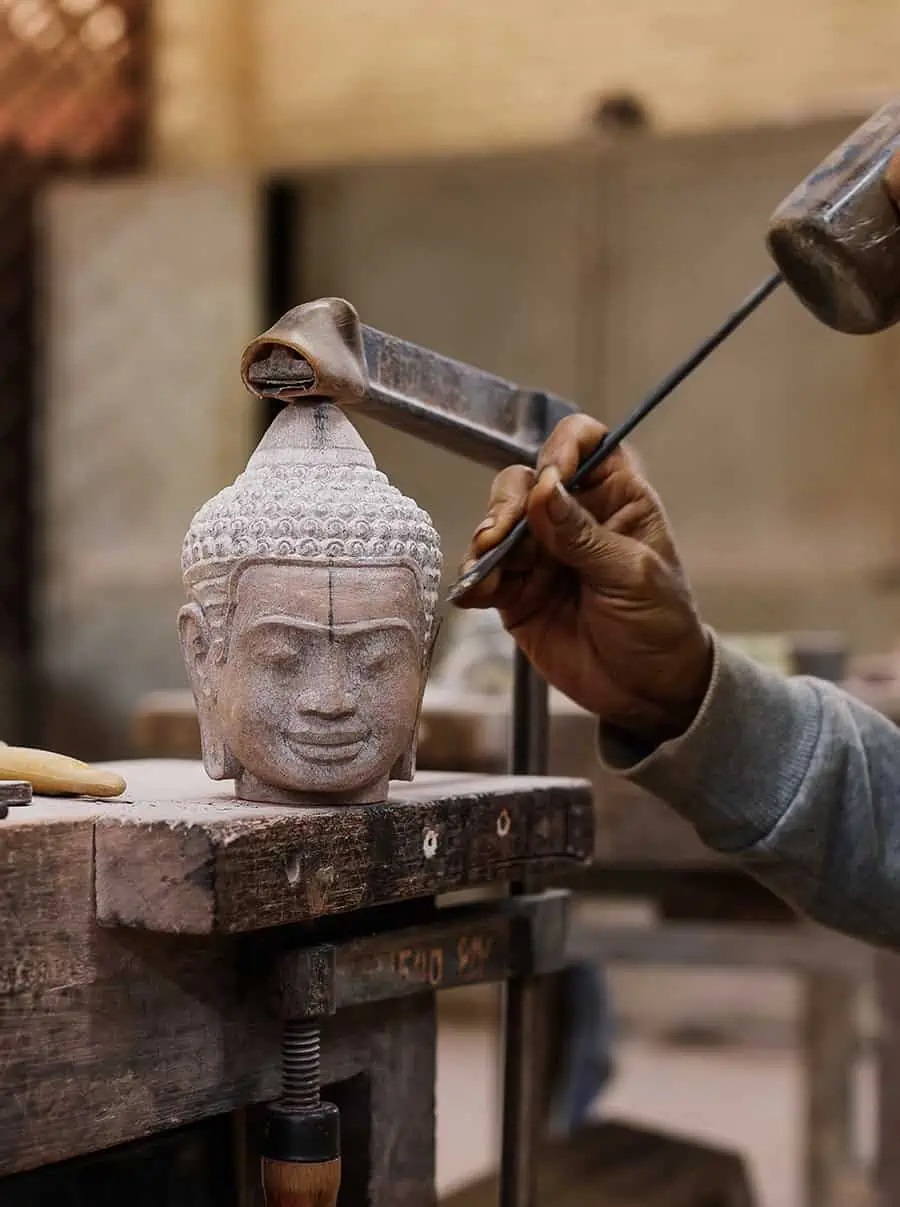
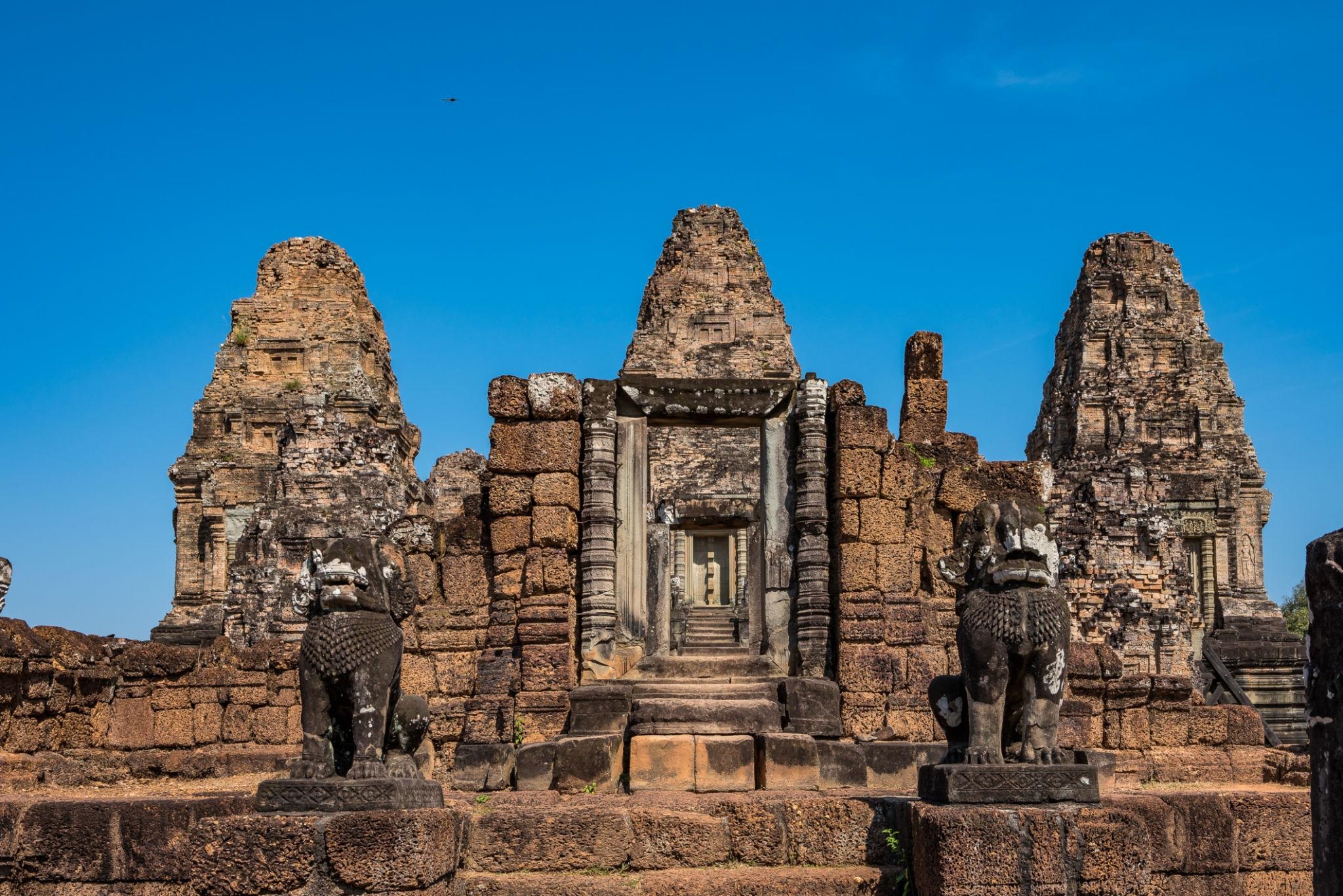
If there is one temple that makes visitors stop and look up in amazement, it is Bayon Temple in Siem Reap. Its towering stone faces seem to watch over the ancient city from every direction, creating one of the most recognizable scenes in Cambodia.
Located at the heart of Angkor Thom, Bayon offers more than impressive photographs. Its detailed carvings tell stories about the Khmer Empire, from royal ceremonies and military campaigns to markets, fishing and everyday activities.
Whether you are visiting Angkor for the first time or returning to explore more of Cambodia’s heritage, Bayon Temple deserves a place on your itinerary.
1. History of Bayon Temple
Bayon Temple was constructed during the reign of King Jayavarman VII toward the end of the 12th century. It served as the state temple of Angkor Thom, the royal city established after the Khmer Empire recovered from the Cham invasion of Angkor in 1177.
Unlike Angkor Wat, which was originally dedicated to the Hindu god Vishnu, Bayon was built as a Mahayana Buddhist temple. Its religious history later became more complex as Hindu and Theravada Buddhist influences shaped the monument over time.
The temple's location was highly symbolic. Standing at the center of Angkor Thom, it represented the religious and political heart of the capital.
Today, Bayon forms part of the Angkor Archaeological Park, a UNESCO World Heritage property recognized for its extraordinary collection of Khmer temples, ancient cities and water-management structures.
2. Why Is Bayon Temple Famous?
The mysterious smiling faces
Bayon's most recognizable feature is its collection of enormous stone faces carved on the towers. Their calm expressions, broad smiles and downward-looking eyes give the temple a distinctive atmosphere.
The exact identity of the faces remains a subject of interpretation. They have often been associated with the bodhisattva Avalokiteshvara, Buddhist compassion, or royal imagery connected with Jayavarman VII. Rather than presenting one interpretation as certain, visitors can appreciate the faces as part of the temple's rich religious and artistic symbolism.
The extraordinary bas-reliefs
The temple's galleries contain extensive carvings depicting historical events, religious imagery and ordinary life during the Angkorian period.
Look closely and you may find scenes of soldiers, boats, markets, food preparation, animals and people engaged in daily activities. These details make Bayon especially interesting because the carvings reveal more than royal power; they also provide glimpses into the lives of people who lived centuries ago.
The central temple structure
Bayon has a complex layout of galleries, passages, courtyards and towers. Exploring the interior feels different from walking around the more symmetrical outer galleries of Angkor Wat.
Some passages are narrow and the stone floors may be uneven, so take your time as you move between the different sections.
3. Where Is Bayon Temple?
Bayon Temple is situated in the center of Angkor Thom, north of Angkor Wat, within the Angkor Archaeological Park in Siem Reap Province.
Location: Angkor Thom, Angkor Archaeological Park, Siem Reap, Cambodia.
Getting there: Most visitors travel by tuk-tuk, private car, bicycle or guided temple tour from Siem Reap town. Bayon is commonly included in the Small Circuit temple route.
If you hire a driver for the day, you can combine Bayon with several nearby temples without returning to town between stops.
4. Bayon Temple Opening Hours and Entrance Fee
| Visitor information | Details |
|---|---|
| Typical opening hours | 7:30 AM–5:30 PM |
| Entrance fee | Covered by a valid Angkor Archaeological Park pass; no separate Bayon ticket is normally required |
| Best time to visit | Early morning or late afternoon |
| Suggested visit duration | Around 1.5–2 hours |
| Location | Center of Angkor Thom, Siem Reap |
| Recommended transport | Tuk-tuk, private car, bicycle or guided tour |
Ticket reminder: Angkor pass prices depend on the ticket type and duration. Buy your pass through Angkor Enterprise, the official ticketing authority, and confirm current visitor arrangements before travelling.
Opening hours and access to individual areas can change because of conservation work. Check the latest information from the APSARA National Authority before your visit.
5. Best Time to Visit Bayon Temple
Early morning: Best for a quieter experience
Arriving early can help you explore the galleries and photograph the stone faces before the busiest tour groups arrive. The cooler temperatures also make walking around the temple more comfortable.
Late afternoon: Best for warm light
The softer light later in the day can bring out the texture of the stone carvings. It is a good time for photography, although you should leave enough time to finish your visit before closing.
Best season to visit
The dry season, generally from November to April, often provides convenient conditions for exploring the temples. During the rainy season, the surrounding vegetation can look particularly green, but wet stone surfaces may be slippery.
Bayon is primarily a temple and historical site rather than a sunset viewpoint. If sunset is your main goal, plan that experience separately and allow enough time to travel safely between locations.
6. What to See Inside Bayon Temple
The face towers: Look at the different towers from several angles. The expressions and the way the faces appear above the surrounding stonework change with your viewing position.
The outer bas-reliefs: Study the long carved galleries for scenes of battles, processions, boats and everyday life.
The inner galleries: Walk slowly through the passages to appreciate the temple's layered structure and the relationship between its courtyards and towers.
The central area: Explore the accessible central sections while respecting barriers and any conservation restrictions.
The stone details: Pay attention to smaller carvings and architectural features rather than focusing only on the famous faces. These details help reveal the craftsmanship involved in building the monument.
7. Practical Tips for Visiting Bayon
- Wear comfortable walking shoes with good grip.
- Bring drinking water and sun protection.
- Dress respectfully when visiting Cambodia's sacred heritage sites.
- Avoid touching, climbing or leaning on fragile carvings and structures.
- Watch your step on uneven stones and narrow stairways.
- Visit with a guide if you want a deeper explanation of the temple's history and bas-reliefs.
- Keep your Angkor pass available if requested at checkpoints.
- Allow extra time if you plan to visit several temples in one day.
- Follow all posted restrictions, especially in areas closed for conservation.
- Bring a camera or phone, but be considerate of other visitors when photographing the narrow galleries.
8. Places to Visit Near Bayon Temple
Bayon's central location makes it convenient to explore other monuments within Angkor Thom on the same day.
| Nearby attraction | What makes it interesting |
|---|---|
| Baphuon Temple | A large temple-mountain with an impressive elevated walkway |
| Terrace of the Elephants | A long royal viewing platform decorated with elephant and other figures |
| Terrace of the Leper King | A carved terrace with detailed figures and a distinctive hidden passage |
| Phimeanakas | An ancient temple structure within the former royal enclosure |
| Angkor Thom South Gate | A monumental entrance with rows of figures holding a naga |
| Angkor Wat | Cambodia's best-known temple complex, famous for its towers and extensive galleries |
| Ta Prohm | A temple landscape where large trees grow around ancient stone structures |
Distances and travel times depend on the route and access conditions within the park. Check your itinerary with your driver or guide before setting off.
9. Suggested One-Day Angkor Itinerary Featuring Bayon
| Time | Suggested activity |
|---|---|
| 7:30 AM | Begin at Angkor Thom's South Gate |
| 8:00 AM | Explore Bayon Temple |
| 10:00 AM | Visit Baphuon Temple |
| 11:00 AM | Walk around the Terrace of the Elephants and nearby monuments |
| 12:00 PM | Take a lunch break |
| 1:30 PM | Visit Ta Prohm |
| 3:30 PM | Continue to Angkor Wat if time, access and your energy permit |
This is a suggested schedule rather than a fixed tour. Temple access, heat, crowd levels and your interests may affect how long each stop takes. If you prefer a relaxed visit, spread the temples over two days.
10. Frequently Asked Questions
What is Bayon Temple famous for?
Bayon is famous for its large carved stone faces, complex temple layout and extensive bas-reliefs showing historical, religious and everyday scenes from the Angkorian period.
Who built Bayon Temple?
Bayon was built under King Jayavarman VII toward the end of the 12th century. It was the state temple of Angkor Thom.
Is Bayon Temple part of Angkor Wat?
No. Bayon and Angkor Wat are separate temple complexes within the Angkor Archaeological Park. Bayon is located in Angkor Thom, north of Angkor Wat.
Do I need a separate ticket for Bayon Temple?
A valid Angkor Archaeological Park pass normally covers admission to Bayon. Check the official ticketing information before visiting.
How much time should I spend at Bayon?
Allow approximately 1.5–2 hours to explore the main galleries, admire the stone faces and look at the bas-reliefs. Visitors with a strong interest in Khmer history may want more time.
Can I visit Bayon Temple without a tour guide?
Yes. Independent visitors can explore with a valid Angkor pass and by following site rules. A knowledgeable guide can help explain the temple's religious symbolism and historical carvings.
Are the faces at Bayon all the same?
They share recognizable features, but their appearance can seem different depending on the tower, viewing angle, lighting and state of preservation.
TravelKH Tip
When you visit Bayon, do not rush straight to the most famous face towers and leave. Spend time looking at the bas-reliefs along the galleries. They offer a fascinating glimpse into the lives, beliefs and activities of the people who lived during the Khmer Empire.
For the best experience, combine Bayon with other monuments in Angkor Thom and give yourself enough time to explore without rushing from one temple to another.
SEO Information
SEO title: Bayon Temple, Siem Reap: History, Stone Faces and Visitor Guide
Meta description: Explore Bayon Temple in Siem Reap, Cambodia. Discover its famous smiling faces, Khmer history, opening hours, Angkor pass information and travel tips.
URL slug: bayon-temple-siem-reap
Primary keyword: Bayon Temple
Secondary keywords: Bayon Temple Siem Reap, Bayon Temple history, Bayon Temple opening hours, Bayon Temple entrance fee, Angkor Thom temples, smiling faces of Bayon, things to do in Siem Reap
Suggested image alt text: The iconic smiling stone faces of Bayon Temple in Angkor Thom, Siem Reap, Cambodia
Category: Destinations → Siem Reap
Suggested tags: Bayon Temple, Siem Reap, Angkor Thom, Angkor Archaeological Park, Khmer Empire, Cambodia temples, Cambodia travel guide