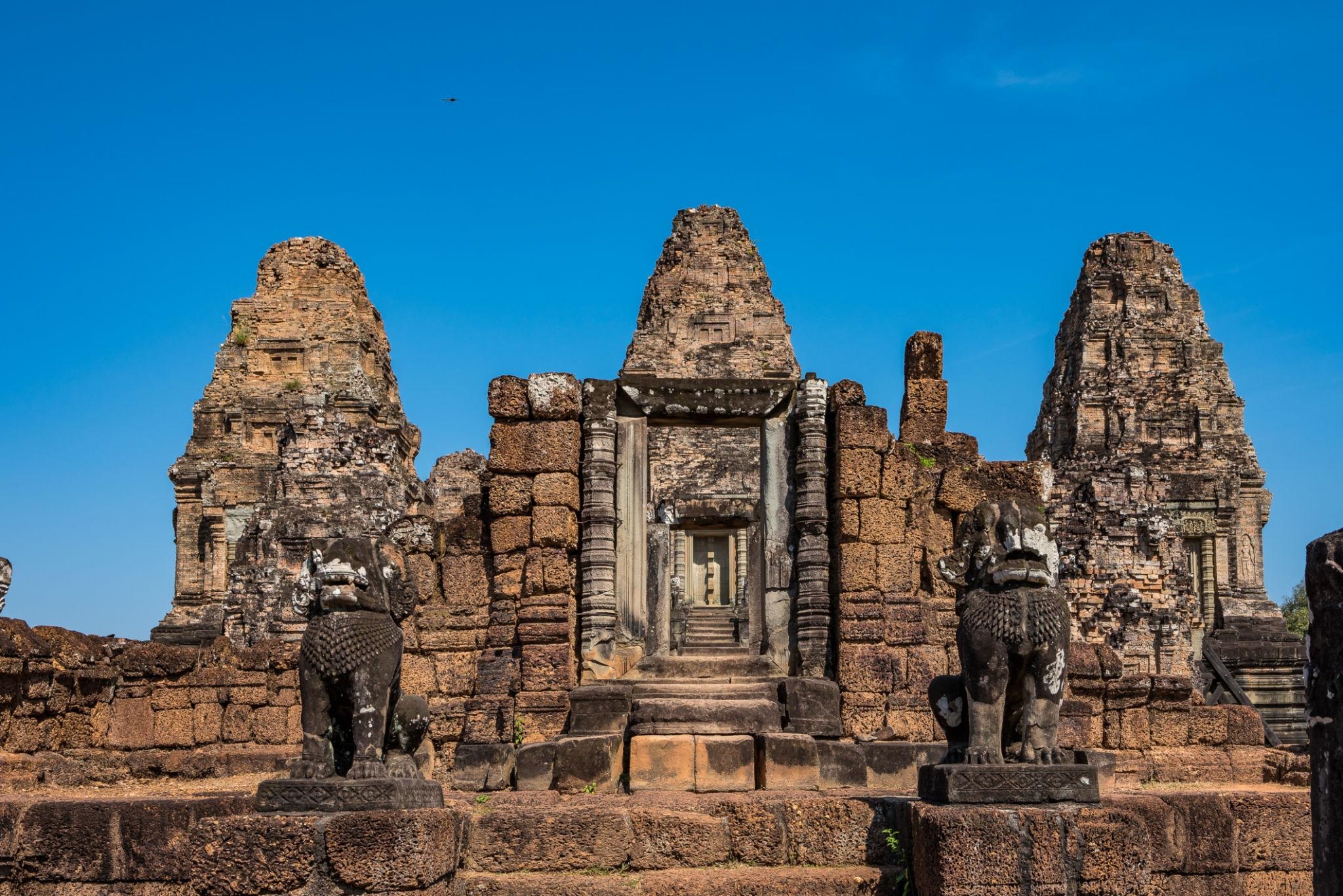
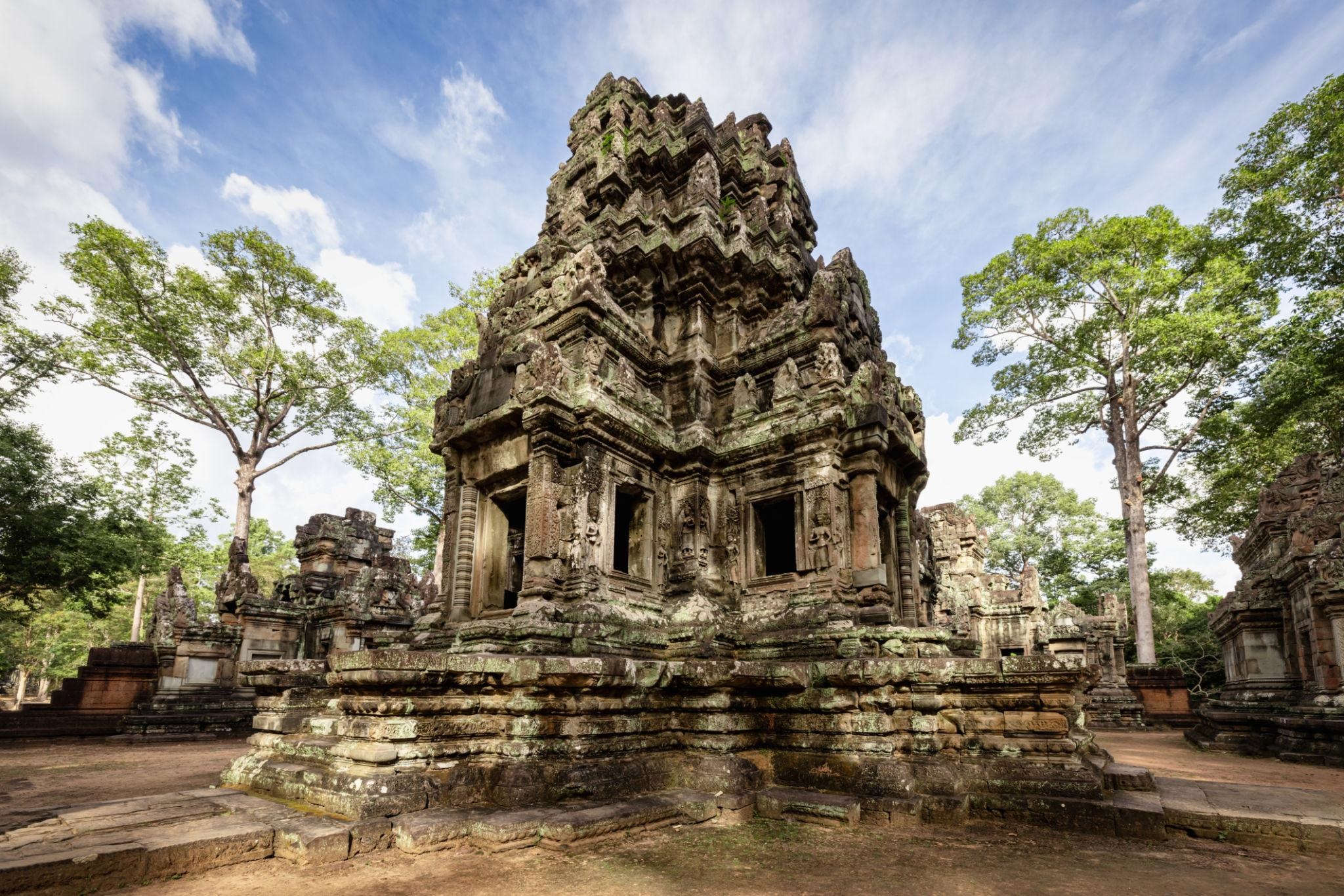
If you want to see a different side of Angkor beyond its famous stone faces and tree-covered ruins, Preah Rup Temple is an excellent place to visit. Built from brick and laterite, this impressive temple-mountain stands out for its warm reddish colour, towering upper platform, and distinctive ancient Khmer architecture.
Located east of Angkor Thom and south of East Mebon, Preah Rup is especially popular in the late afternoon. Its elevated terraces offer views across the surrounding landscape, making it a memorable stop at the end of a day exploring Angkor.
For travellers interested in Khmer history, temple architecture, and photography, Preah Rup deserves a place on a Siem Reap itinerary.
History of Preah Rup Temple
Preah Rup was consecrated in 961 AD during the reign of King Rajendravarman II, one of the important rulers of the Khmer Empire. The temple was dedicated to the Hindu god Shiva, and its central sanctuary housed a sacred linga associated with the king.
The monument was constructed mainly from brick and laterite, with sandstone used for architectural details. Its three-tiered pyramid design reflects the temple-mountain concept, in which the elevated central sanctuary symbolises the sacred mountain associated with Hindu cosmology.
The temple was built during a period when the royal centre had returned to the Angkor region from Koh Ker. Together with East Mebon, Preah Rup formed part of the religious and architectural landscape developed under Rajendravarman II.
The name “Preah Rup” is commonly translated as “turning the body” or “changing the body.” It is often associated with a traditional cremation interpretation of the site, although visitors should distinguish this popular explanation from the temple’s documented religious history.
What Makes Preah Rup Temple Special?
1. The red brick architecture
Preah Rup is one of Angkor’s most recognisable brick temples. Its reddish towers look particularly striking in warm afternoon light, contrasting with the greenery around the complex.
Unlike the grey sandstone appearance of many other Angkor monuments, its brick surfaces give the temple a distinctive character.
2. The three-tiered temple pyramid
The temple rises through several levels to a central upper platform. Steep stairways connect the levels, creating a dramatic silhouette and illustrating the temple-mountain architectural tradition.
Some stairways and upper areas may be restricted for safety or conservation reasons. Follow the signs and do not climb closed sections.
3. Five towers on the upper platform
The top level features five principal towers arranged in a quincunx pattern: one central tower surrounded by four others. This arrangement is a key feature of the temple's design.
The central sanctuary was dedicated to Shiva, while the surrounding sanctuaries formed part of the larger sacred complex.
4. Stone lions and guardian figures
Look for stone lions and other carved details around the terraces and stairways. The temple also preserves devata figures and decorative elements that reward a closer look.
5. A popular late-afternoon stop
Preah Rup is known for its warm sunset light. The reddish brick can glow in the late afternoon, making it a favourite place for photography.
Sunset colours and visibility depend on weather conditions, and the temple's opening time may limit how long you can stay. Arrive early enough to explore before closing.
Where Is Preah Rup Temple?
Location: Angkor Archaeological Park, Siem Reap Province, Cambodia.
Preah Rup lies south of East Mebon and east of the main Angkor Thom area. It is commonly included in the Grand Circuit or a wider Angkor temple tour.
How to get there
- Tuk-tuk: A convenient option for travelling between temples with a local driver.
- Private car: A comfortable choice for families or visitors exploring several sites in one day.
- Bicycle: Possible for active travellers, but plan for the distance, heat, and time required.
- Guided tour: Helpful if you want to learn more about the temple’s Hindu symbolism and architectural design.
From central Siem Reap, the journey generally takes around 30–45 minutes by car or tuk-tuk, depending on traffic, your starting point, and the route.
Opening Hours and Entrance Fee
| Visitor information | Details |
|---|---|
| Typical opening hours | 7:30 AM–5:30 PM |
| Entrance fee | No separate fee for Preah Rup |
| Angkor Pass | Required for normal park access |
| Recommended visit | Around 40 minutes |
| Best known for | Brick towers, temple-mountain architecture, late-afternoon light |
The APSARA National Authority lists Preah Rup's opening hours as 7:30 AM–5:30 PM and suggests around 40 minutes for a visit.
Preah Rup is included in the Angkor Archaeological Park ticketing system. There is generally no separate temple ticket. Check the official Angkor Enterprise website for current ticket prices and conditions before travelling.
Best Time to Visit Preah Rup
Late afternoon: This is the most popular time for the warm light on the red brick and the surrounding landscape. Arrive with enough time to explore the lower levels before closing.
Morning: A good option for cooler temperatures and a quieter visit. The temple's brick details can look very different in softer morning light.
Dry season: Often more convenient for walking between temples and planning photography, although the heat can be intense.
Rainy season: The surrounding greenery may be more vibrant, but cloudy skies can reduce the warm colours associated with sunset photography.
If sunset photography is your priority, confirm the day's access arrangements and do not assume the temple remains open after its posted closing time.
Things to See and Do at Preah Rup Temple
- Explore the lower terraces: Notice the brickwork, laterite blocks, and layout of the temple complex.
- Study the five upper towers: Observe how the central tower is positioned in relation to the four surrounding towers.
- Look for devata carvings: The south-west sanctuary is particularly worth noticing for its decorative figures.
- Photograph the reddish brick: Late-afternoon light can bring out the texture and colour of the walls.
- Learn about Hindu temple symbolism: The elevated central sanctuary reflects the temple-mountain concept.
- Enjoy the landscape views: From accessible areas, look across the surrounding trees and fields.
Please respect barriers and restricted areas. The temple is an ancient archaeological site, and some of its stairways are steep or uneven.
Nearby Attractions
| Attraction | Why visit? | Suggested time |
|---|---|---|
| East Mebon | An earlier temple with brick towers and stone elephants | 30–45 minutes |
| Banteay Samre | A beautifully proportioned temple with detailed carvings | 45–60 minutes |
| Srah Srang | A broad ancient reservoir with a sandstone landing terrace | 15–30 minutes |
| Banteay Kdei | A peaceful temple complex with galleries and courtyards | 40–60 minutes |
| Ta Prohm | Famous for trees growing among temple ruins | 45–90 minutes |
| Angkor Wat | Cambodia's iconic temple complex | 2–3 hours or more |
Distances and travel times vary, so ask your driver to arrange the route based on your priorities and the day's conditions.
Suggested Grand Circuit Itinerary
| Order | Stop | What to do |
|---|---|---|
| 1 | Preah Khan | Explore the large temple complex and its galleries |
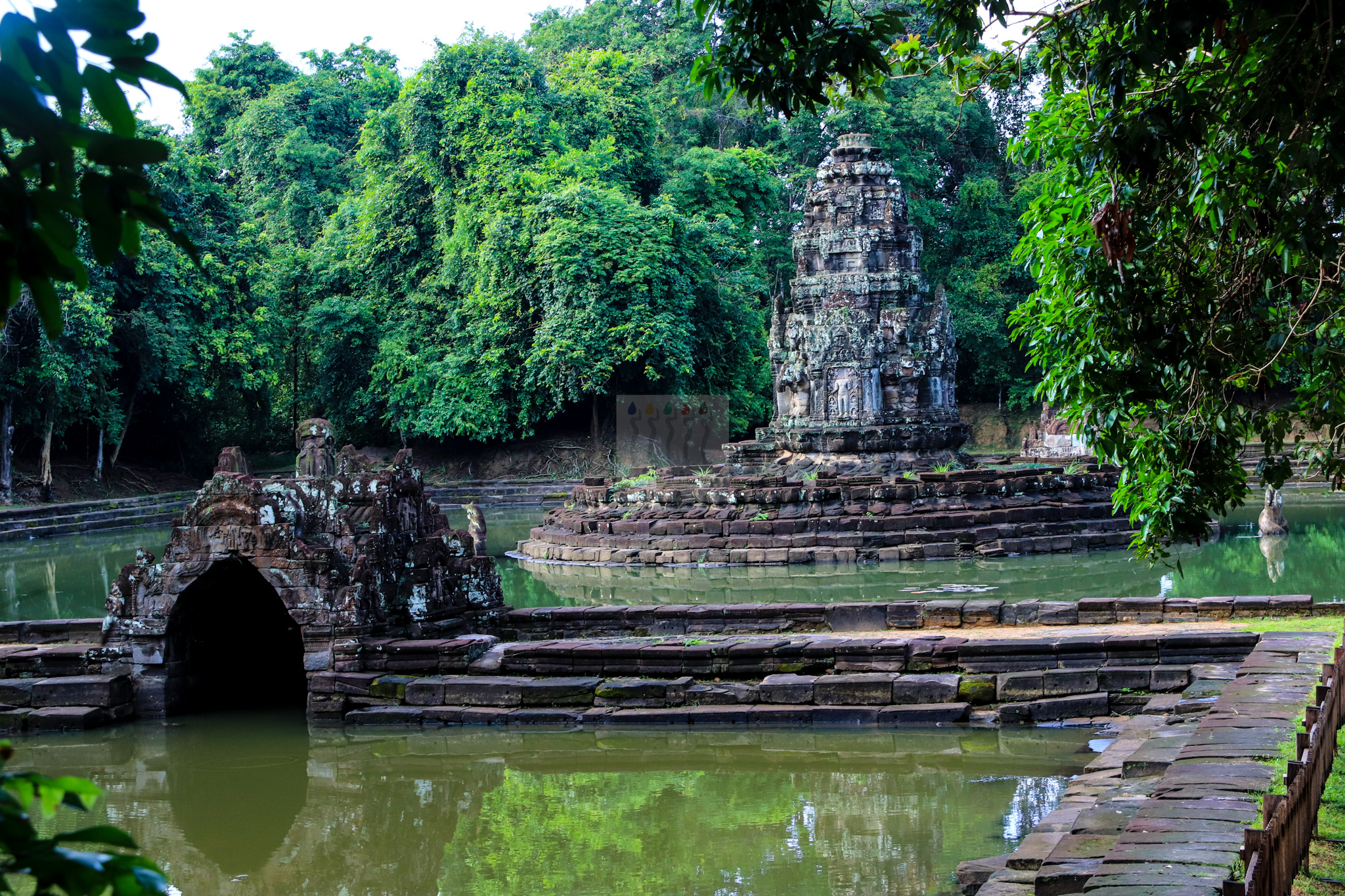
| 2 | Neak Pean | Visit the island sanctuary and surrounding water features, subject to access |
| 3 | Ta Som | See the compact temple and its famous tree-framed eastern gate |
| 4 | East Mebon | Explore the brick towers and stone elephant sculptures |
| 5 | Preah Rup | Finish with its distinctive brick architecture and late-afternoon light |
This route offers a good mix of architecture, history, and landscape. The best order depends on your departure time and whether you want to prioritise photography or a broader temple experience.
Practical Tips for Visiting Preah Rup
- Wear comfortable shoes with good grip because the steps and surfaces can be uneven.
- Carry water and sun protection, especially if visiting in the afternoon.
- Do not climb closed stairways or cross barriers to reach a viewpoint.
- Arrive early enough to explore before the temple closes.
- Bring a camera if you enjoy architectural photography.
- Consider combining Preah Rup with East Mebon because the two temples are relatively close.
- Respect the religious and cultural significance of the site, including any posted visitor rules.
Frequently Asked Questions
Is Preah Rup Temple worth visiting?
Yes. Its brick towers, pyramid structure, and distinctive reddish colour make it different from many of Angkor's sandstone temples. It is also a popular place for late-afternoon photography.
Why is Preah Rup Temple famous?
Preah Rup is known for its 10th-century history, temple-mountain design, five upper towers, and brick architecture. It is also associated with traditional interpretations of cremation ceremonies, although this is not the only aspect of its history.
Can I watch the sunset at Preah Rup?
Preah Rup is a popular late-afternoon stop because the light can make the brickwork glow. However, sunset conditions vary, and the temple's usual closing time is 5:30 PM. Confirm current access rules and arrive well before closing.
How long should I spend at Preah Rup?
Around 40 minutes is a reasonable visit, in line with the APSARA visitor information. Allow longer if you enjoy photography or want to study the architectural details.
Is Preah Rup included in the Angkor Pass?
Yes. Preah Rup is part of the Angkor Archaeological Park ticketing system, so a valid Angkor Pass generally covers entry.
What is the best temple to visit with Preah Rup?
East Mebon is a natural companion because it is nearby and shares a connection with the reign of King Rajendravarman II. Banteay Samre is another option for visitors who want to explore more Khmer architecture.
TravelKH Tip
If you are planning a Grand Circuit day, schedule Preah Rup for the late afternoon and leave enough time to explore before closing. Pair it with East Mebon to compare two temples from the same period and see how Khmer builders used brick, laterite, and stone in different ways.