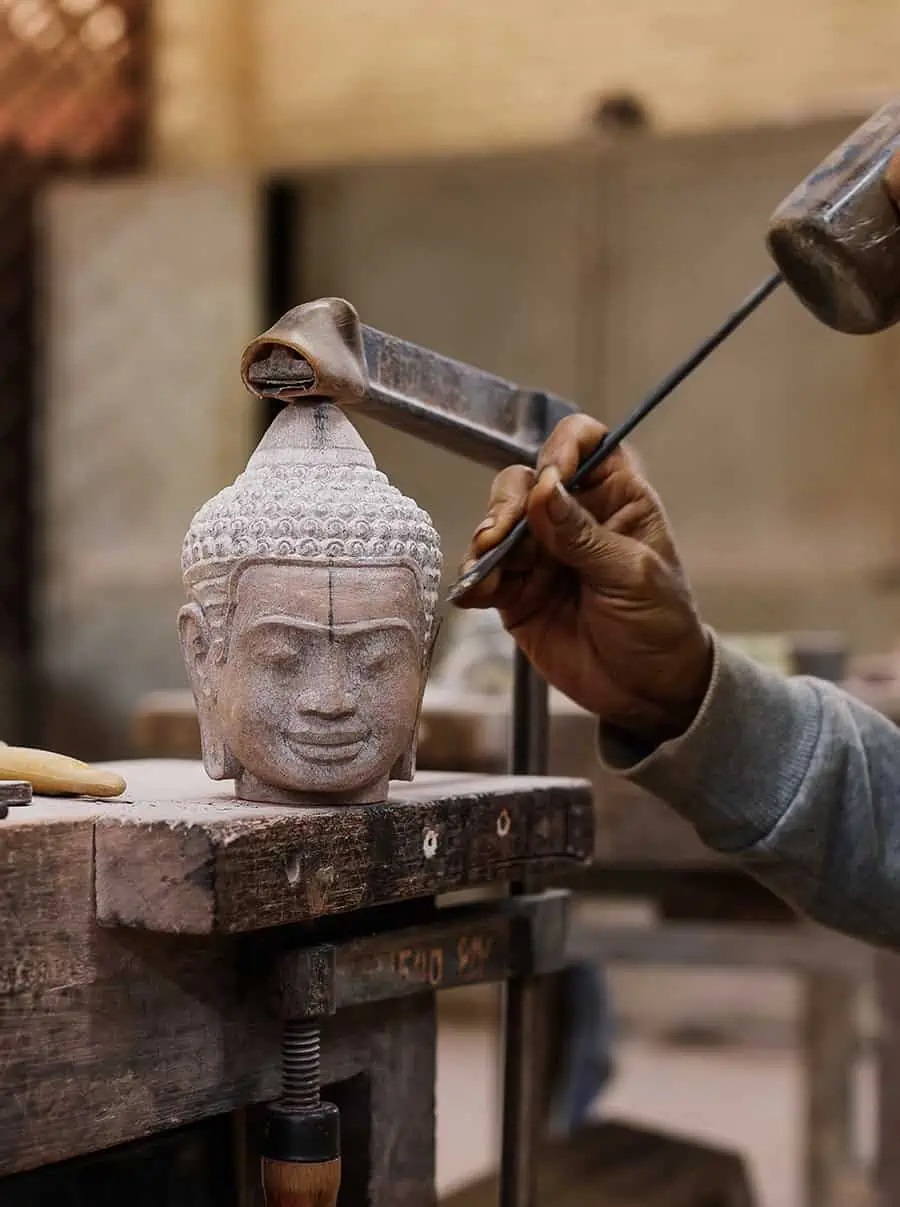
Lolei Temple is one of the oldest surviving temples in the Angkor region and an important monument in the history of the early Khmer Empire. Located in the Roluos area, approximately 13–15 kilometres east of Siem Reap, this 9th-century temple is known for its four brick towers, detailed sandstone carvings and unusual original setting on an artificial island.
Built under King Yasovarman I and consecrated in 893 AD, Lolei was dedicated to the king's royal ancestors. It originally stood in the middle of Indratataka, a huge ancient reservoir constructed during the reign of his father, King Indravarman I.
Today, the reservoir is no longer filled with water, and the temple stands beside an active Buddhist pagoda. Visiting Lolei offers a fascinating look at how Khmer religious architecture, royal history and everyday community life have continued to share the same landscape.
Quick Facts About Lolei Temple
| Information | Details |
|---|---|
| Temple Name | Lolei Temple |
| Khmer Name | ប្រាសាទលលៃ |
| Historical Period | 9th century |
| Consecrated | 893 AD |
| King | Yasovarman I |
| Original Religion | Hinduism |
| Main Deity | Shiva |
| Original Purpose | Royal ancestral temple |
| Architectural Style | Preah Ko style |
| Location | Lolei Village, Prasat Bakong District, Siem Reap Province |
| Distance from Siem Reap | Approximately 13–15 km east |
| Opening Hours | 7:30 AM–5:30 PM (published APSARA information) |
| Recommended Visit | 20–45 minutes |
| Entrance Ticket | Angkor Pass; confirm current coverage |
| Best Time to Visit | November–February |
1. History of Lolei Temple
Lolei Temple was built under King Yasovarman I, who ruled the Khmer Empire from 889 to approximately 910 AD. The temple was consecrated in 893 AD as part of the religious and political development of the ancient capital of Hariharalaya, now known as the Roluos area.
The temple was dedicated to the memory of the king's ancestors, particularly his father, King Indravarman I.
Lolei was constructed on an artificial island in the middle of Indratataka Baray, a massive reservoir built during the reign of Indravarman I. The reservoir measured approximately 3,800 metres long and 800 metres wide.
The location was symbolically important. By placing the temple in the middle of a royal reservoir, Yasovarman I connected the sacred monument with the hydraulic achievement of his father.
The temple's inscriptions provide valuable information about its consecration, religious practices and the organisation of the people who served the temple.
Lolei also represents an important period of transition in Khmer history. After establishing the temple at Hariharalaya, Yasovarman I developed a new royal capital in the Angkor area, near Phnom Bakheng.
For this reason, Lolei is an important monument for understanding the early development of the Khmer Empire before the rise of the great Angkorian temples.
2. Why Is Lolei Temple Special?
Built on an artificial island
One of Lolei's most distinctive features is its original location.
Unlike many Khmer temples built directly on land, Lolei was constructed on an artificial island in the centre of Indratataka Baray.
The reservoir is now dry, and the surrounding landscape has changed considerably. Visitors can walk to the temple by road rather than approaching it by boat.
However, the original layout demonstrates the importance of water management and religious symbolism in early Khmer urban planning.
Four brick towers
The temple's surviving main structures consist of four brick towers arranged in two rows on a raised platform.
These towers were part of a royal ancestral sanctuary. Their arrangement reflects the importance of family lineage and religious devotion in the Khmer royal tradition.
Ancient sandstone inscriptions
Lolei is particularly valuable for its inscriptions carved into sandstone door jambs.
These inscriptions provide historical information about the temple's consecration, religious ceremonies and the responsibilities of people working within the temple organisation.
They are also important examples of early Khmer and Sanskrit epigraphic traditions.
A living Buddhist pagoda
Another interesting feature is the presence of a modern Buddhist pagoda within the temple grounds.
This creates a distinctive combination of ancient Hindu architecture and continuing Buddhist religious activity.
Visitors can experience both the archaeological remains and the atmosphere of an active local religious community.
3. What to See at Lolei Temple
3.1 The four brick towers
The four brick towers are the main attraction.
They stand on a raised platform and were originally designed as part of a larger ancestral temple complex.
Although some structures have suffered considerable deterioration, their remaining architectural details provide insight into the craftsmanship of the early Khmer period.
Walk around the towers to observe their different conditions and decorative features.
3.2 Sandstone lintels and doorframes
The sandstone lintels and doorframes are among the most interesting features of Lolei.
Look for carved details above the entrances and along the door jambs. These decorations demonstrate the artistic development of Khmer religious architecture during the 9th century.
Some of the inscriptions are particularly important because they document historical details about the temple's foundation and organisation.
3.3 Guardian figures and decorative niches
The towers contain decorative niches and sculptural details associated with Hindu religious architecture.
Some figures and ornamental sections have deteriorated over time, while others remain visible.
These details are worth examining closely, particularly for visitors interested in ancient Khmer art.
3.4 The raised temple platform
The temple stands on a raised laterite platform measuring approximately 100 metres by 100 metres.
The elevated position originally reinforced the symbolism of the temple as a sacred place surrounded by water.
Today, the platform provides a good viewpoint for observing the four towers and the surrounding temple grounds.
3.5 Wat Lolei Buddhist Pagoda
A modern Buddhist pagoda stands within the wider temple grounds.
Unlike the ancient Hindu structures, this is an active religious site. Visitors may encounter monks, local worshippers and community activities.
Please dress respectfully, keep noise to a minimum and ask permission before photographing people.
4. Location: How to Get to Lolei Temple
Lolei Temple is located in Lolei Village, Prasat Bakong District, approximately 13–15 kilometres east of Siem Reap city.
It is part of the Roluos Group, together with Bakong and Preah Ko.
The temple is situated north of National Road 6, with a short local-road approach from the main highway.
| Transport | Estimated Travel Time | Notes |
|---|---|---|
| Tuk-tuk | 30–40 minutes | Convenient for visiting the Roluos Group |
| Private car | 25–35 minutes | Comfortable for families and groups |
| Motorbike | 25–35 minutes | Suitable for experienced riders |
| Bicycle | 45–75 minutes | Possible, but consider traffic and heat |
| Guided tour | Depends on itinerary | Can include all three Roluos temples |
Travel times are approximate and depend on traffic and your starting point.
5. Road Conditions and Accessibility
The road journey from Siem Reap to Lolei is relatively straightforward.
Visitors generally travel east along National Road 6 towards the Roluos area before turning onto a smaller local road leading to the temple.
| Travel Detail | Practical Information |
|---|---|
| Main route | Siem Reap – National Road 6 – Lolei Village |
| Road surface | Main road is paved; final local-road conditions may vary |
| Suitable vehicles | Car, SUV, tuk-tuk and motorbike |
| Rainy-season risks | Rain may cause slippery surfaces, standing water and muddy sections on smaller roads |
| Final approach | Short local-road journey from National Road 6 |
| Walking required | Walking around the raised temple platform |
| Accessibility | Uneven surfaces and steps; not fully wheelchair accessible |
The final approach is generally manageable using an ordinary car or tuk-tuk in normal conditions.
However, visitors should be aware that the temple platform and surrounding archaeological structures have uneven surfaces. Some sections may be difficult for visitors with mobility limitations.
During the rainy season, allow additional travel time and check local road conditions before departure.
6. Opening Hours
Published APSARA National Authority visitor information lists Lolei Temple's opening hours as:
| Day | Opening Time | Closing Time |
|---|---|---|
| Monday–Sunday | 7:30 AM | 5:30 PM |
The temple is also connected to an active Buddhist pagoda, so visitors should respect religious activities and any access restrictions.
Opening arrangements may change due to restoration work or special circumstances. Verify current information before travelling.
7. Entrance Fee: Do You Need an Angkor Pass?
Lolei is part of the Roluos archaeological group and is generally visited using an Angkor Archaeological Park pass.
The published standard Angkor Pass prices are:
| Ticket Type | Standard Price |
|---|---|
| 1-day pass | US$37 |
| 3-day pass | US$62 |
| 7-day pass | US$72 |
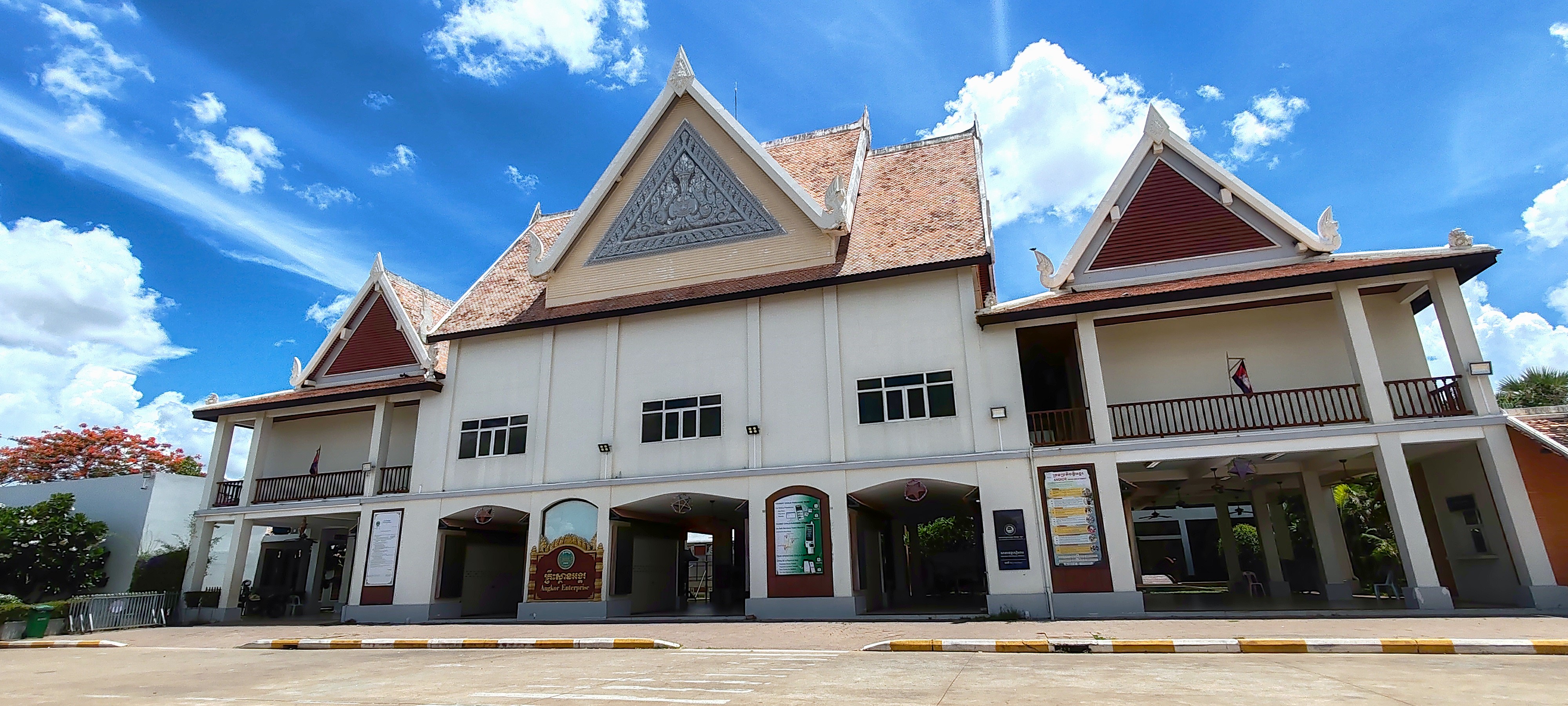
Confirm current ticket prices and coverage with Angkor Enterprise before visiting.
Official ticket website:
Visitors should purchase their ticket before travelling to the Roluos temples. Do not assume that tickets can be purchased directly at Lolei.
8. Best Time to Visit Lolei Temple
The best time to visit is generally between November and February, when the weather is cooler and more comfortable for exploring the temple grounds.
| Season | Months | Visitor Experience |
|---|---|---|
| Cool season | November–February | Comfortable temperatures for sightseeing |
| Hot season | March–May | Hot afternoons; morning visits recommended |
| Rainy season | June–October | Green surroundings, with possible rain and slippery surfaces |
Recommended time of day: Visit in the morning or late afternoon. The softer light is particularly attractive for photographing the brick towers and sandstone details.
9. How Long Should You Spend at Lolei?
Lolei is a relatively small temple compared with Bakong and the major Angkor monuments.
Most visitors can explore the site in approximately 20–45 minutes.
| Activity | Estimated Time |
|---|---|
| Explore the four brick towers | 10–15 minutes |
| Examine sandstone carvings and inscriptions | 5–10 minutes |
| Walk around the temple platform | 5–10 minutes |
| Visit the surrounding pagoda area | 5–10 minutes |
| Photography | 5–10 minutes |
Visitors with an interest in Khmer inscriptions and archaeology may want to spend additional time examining the surviving details.
10. Nearby Attractions: Explore the Roluos Group
Lolei is best visited together with the other important temples of the Roluos Group.
| Attraction | Main Highlight | Suggested Visit |
|---|---|---|
| Bakong Temple | Five-tiered pyramid and early temple-mountain architecture | 45–90 minutes |
| Preah Ko Temple | Six brick towers and sacred Nandi bull sculptures | 30–45 minutes |
| Prei Monti | Smaller early Khmer archaeological remains | Optional stop |
| Bakong My Village | Local community experience | 30–60 minutes |
Bakong Temple
Bakong is the most monumental temple in the Roluos Group.
Built under King Indravarman I and consecrated in 881 AD, it represents an important development in Khmer temple-mountain architecture.
Preah Ko Temple
Preah Ko was consecrated in 880 AD and is famous for its six brick towers and sacred bull sculptures.
It was built to honour royal ancestors and is an important example of early Khmer religious architecture.
Prei Monti
Prei Monti is a lesser-known archaeological site in the wider Roluos area.
It may interest travellers who want to explore beyond the three main temples. However, access can involve smaller rural roads, so local guidance is advisable.
11. Suggested Half-Day Roluos Group Itinerary
A half-day trip is sufficient to explore the three principal temples.
| Time | Activity |
|---|---|
| 8:00 AM | Depart from Siem Reap |
| 8:30 AM | Visit Preah Ko Temple |
| 9:15 AM | Explore Bakong Temple |
| 10:30 AM | Visit Lolei Temple |
| 11:00 AM | Explore the four brick towers and pagoda |
| 11:30 AM | Optional local village stop |
| 12:00 PM | Return to Siem Reap |
This itinerary is flexible. The order can be adjusted according to your preferred route and photography conditions.
12. Practical Tips for Visiting Lolei Temple
- Combine it with Bakong and Preah Ko. Visiting all three temples gives you a better understanding of early Khmer history.
- Bring drinking water. The temple grounds offer limited shade.
- Wear comfortable shoes. The platform and surrounding ground are uneven.
- Visit during the cooler hours. Morning and late afternoon are generally more comfortable.
- Respect the active pagoda. This is not only an archaeological site but also a place of worship.
- Dress appropriately. Cover your shoulders and knees when visiting religious areas.
- Avoid touching inscriptions. The carved sandstone details are fragile historical evidence.
- Bring a camera. The brick towers and sandstone carvings are excellent photography subjects.
- Consider a local guide. Historical inscriptions and the temple's ancestral symbolism are easier to understand with an explanation.
13. Frequently Asked Questions
Where is Lolei Temple located?
Lolei Temple is located in Lolei Village, Prasat Bakong District, approximately 13–15 kilometres east of Siem Reap city.
Who built Lolei Temple?
Lolei was built under King Yasovarman I and consecrated in 893 AD.
What religion was Lolei Temple dedicated to?
Lolei was originally a Hindu temple dedicated to Shiva and the memory of the king's royal ancestors.
Why was Lolei built on an island?
The temple was constructed on an artificial island in the middle of Indratataka Baray. Its location had religious and symbolic significance, connecting the royal temple with the large reservoir built by King Indravarman I.
How many towers does Lolei Temple have?
Four main brick towers survive today. They stand in two rows on a raised platform.
Is the reservoir around Lolei still filled with water?
No. The ancient Indratataka reservoir is no longer a functioning lake surrounding the temple. The surrounding land has changed and is now accessible by road.
Is Lolei Temple part of the Roluos Group?
Yes. Lolei is one of the three principal temples of the Roluos Group, together with Bakong and Preah Ko.
How long does it take to visit Lolei?
Approximately 20–45 minutes is sufficient for most visitors.
Do I need an Angkor Pass to visit Lolei?
Lolei is generally visited under the Angkor ticketing system. Confirm current ticket coverage and conditions with Angkor Enterprise before travelling.
TravelKH Tip
Lolei may be smaller and less impressive in scale than Bakong, but its historical importance should not be overlooked.
Its original island setting, four brick towers and sandstone inscriptions provide valuable evidence of how the early Khmer kings connected religion, royal ancestry and water management.
For travellers interested in the origins of Angkor, visiting Lolei together with Preah Ko and Bakong is one of the best ways to understand the development of the Khmer Empire before the construction of Angkor Wat.
Official and Useful References
- APSARA National Authority – Lolei Temple: https://apsaraauthority.gov.kh/2021/08/06/lolei/
- Hello Angkor – Lolei Temple: https://helloangkor.com/attractions/lolei/
- UNESCO World Heritage Centre – Angkor: https://whc.unesco.org/en/list/668/
- Angkor Enterprise – Official Angkor Pass Information: https://www.angkorenterprise.gov.kh/
Editorial note: Opening hours, ticket coverage, restoration work and visitor access may change. Verify current information with APSARA National Authority and Angkor Enterprise before travelling.