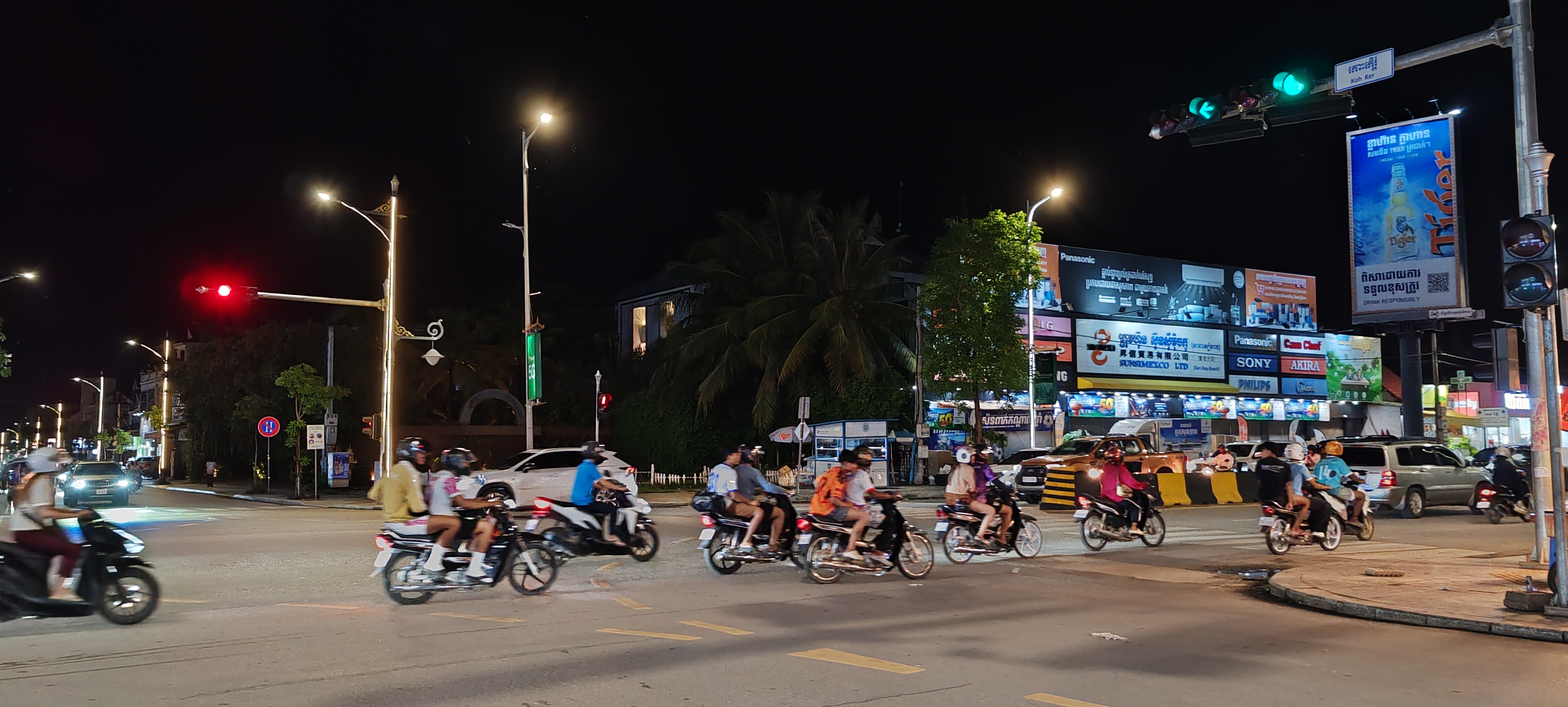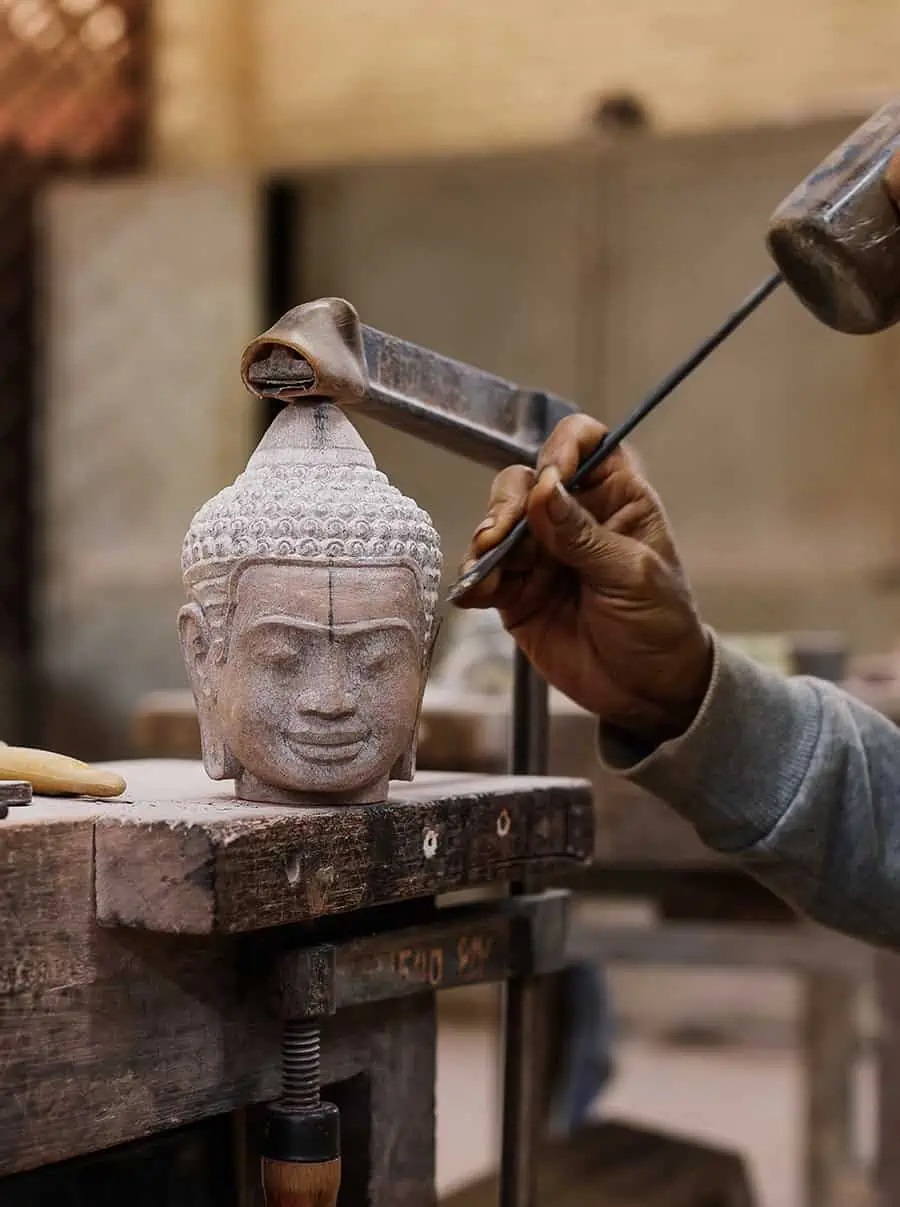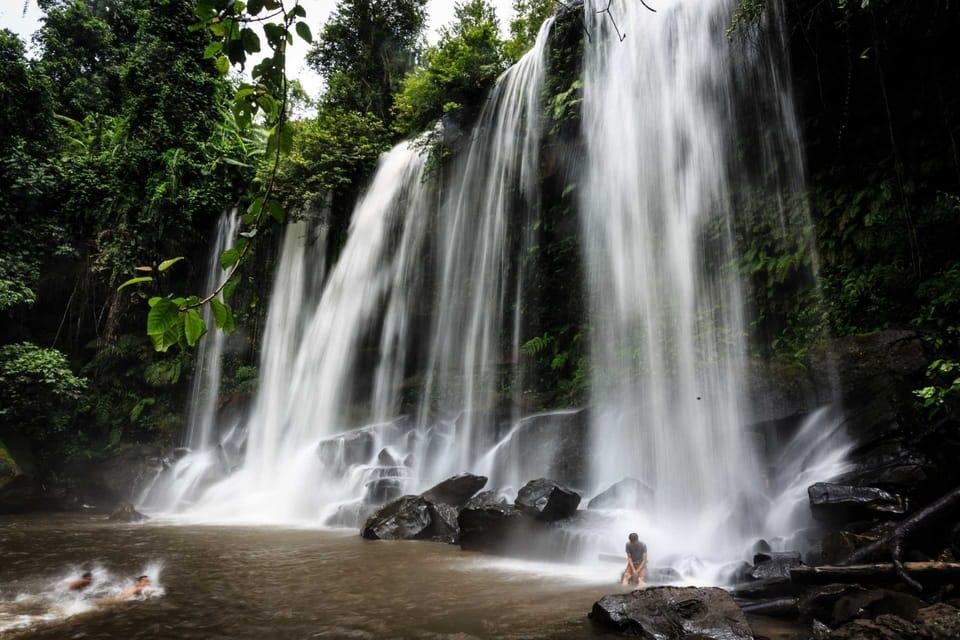

Looking for a refreshing escape from the temples of Angkor? Phnom Kulen Waterfall (ទឹកធ្លាក់ភ្នំគូលែន) is one of the most popular nature attractions near Siem Reap, Cambodia. Surrounded by forest and sandstone hills, the waterfall is a favorite place for swimming, family picnics, photography, and relaxing in nature.
Located in the sacred Phnom Kulen mountain area, the waterfall is also part of a landscape deeply connected to Cambodia’s history and religious traditions. Visitors can combine it with Preah Ang Thom’s reclining Buddha and the River of a Thousand Lingas for a full-day cultural and nature trip.
Quick Facts About Phnom Kulen Waterfall
| Information | Details |
|---|---|
| Destination | Phnom Kulen Waterfall |
| Khmer name | ទឹកធ្លាក់ភ្នំគូលែន |
| Location | Phnom Kulen, Svay Leu District, Siem Reap Province, Cambodia |
| Type | Natural waterfall and swimming area |
| Distance from Siem Reap | Approximately 48–50 km |
| Travel time | Around 1.5–2 hours each way, depending on road and traffic conditions |
| Entrance fee | Foreign visitors are commonly quoted around US$20 per person for Phnom Kulen National Park; confirm the current rate |
| Angkor Pass | Not included; Phnom Kulen has a separate admission arrangement |
| Best season for waterfall flow | Rainy season and the period after sufficient rainfall |
| Activities | Swimming, sightseeing, photography, picnicking |
| Recommended visit | Half a day at the waterfall; a full day for Phnom Kulen |
| Suitable for | Nature lovers, families, couples, and travelers interested in Cambodian culture |
Travel information and fees may change. Confirm ticket prices, access arrangements, and road restrictions before departure. Phnom Kulen is approximately 48 km from Siem Reap and is commonly visited as a day trip. Source: Tourism Cambodia.
1. What Makes Phnom Kulen Waterfall Special?
Phnom Kulen Waterfall offers a different experience from Siem Reap’s famous temple complex. Instead of spending the day walking between ancient stone monuments, visitors can enjoy flowing water, forest scenery, and natural pools.
A beautiful two-tier waterfall
The waterfall has two main levels. The upper section has a gentler landscape in places, while the lower waterfall is a major attraction for visitors who want to see the water cascading into the pool below.
Water volume changes throughout the year. After rainfall, the waterfall can look more dramatic, while during the later dry season its flow may become much weaker.
A popular local picnic destination
On weekends and Cambodian public holidays, local families often visit Phnom Kulen to relax, eat together, and enjoy the natural surroundings. Picnic areas and nearby food vendors make it possible to spend several hours at the site.
For a quieter experience, consider visiting on a weekday and arriving early.
A refreshing swimming spot
Visitors can often swim in designated natural pools when conditions permit. Bring swimwear, a towel, and a change of clothes if you plan to enter the water.
Always check local safety advice before swimming. Rocks may be slippery, and currents can become stronger after heavy rain.
2. History and Cultural Significance of Phnom Kulen
Phnom Kulen is more than a scenic mountain destination. It is widely regarded as a sacred place in Cambodia and is associated with the emergence of the Khmer Empire.
Historical tradition links the mountain to King Jayavarman II’s declaration in 802 CE, an important event in the traditional account of the empire’s foundation. The wider Phnom Kulen landscape also contains archaeological remains associated with the early Angkorian period. Source: Ministry of Tourism, Cambodia.
The waterfall is one of several attractions in this larger cultural landscape. Many travelers combine it with ancient riverbed carvings and Buddhist pilgrimage sites to understand the mountain beyond its natural scenery.
When visiting religious areas, dress respectfully and follow local instructions.
3. Where Is Phnom Kulen Waterfall?
Phnom Kulen Waterfall is located within the Phnom Kulen mountain area in Siem Reap Province, north of Siem Reap city.
The journey usually takes around 1.5–2 hours each way. Travel time depends on your departure point, vehicle, traffic, and the condition of the mountain road.
Google Maps: Search for “Phnom Kulen Waterfall” or use the destination pin provided by your driver or tour operator. Confirm that the pin refers to the main waterfall area before setting off.
How to get there
| Transport | Best for | Advice |
|---|---|---|
| Private car | Couples, families, and independent travelers | Arrange a driver familiar with Phnom Kulen’s road restrictions |
| Private van | Families and groups | Useful for carrying swimwear, towels, food, and other supplies |
| Guided day tour | First-time visitors | Convenient for combining the waterfall with cultural sites |
| Motorbike | Experienced riders | Check road conditions, legal requirements, weather, and traffic restrictions first |
| Tuk-tuk | Travelers considering local transport | Confirm the vehicle can safely manage the actual route; a transfer or alternative vehicle may be necessary |
For most first-time visitors, a private car or organized tour is a practical choice. Do not assume that every vehicle can use every road on the mountain.
4. Road Conditions & Accessibility
The trip to Phnom Kulen includes a mountain approach with winding sections. Conditions can vary, and smaller access roads around the plateau may be rougher than the main road.
Road surface and vehicle recommendations
- Main approach: Expect winding mountain roads. Check current conditions with your driver before departure.
- Vehicle choice: A suitable car or van with an experienced driver is a practical option for most visitors. A vehicle with higher clearance may be useful if local access roads are rough.
- Motorbikes: Riders should have suitable experience and protective equipment. Wet or loose surfaces can make riding more difficult.
- Final approach: Expect to walk around the waterfall area and use steps or uneven paths to reach certain sections. Wear shoes or sandals with good grip.
Rainy-season risks
During the rainy season, surfaces may become muddy, slippery, or difficult to navigate. Heavy rain can increase water flow and make rocks around the waterfall hazardous.
Before leaving, ask your driver or a local operator about recent rainfall, road access, and any closures. Do not enter flooded sections or attempt to cross fast-moving water.
Important one-way road restriction
Traffic on the mountain road has traditionally been managed in different directions at different times of day, with uphill travel in the morning and downhill travel later. Published guides give differing cutoff times, so do not rely on an old timetable.
Confirm the current schedule with the park authorities or your local driver before setting off. Leave Siem Reap early and avoid planning a late-morning ascent without confirmation.
5. Phnom Kulen Waterfall Opening Hours
The waterfall is commonly listed as open during daytime hours, with some listings showing approximately 8:00 AM–6:00 PM. However, attraction hours and mountain-road access restrictions are not necessarily the same.
For the most practical visit:
- Start from Siem Reap early in the morning.
- Confirm the road schedule before departure.
- Allow time for the mountain journey, ticketing, and walking.
- Follow local instructions about when visitors must leave the area.
Opening hours, road restrictions, and access arrangements should be checked locally before your trip.
6. Phnom Kulen Waterfall Entrance Fee
Foreign visitors are commonly quoted an entrance fee of approximately US$20 per person for Phnom Kulen National Park. This is separate from the Angkor Archaeological Park pass.
| Expense | Planning guidance |
|---|---|
| Phnom Kulen admission | Commonly quoted at around US$20 per foreign visitor; verify the current fee |
| Transportation | Depends on vehicle, group size, and whether you book a tour |
| Food and drinks | Budget separately for meals, snacks, and water |
| Swimming and changing facilities | Ask on arrival whether any additional charges apply |
| Guide or tour | Optional, with cost depending on the itinerary and inclusions |
These figures are planning guidance, not a guaranteed current price. Confirm where tickets are sold, whether advance purchase is required, and what is included before leaving Siem Reap.
7. Best Time to Visit Phnom Kulen Waterfall
The best time depends on whether you prefer stronger waterfall flow, easier walking conditions, or fewer crowds.
| Period | What to expect | Recommendation |
|---|---|---|
| Rainy season, generally May–October | More rainfall can create a stronger waterfall, but trails and rocks may be slippery | Good for dramatic scenery when access is safe |
| Drier months, generally November–April | Walking may be easier, but waterfall flow can decrease | Good for combining the waterfall with other attractions |
| Weekdays | Often quieter than weekends and major holidays | Best for visitors seeking a more relaxed atmosphere |
| Weekends and festivals | More local families and visitors, especially around picnic areas | Arrive early and expect busier facilities |
These are general seasonal patterns rather than a forecast. Recent rainfall has more influence on waterfall flow than the calendar alone.
8. Things to Do at Phnom Kulen Waterfall
Swim in the natural pools
Swimming is one of the main reasons people visit. Use only areas considered safe by local staff, avoid strong currents, and never approach the cascade when water is powerful.
Take photographs
The waterfall, surrounding greenery, and sandstone landscape provide plenty of opportunities for nature photography. Be careful when using a phone or camera near wet rocks.
Enjoy a picnic
Bring snacks or enjoy food available nearby. Take all rubbish with you and avoid leaving plastic packaging around the water.
Explore the surrounding area
The waterfall can be part of a broader Phnom Kulen itinerary that includes sacred sites and historical attractions. If you plan to visit several places, allow enough time for the mountain road and walking between sites.
9. How Long Should You Spend at the Waterfall?
For the waterfall alone, allow approximately 1.5–3 hours, depending on how long you want to swim, relax, eat, and take photographs.
If you are visiting Phnom Kulen from Siem Reap, it is generally better to reserve a full day for the round trip and additional attractions.
A suggested schedule:
| Time | Activity |
|---|---|
| Early morning | Depart Siem Reap after confirming the mountain-road schedule |
| Morning | Travel to Phnom Kulen and visit a cultural attraction if access and timing allow |
| Late morning or afternoon | Visit the waterfall, depending on the approved route and local traffic arrangements |
| Midday | Have lunch or enjoy a picnic |
| Afternoon | Visit another nearby attraction if time and road access permit |
| Late afternoon | Return to Siem Reap according to the current descent schedule |
Important: This is a flexible itinerary, not a fixed timetable. Plan the route around the current one-way traffic rules and your driver’s advice.
10. What to Bring
- Swimwear and a towel
- A change of clothes
- Comfortable shoes or sandals with good grip
- Drinking water
- Cash for admission, food, and incidental expenses
- Sunscreen and insect repellent
- A waterproof bag for your phone and valuables
- A reusable bag for carrying rubbish out
- Modest clothing for visiting pagodas and other religious sites
Keep valuables secure while swimming, and avoid carrying unnecessary items onto wet or uneven paths.
11. Nearby Attractions to Combine With Phnom Kulen Waterfall
If you are already traveling to Phnom Kulen, consider adding one or two nearby cultural stops. Check their access conditions and opening arrangements before finalizing your itinerary.
| Attraction | Why visit? | Suggested time |
|---|---|---|
| Preah Ang Thom and the Reclining Buddha | Important Buddhist pilgrimage site with a large reclining Buddha | 45–60 minutes |
| River of a Thousand Lingas | Ancient riverbed carvings with Hindu religious imagery | Around 1–2 hours, including walking |
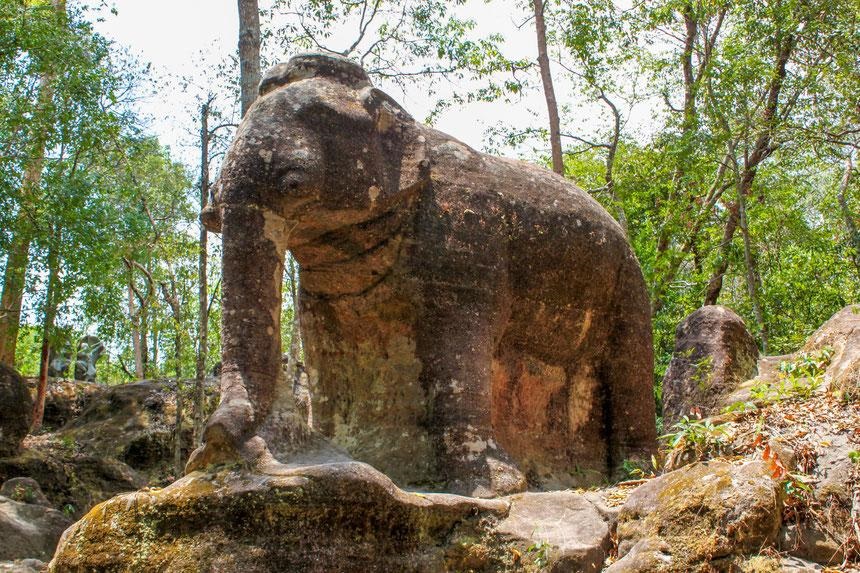
| Srah Damrei (Elephant Pond) | Remote sandstone animal carvings; access may require a local guide and a difficult walk | Allow extra time; confirm access locally |
| Mahendraparvata archaeological landscape | Explore the early Khmer urban landscape associated with Phnom Kulen | Depends on the sites and route selected |
These locations are not all equally accessible. Some involve forest trails, uneven ground, or separate arrangements, so avoid assuming every attraction can be visited comfortably in one day.
12. Responsible Travel and Safety Tips
Phnom Kulen is both a natural attraction and a sacred landscape. Help protect it by following these simple guidelines:
- Respect local religious customs and dress appropriately when entering pagodas.
- Follow swimming instructions and stay away from dangerous currents.
- Do not climb on fragile archaeological carvings or damage stone surfaces.
- Take rubbish with you and keep the water clean.
- Follow your driver's instructions about mountain-road traffic restrictions.
- Confirm access conditions after heavy rain.
- Give yourself enough time to return safely rather than rushing to fit in too many attractions.
Frequently Asked Questions
Is Phnom Kulen Waterfall worth visiting?
Yes, especially if you want a break from temple sightseeing. It offers a combination of natural scenery, swimming opportunities, picnic areas, and access to a historically important mountain landscape.
How far is Phnom Kulen Waterfall from Siem Reap?
It is approximately 48–50 km from Siem Reap, with a typical journey of around 1.5–2 hours each way. Actual travel time depends on the route, vehicle, and road conditions.
How much is the entrance fee?
Foreign visitors are commonly quoted around US$20 per person for Phnom Kulen National Park. Confirm the current price and ticket-purchasing procedure before traveling.
Is Phnom Kulen Waterfall included in the Angkor Pass?
No. Phnom Kulen has a separate admission arrangement and is not covered by the standard Angkor Archaeological Park pass.
Can visitors swim at Phnom Kulen Waterfall?
Swimming is commonly enjoyed in designated natural pools when conditions permit. Check local safety guidance, avoid strong currents, and be especially cautious after heavy rain.
When is the waterfall at its strongest?
It generally has more water during and after periods of substantial rainfall. The exact flow varies from year to year, so check recent local conditions if seeing a powerful waterfall is your priority.
Can I visit Phnom Kulen Waterfall without a guide?
Independent visits may be possible with suitable transport and advance planning. However, a local driver or guide can help with mountain-road restrictions, navigation, and combining attractions.
Is Phnom Kulen suitable for children?
It can be a rewarding family outing, but children need close supervision around water, slippery rocks, and steps. Choose swimming areas carefully and avoid dangerous sections of the cascade.
TravelKH Tip
For a more complete Phnom Kulen experience, combine the waterfall with Preah Ang Thom and the River of a Thousand Lingas. Start early, confirm the mountain-road schedule, and leave enough time for the return journey.
If your main goal is swimming and relaxing, prioritize the waterfall rather than trying to visit every remote archaeological site in one day.