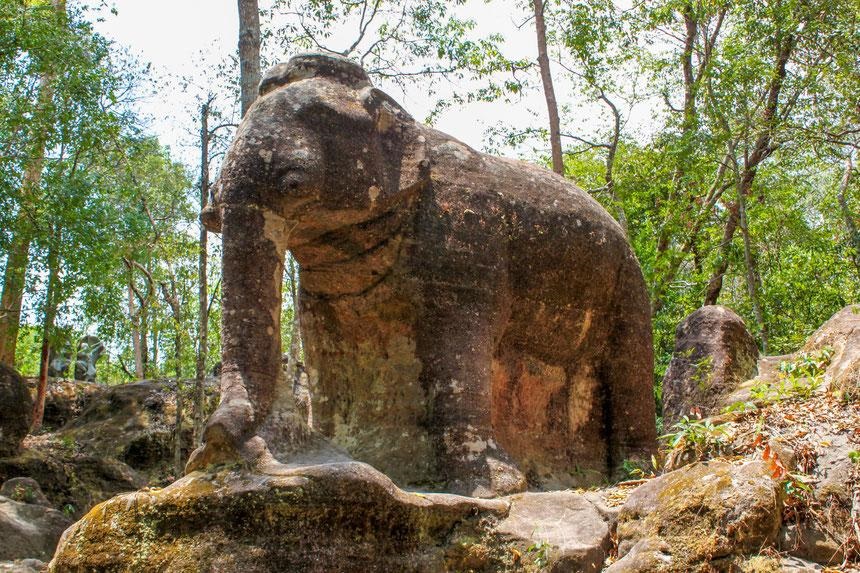

Deep in the forest of Phnom Kulen, away from the mountain's popular waterfall and pilgrimage sites, lies Srah Damrei, also known as Elephant Pond. This remote archaeological site is famous for its enormous animal sculptures carved directly from natural sandstone.
Visitors who make the journey can discover an impressive stone elephant, lion sculptures and other carved figures set within a forested landscape overlooking the Cambodian plains.
Srah Damrei is not an easy stop to add to a standard Phnom Kulen sightseeing tour. The approach involves rough forest trails, and current access should be confirmed with a knowledgeable local guide. For travelers interested in early Khmer art, remote heritage sites and outdoor exploration, however, it can be one of the mountain's most memorable destinations.
Quick Facts
| Information | Details |
|---|---|
| Name | Srah Damrei |
| Khmer Name | ស្រះដំរី |
| English Name | Elephant Pond |
| Location | Phnom Kulen, Svay Leu District, Siem Reap Province |
| Type | Ancient archaeological and sculptural site |
| Estimated Period | Often associated with the 8th–9th centuries; exact dating remains uncertain |
| Main Attractions | Sandstone elephant, lions, other animal carvings and a viewpoint |
| Setting | Forest, sandstone outcrops and countryside views |
| Recommended Visit | Allow several hours for the trail and exploration |
| Difficulty | Challenging; requires preparation |
| Access | Guided forest trail or locally confirmed route |
| Ticket | Phnom Kulen access arrangements apply; confirm current fees and whether any additional charges apply |
The archaeological reference site Hello Angkor places Srah Damrei in Thmei Village, Khnang Phnum Commune, Svay Leu District, Siem Reap Province. It describes the animal sculptures as carved from naturally formed sandstone and tentatively dates them to around the 8th–9th centuries.
History of Srah Damrei
An early Khmer sacred landscape
Phnom Kulen has a special place in Cambodian history. It is associated with Mahendraparvata, an early Khmer capital linked to King Jayavarman II and the formation of the Khmer Empire in the early 9th century.
The mountain contains numerous archaeological sites, ancient temples and sacred landscapes that developed over different periods. Srah Damrei is one of the less accessible places that reveal this wider heritage beyond the best-known Angkor monuments.
When were the sculptures created?
The animal carvings are commonly associated with the early Khmer period, often described as dating to the 8th or 9th century. However, the exact date and original purpose of each sculpture have not been conclusively established.
The site was documented by French archaeologist Henri Parmentier in the 1920s. Later archaeological work and restoration have helped researchers record the sculptures and their surroundings.
Why is it called Elephant Pond?
The Khmer name Srah Damrei is commonly translated as “Elephant Pond.” Despite the name, the site's main attraction today is not a conventional water-filled pond. It is the monumental animal sculpture group and the surrounding sandstone landscape.
What Makes Srah Damrei Special?
1. The monumental stone elephant
The elephant is the site's signature sculpture. Carved from sandstone, it stands out for its scale and the way it is integrated into the natural rock landscape.
Rather than being a modern statue placed on a pedestal, the sculpture is associated with the mountain's natural sandstone formations, giving it a distinctive archaeological character.
2. The stone lions
Two lion figures accompany the elephant sculpture group. These carvings are among the most interesting features for visitors studying early Khmer sculpture and its representations of animal guardians.
Look closely at the shapes and details, but avoid touching fragile carved surfaces unnecessarily.
3. Other animal figures
The site also contains another figure that is sometimes interpreted as a frog, although its identification is uncertain. A carved bull associated with Nandin is also described at the site.
Because some animal identifications are interpretations rather than confirmed facts, visitors should treat them as part of the site's ongoing archaeological interest.
4. The sandstone landscape
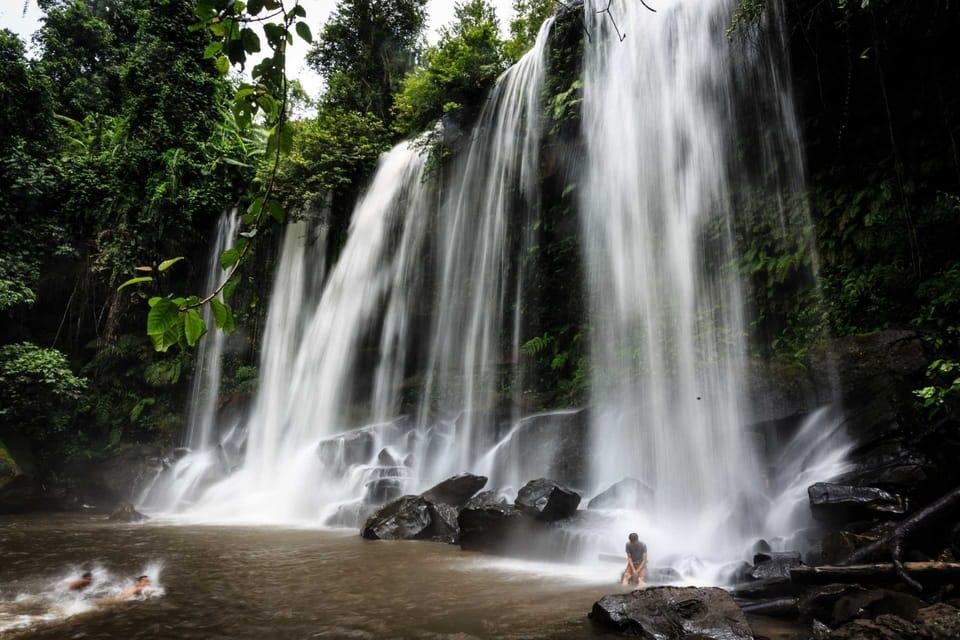
Srah Damrei's setting is as memorable as the sculptures themselves. Large rock formations, trees and forest vegetation surround the carvings, creating a sense of discovery far removed from the main tourist circuit.
5. Views across the plains
A nearby cliff-edge viewpoint offers views across the lower landscape and surrounding countryside when visibility is good.
Take care around the edge, stay on safe ground and follow local guidance, especially after rain.
Location: Where Is Srah Damrei?
Srah Damrei is located on Phnom Kulen in Siem Reap Province, approximately 5.5 kilometres southwest of Anlong Thom village according to the archaeological site reference Hello Angkor.
Phnom Kulen lies north of Siem Reap town and is generally visited as a day trip. However, Srah Damrei is much more remote than the mountain's main visitor attractions, such as Preah Ang Thom and Phnom Kulen Waterfall.
Do not rely on the driving distance to the mountain entrance as an indication of how long it takes to reach the sculpture site.
Road Conditions & Accessibility
This is the most important section to read before planning a visit. Srah Damrei is not a simple roadside attraction.
The approach route
The route described by Hello Angkor leaves the main sealed road across the Phnom Kulen plateau and follows smaller forest trails. These trails can include loose sand, water crossings and steep, rocky sections. The source recommends visiting with a guide familiar with the area.
Recommended transport
- Local guide: Strongly recommended for route-finding, safety and understanding the archaeological sites.
- Motorbike: May be suitable for experienced riders when trail conditions permit, but is not a reliable choice in every season.
- Private car or van: Useful for reaching the mountain and meeting a local guide, but should not be assumed capable of reaching the sculpture site itself.
- Walking: Expect a substantial walk if the final route cannot be completed by vehicle. Confirm the current trail and walking distance before departure.
Do not assume a standard tuk-tuk can reach the site.
Rainy-season risks
Rain can make the trail muddy, slippery and difficult to navigate. Water crossings, loose ground and erosion may increase the difficulty.
Some historical travel descriptions warn that parts of the route can become impassable during the wet season. Current trail conditions must be checked locally rather than inferred from older reports.
Accessibility and safety
Srah Damrei is not suitable for visitors who require step-free access or have difficulty walking over rough ground.
Before setting out:
- Confirm whether the trail is currently open and passable.
- Ask the guide how much walking is expected.
- Wear sturdy shoes with good grip.
- Bring sufficient drinking water, sun protection and insect repellent.
- Carry a charged phone and arrange a clear return plan.
- Do not leave established routes or explore unverified tracks.
- Stay away from cliff edges and unstable rocks.
TravelKH advice: Book through a knowledgeable local guide or the Anlong Thom Community-Based Tourism Centre where available. The Archaeology and Development Foundation describes community-based tourism initiatives in Anlong Thom and Popel that help visitors explore Phnom Kulen while supporting local communities.
Opening Hours
I could not verify a reliable official daily opening schedule specifically for Srah Damrei.
Because access involves remote trails, visiting arrangements may depend on weather, local guidance and conservation restrictions. Plan for a daylight visit and confirm the current route and permitted access before travelling.
Do not plan to arrive late in the afternoon without a confirmed return arrangement.
Entrance Fee
Srah Damrei is located within the Phnom Kulen protected landscape, where separate mountain access arrangements apply. An Angkor Pass should not be assumed to cover Phnom Kulen.
The current Phnom Kulen admission price and any guide, transport or community-tour charges should be confirmed before the trip. Older online prices may be outdated.
Ask for an itemized quote that makes clear whether it includes:
- Phnom Kulen admission
- Guide services
- Motorbike or other local transport
- Any additional trail or community-tour charges
Best Time to Visit Srah Damrei
Dry-season conditions
The drier months are generally more convenient for planning a forest-trail excursion. Even then, rough ground and loose sand can make the approach challenging.
Rainy season
Rain can make the trail significantly more difficult. Do not proceed simply because the mountain's main road is open; the smaller trail to Srah Damrei may have different conditions.
Best time of day
Start early enough to complete the approach, explore the site and return safely in daylight. Your guide should advise on the departure time based on current conditions.
What to See and Do
Explore the animal sculptures
Take time to observe the elephant, lions and other carved figures from different angles. Avoid climbing on the sculptures or placing objects on them.
Learn about early Khmer art
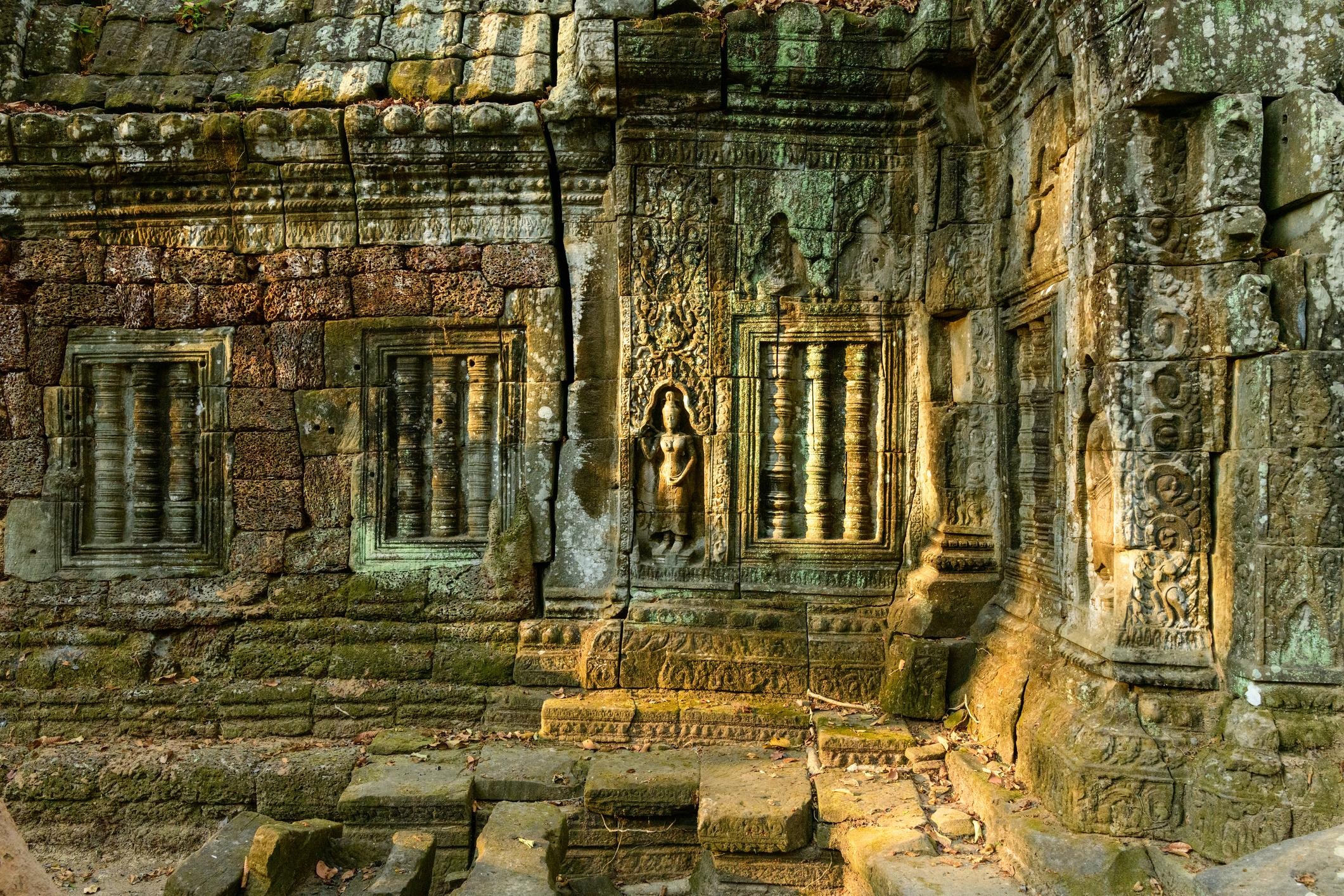
Ask your guide about the possible dating, carving techniques and interpretations of the animal imagery. Some details remain uncertain, making the site an interesting place to discuss how archaeologists interpret ancient remains.
Enjoy the forest setting
The forest is part of the site's character. Walk carefully, respect wildlife and avoid leaving rubbish behind.
Visit the viewpoint
If your guide confirms that the viewpoint is accessible and safe, take time to appreciate the views across the plains. Do not approach an unprotected cliff edge for photographs.
Explore other remote Kulen sites
If trail conditions and your available time permit, ask whether nearby archaeological sites can be included in the same guided excursion.
Possible stops along the broader forest trail network include Damrei Krap and other remote Kulen archaeological remains. These should be planned as a guided route rather than approached independently.
How Long Should You Spend at Srah Damrei?
Allow several hours for the excursion, rather than treating it as a 20-minute temple stop.
The total time depends on the trail condition, transport arrangements, walking distance and whether you visit additional sites. Ask your guide for a realistic estimate before leaving the main road.
| Visit Type | Planning Advice |
|---|---|
| Srah Damrei only | Allow several hours for the approach, visit and return |
| Srah Damrei with nearby ruins | Allow additional time and confirm the full route |
| Combined Phnom Kulen day trip | Plan the main mountain attractions around the remote trail excursion |
These are planning recommendations, not official visit durations.
Suggested Phnom Kulen Itinerary
Srah Damrei requires more preparation than the mountain's main attractions. If you want to combine it with other stops, confirm the schedule with your guide first.
| Stop | What to Experience |
|---|---|
| Preah Ang Thom | Visit the sacred pagoda and reclining Buddha |
| River of a Thousand Lingas | Explore the carved riverbed, if included in your route |
| Phnom Kulen Waterfall | Enjoy the waterfall area if time and conditions permit |
| Srah Damrei | Explore the monumental animal sculptures on a guided trail |
This is an example of possible destinations, not a guarantee that all four can comfortably fit into one day. The remote trail may require most of the available time, so do not attempt to squeeze every attraction into a fixed schedule.
Practical Tips for Visitors
- Arrange a guide in advance. Do not rely on finding a guide after reaching a remote trailhead.
- Wear sturdy walking shoes. Sandals and smooth-soled shoes are not ideal for loose or rocky ground.
- Carry enough water. Do not assume refreshments will be available near the sculptures.
- Bring insect repellent and sun protection.
- Keep your phone charged. Mobile coverage may be limited along remote trails.
- Avoid the route after heavy rain unless local guides confirm it is safe.
- Respect archaeological remains. Do not climb, scratch, move or remove stones.
- Confirm Phnom Kulen access fees separately from Angkor tickets.
- Leave enough daylight for the return journey.
Nearby Attractions
| Attraction | Why Visit |
|---|---|
| Damrei Krap | A remote archaeological site associated with a kneeling elephant sculpture |
| Phnom Kulen Waterfall | A popular natural attraction on the mountain |
| Preah Ang Thom | A major Buddhist pilgrimage site with a reclining Buddha |
| River of a Thousand Lingas | Ancient carvings in a riverbed |
| Mahendraparvata archaeological landscape | Early Khmer urban and religious heritage |
| Other Kulen forest temples | Remote remains best explored with local guidance |
These attractions are spread across the mountain, and distances between them can be substantial. Confirm the order and accessibility of each stop before planning a route.
Frequently Asked Questions
Is Srah Damrei worth visiting?
Yes, for travelers interested in archaeology, early Khmer sculpture and remote forest destinations. The sculptures are distinctive, but the difficult approach means it is not the best choice for every visitor.
Is Srah Damrei a real pond?
The name is commonly translated as Elephant Pond, but the main attraction today is the group of carved animal sculptures and the surrounding sandstone landscape.
How old are the sculptures?
They are often tentatively dated to the 8th–9th centuries, but the precise date is not conclusively established.
Can I drive directly to Srah Damrei?
Do not assume that you can. The final approach involves smaller forest trails, and vehicle access depends on conditions. Confirm the route with a local guide before setting out.
Is Srah Damrei suitable for children?
It depends on the child's age, fitness and experience with outdoor walking. The rough trail, water crossings and remote setting may make it unsuitable for young children or families seeking an easy excursion.
Can I visit during the rainy season?
Possibly, but the trail can become muddy, slippery or impassable. Ask a local guide to assess conditions before departure and be prepared to postpone the trip.
Is Srah Damrei covered by the Angkor Pass?
Do not assume so. Srah Damrei is on Phnom Kulen, which has separate visitor access arrangements. Verify current fees before travelling.
TravelKH Tip
Treat Srah Damrei as a guided outdoor expedition, not an ordinary temple stop.
Its carved elephant and lion sculptures offer a rare glimpse into Phnom Kulen's ancient artistic landscape, but the route requires planning, suitable footwear and a realistic schedule.
If you are developing a complete Phnom Kulen guide for TravelKH.com, link this article to your pages about Phnom Kulen Waterfall, Preah Ang Thom, the River of a Thousand Lingas and Damrei Krap. This helps readers understand the wider mountain landscape while making clear that Srah Damrei is one of the more difficult sites to reach.