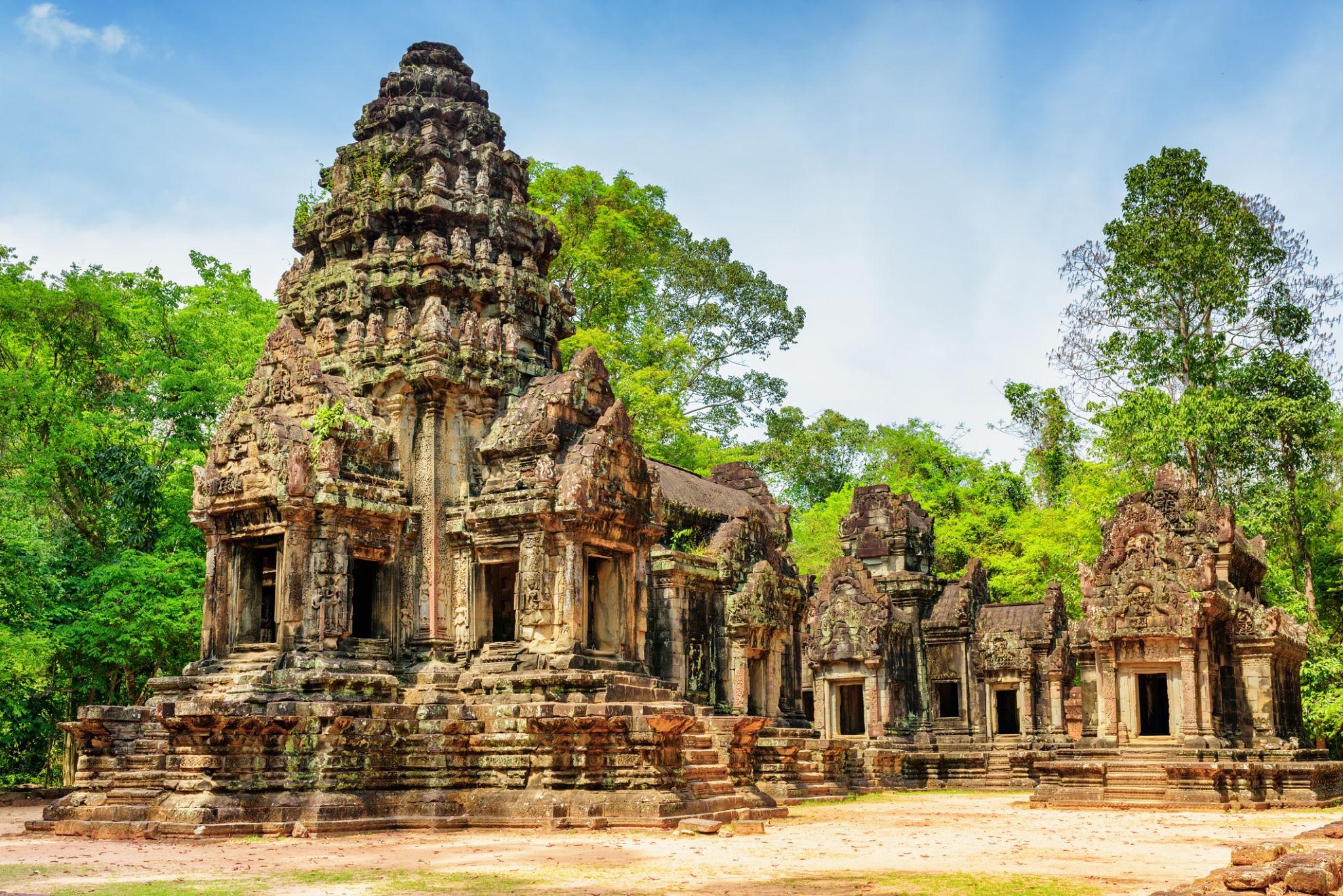

Hidden among the forest of the Angkor Archaeological Park, Ta Nei Temple is one of the quieter and more atmospheric temples in Siem Reap.
Unlike Angkor Wat or Ta Prohm, Ta Nei is small, partly ruined and tucked away from the main tourist routes. Its narrow forest approach, moss-covered stones, Buddhist carvings and peaceful surroundings make the journey feel more like discovering a forgotten part of Angkor than visiting a major tourist attraction.
If you enjoy photography, ancient ruins, nature or less-crowded places, Ta Nei is well worth adding to your Angkor itinerary.
Quick Facts
| Information | Details |
|---|---|
| Temple | Ta Nei Temple |
| Khmer Name | ប្រាសាទតានៃ |
| Location | Angkor Archaeological Park, Siem Reap |
| Period | Late 12th century |
| King | Jayavarman VII |
| Religion | Buddhism |
| Architectural Style | Bayon |
| Main Material | Sandstone |
| Size | Approximately 55 × 47 metres |
| Atmosphere | Quiet, forested and partly ruined |
| Recommended Visit | 45–60 minutes |
| Entrance | Covered by the Angkor Pass |
APSARA National Authority identifies Ta Nei as a Buddhist temple built under Jayavarman VII, dating to the end of the 12th century and belonging to the Bayon style.
History of Ta Nei Temple
Ta Nei was constructed during the reign of King Jayavarman VII, one of the most important rulers of the Khmer Empire.
Jayavarman VII was a Buddhist king responsible for numerous major construction projects at Angkor, including temples, roads, reservoirs and other public works.
Ta Nei is considerably smaller than many of his better-known monuments, but its architecture reflects the artistic characteristics of the period.
The temple was also extended more than once, resulting in a complex layout with several galleries, entrance structures and enclosed areas. APSARA notes that Buddhist-inspired pediments and lintels survive at the site.
Some sources have suggested that Ta Nei may have had a connection with the network of hospitals established during Jayavarman VII's reign. However, this interpretation should be treated cautiously rather than presented as a confirmed fact.

What Makes Ta Nei Special?
1. It is hidden in the forest
The location is one of Ta Nei's biggest attractions.
APSARA describes a narrow forest road winding through ficus trees and vines to reach the temple. The secluded setting helps create a very different atmosphere from the crowded major temples.
You may hear birds and insects rather than tour groups.
2. It feels like a genuine ruin
Ta Nei has not been transformed into a highly polished tourist attraction.
Parts of the temple remain collapsed or weathered, with vegetation surrounding the sandstone structures.
This gives visitors a chance to see a more rugged side of Angkor.
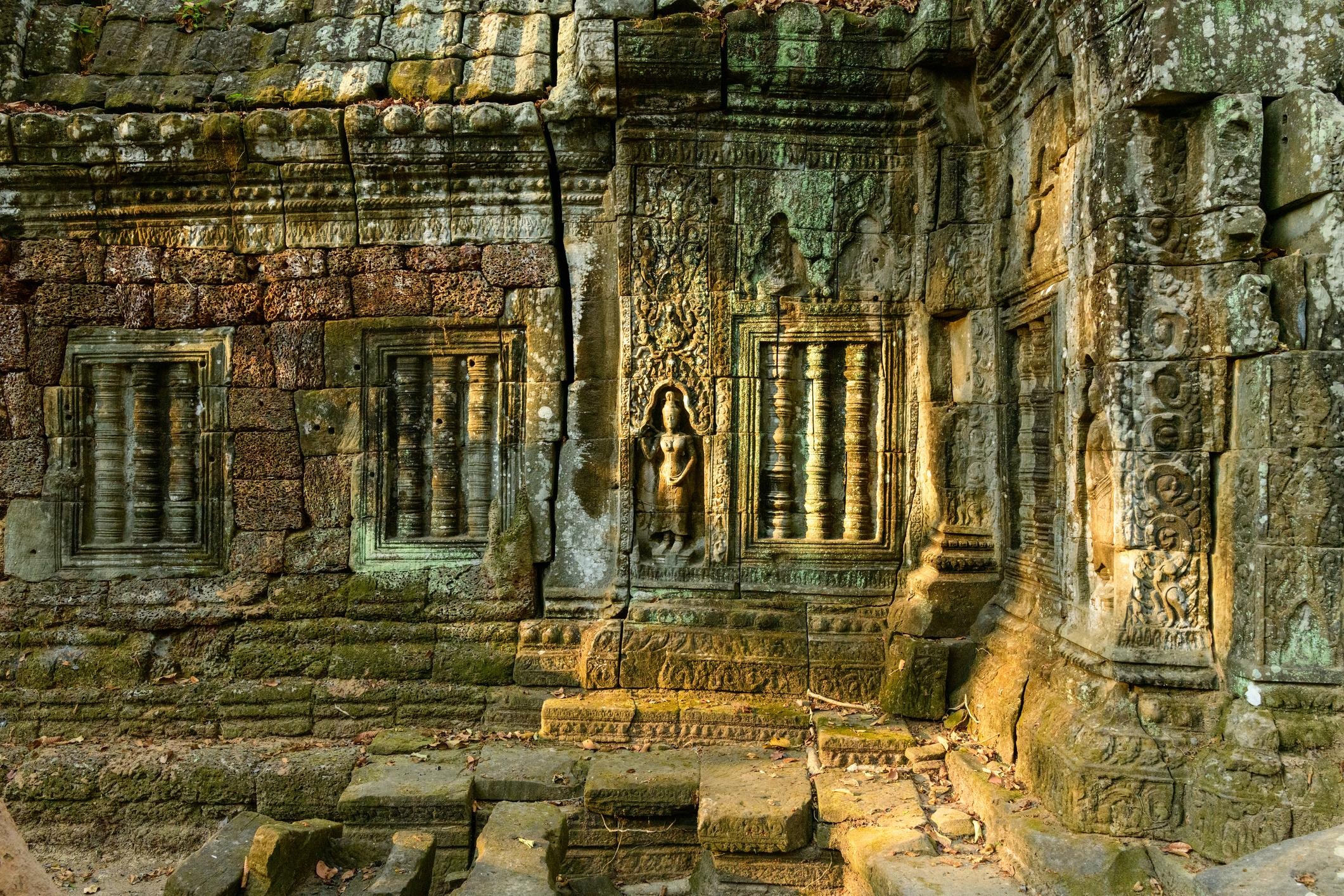
3. Buddhist carvings
Look carefully at the lintels and pediments.
Several decorative elements contain Buddhist-inspired imagery, while surviving architectural details show the artistic characteristics of the Bayon period.
4. Very few crowds
Ta Nei is one of the better choices for travelers who want to escape the busiest Angkor sites.
Its narrow approach is not suitable for large tour buses, which helps explain why it receives fewer visitors than temples such as Angkor Wat, Bayon and Ta Prohm.
Location
Ta Nei is located inside the Angkor Archaeological Park, in the forest north of Ta Keo and near Ta Prohm.
It is relatively close to the better-known temples but feels much more remote because it is set away from the main road.
The temple is approximately 55 × 47 metres, making it a relatively compact monument.
Road Conditions & Accessibility
Ta Nei is one of the Angkor temples where the access road is part of the experience.
Main approach
APSARA describes the approach as a narrow road through the forest. The Ministry of Tourism has also reported that the main road connecting Ta Nei with the Grand Circuit near Ta Keo has been closed at times, requiring visitors to continue on foot from the end of the accessible road.
Because access arrangements can change, visitors should not assume that a vehicle can drive directly to the temple entrance.
What vehicle is best?
A:
- Tuk-tuk
- Motorcycle
- Bicycle
- Private car with an experienced driver
may all be practical depending on current road conditions.
For first-time visitors, a local driver or guide familiar with Ta Nei's current access route is recommended.
Road surface
The approach can include unpaved or dirt forest tracks, and conditions may be rougher than the main Angkor circuits.
An Angkor heritage planning document notes that the park contains paved, laterite and compacted-dirt roads, with some less-developed paths used mainly by local traffic and smaller vehicles.
Rainy season
Rain can make dirt tracks muddy and slippery. Water, mud, fallen leaves and uneven ground can also make the final walking section more difficult.
Wear shoes with good grip and allow extra time.
Walking inside the temple
The temple itself contains uneven archaeological surfaces, stones and partially ruined structures.
Do not climb unstable ruins or walk underneath visibly loose stones.
TravelKH advice: Ta Nei's exact access route can change because of conservation work, weather or road conditions. Confirm the current route with your driver, guide or APSARA before travelling.
Opening Hours
APSARA currently lists Ta Nei as open:
7:30 AM – 5:30 PM
and recommends approximately 45 minutes to 1 hour for the visit.
General Angkor opening arrangements can change, so visitors should confirm current access before making a special trip to Ta Nei.
Entrance Fee
Ta Nei is located within the Angkor Archaeological Park.
There is normally no separate Ta Nei admission fee; visitors use the applicable Angkor Archaeological Park pass.
The official Angkor Enterprise ticket office is the designated ticket point for Angkor passes.
For current ticket prices and eligibility, check the official Angkor Enterprise information before visiting.
Best Time to Visit Ta Nei
November to February
The cooler months are generally more comfortable for exploring the temples and walking through the forest.
Rainy season
The rainy season can make access more challenging, but it can also enhance Ta Nei's atmosphere.
Wet stone, green vegetation and moss can make the temple particularly photogenic.
However, visitors should expect muddy or slippery sections and verify road conditions before going.
Best time of day
Morning is a good choice for:
- Cooler temperatures
- Softer light
- Photography
- A quieter atmosphere
Late afternoon can also be atmospheric, but always allow enough time to leave the forest area before closing.
What to See at Ta Nei
Central Sanctuary
The central sanctuary forms the heart of the temple complex.
Take time to walk around it and look at the architectural details rather than viewing only the entrance.
Buddhist Pediments
Several pediments contain Buddhist-related imagery.
These are among Ta Nei's most interesting surviving artistic features.
Stone Lintels
Look for decorated lintels around the sanctuary and entrance structures.
Some surviving pieces are remarkably detailed considering the temple's relatively exposed and weathered condition.
Forest and Ruins
The combination of trees, vegetation and ancient sandstone is one of Ta Nei's biggest attractions.
The surroundings provide a much more natural atmosphere than the cleared spaces around some of Angkor's major monuments.

Old Moats and Enclosures
Remains of former moat or basin features can be seen around the temple.
The complex also contains multiple enclosure structures and gopuras, giving visitors an idea of how much larger and more organized the original religious complex was.
How Long Should You Spend at Ta Nei?
Allow approximately:
45–60 minutes
for a relaxed visit.
If you are interested in photography or archaeology, you may want to spend longer.
Remember to include additional time for the approach if current road conditions require walking.
Ta Nei vs Ta Prohm
If you enjoyed Ta Prohm, Ta Nei is worth considering as a quieter alternative.
| Feature | Ta Nei | Ta Prohm |
|---|---|---|
| Size | Small | Large |
| Crowds | Usually low | Often busy |
| Forest setting | Strong | Very strong |
| Restoration | More limited/ruined | Major conservation work |
| Photography | Excellent | Excellent |
| Access | More difficult | Much easier |
| Visit time | 45–60 min | 1–2 hours |
| Atmosphere | Quiet & secluded | Dramatic & popular |
Ta Nei should not be considered a replacement for Ta Prohm if this is your first Angkor visit. Instead, it works well as an additional stop for travelers who have more time.
Suggested Itinerary
Option 1: Ta Keo + Ta Nei
| Stop | Suggested Time |
|---|---|
| Ta Keo | 30–45 min |
| Ta Nei | 45–60 min |
| Ta Prohm | 1–1.5 hr |
| Srah Srang | 20–30 min |
Option 2: Quiet Angkor Exploration
| Stop | Suggested Time |
|---|---|
| Ta Prohm | 1–1.5 hr |
| Ta Nei | 45–60 min |
| Ta Keo | 30–45 min |
| Chau Say Tevoda | 20–30 min |
| Thommanon | 20–30 min |
This combination is especially useful for travelers who want to explore smaller temples instead of spending the entire day at the most famous sites.
Practical Tips
- Wear shoes with good grip. The forest approach and temple grounds can be uneven.
- Bring insect repellent. Ta Nei is surrounded by forest.
- Carry water. There may be fewer visitor facilities immediately around the temple.
- Avoid climbing ruins. Some structures are unstable or fragile.
- Use a local driver or guide if unfamiliar with the route.
- Allow extra time during the rainy season.
- Check the access route before leaving Siem Reap.
- Visit with respect. Ta Nei remains an important archaeological and religious heritage site.
Who Should Visit Ta Nei?
Ta Nei is especially suitable for:
- Photographers
- History enthusiasts
- Temple lovers
- Travelers who dislike crowds
- Visitors staying several days in Siem Reap
- Travelers interested in lesser-known Angkor temples
- People who enjoyed Ta Prohm and want a quieter jungle experience
It may be less suitable for visitors with limited mobility because of the rough approach and uneven archaeological terrain.
Nearby Attractions
| Attraction | Why Visit |
|---|---|
| Ta Prohm | Famous jungle temple |
| Ta Keo | Large unfinished temple mountain |
| Srah Srang | Historic royal reservoir |
| Banteay Kdei | Atmospheric Buddhist temple |
| Chau Say Tevoda | Small, elegant Angkor Wat-style temple |
| Thommanon | Compact temple with detailed carvings |
Frequently Asked Questions
Is Ta Nei Temple worth visiting?
Yes, particularly if you prefer quiet, atmospheric and less-touristed temples. Its forest setting and partially ruined architecture are the main attractions.
Is Ta Nei included in the Angkor Pass?
Yes. Ta Nei is located inside the Angkor Archaeological Park and is generally visited using the applicable Angkor Pass.
Can I drive directly to Ta Nei?
Do not assume so. Access routes and vehicle restrictions can change. Historical information from the Ministry of Tourism has documented closures of the main vehicle approach, while APSARA describes a narrow forest road to the temple. Check current conditions locally before travelling.
How long should I spend at Ta Nei?
Around 45–60 minutes is a good starting point, with additional time if you need to walk part of the approach.
Is Ta Nei similar to Ta Prohm?
It shares the forest-and-ruins atmosphere of Ta Prohm, but Ta Nei is much smaller and significantly quieter.
Is Ta Nei suitable for children?
Older children who are comfortable walking on uneven ground should generally enjoy it. Keep younger children close because of uneven stones and partially ruined structures.
What should I bring?
Bring water, insect repellent, sun protection and comfortable shoes with good grip. A flashlight or phone light can also be useful around darker areas, but do not enter unsafe or restricted spaces.
TravelKH Tip
Ta Nei is for travelers who want to slow down.
Don't treat it as another temple to tick off your list. Take time to listen to the forest, look closely at the surviving carvings and notice how vegetation has reclaimed parts of the ancient structure.
If you have already visited Ta Prohm, Ta Nei gives you a chance to experience the jungle-temple atmosphere without the same level of crowds.