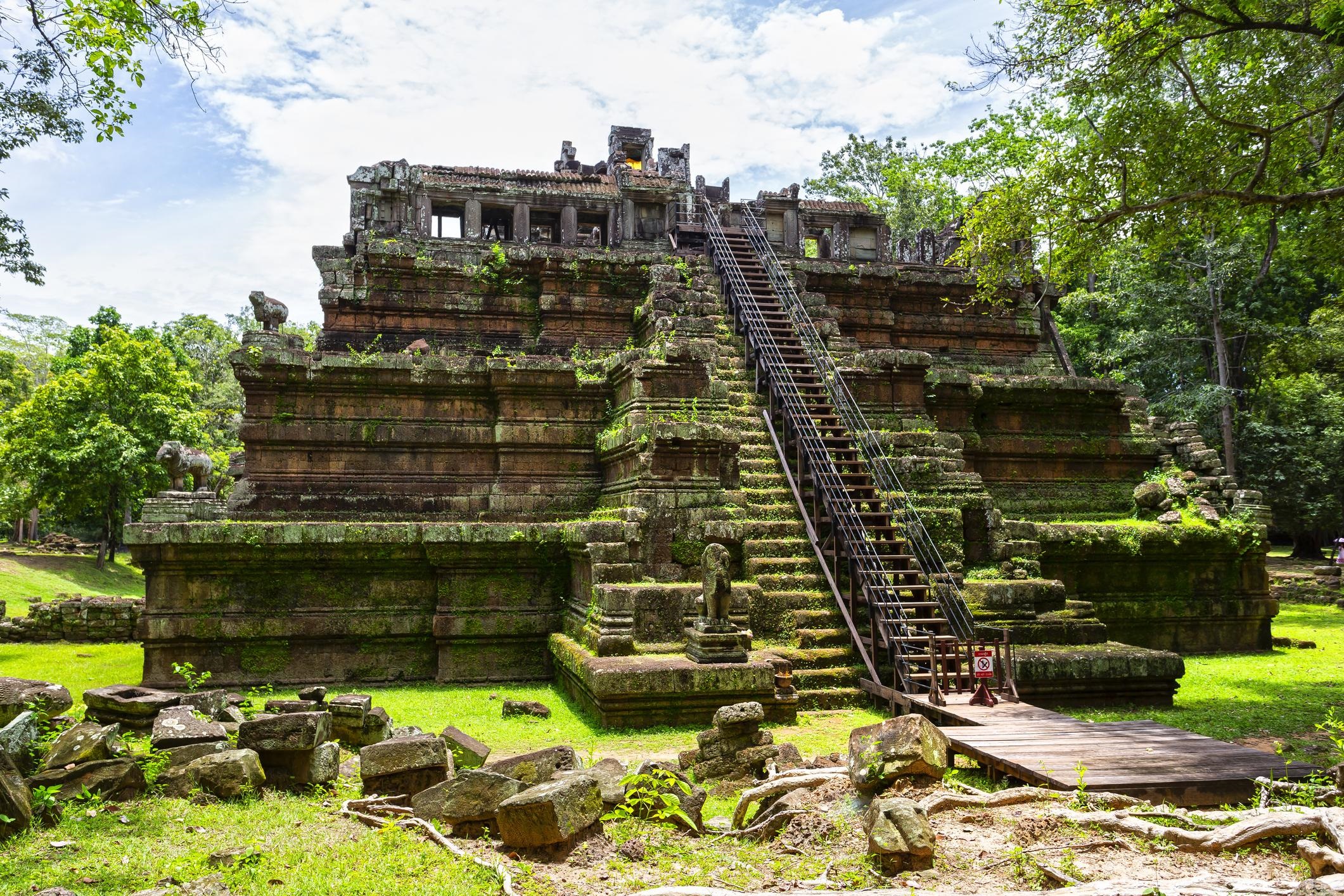

Hidden inside the ancient Royal Palace enclosure of Angkor Thom, Phimeanakas Temple (ប្រាសាទភិមានអាកាស) is one of the quieter historical sites in the Angkor Archaeological Park.
Unlike Angkor Wat or Bayon, Phimeanakas is not famous for huge galleries or extensive bas-reliefs. Its importance comes from its role as a royal sanctuary, its three-tiered pyramid architecture, and the legends surrounding the Khmer kings who once lived and ruled in Angkor.
The temple is especially worth visiting as part of an Angkor Thom itinerary, together with Baphuon, the Terrace of the Elephants, the Terrace of the Leper King, and the Royal Palace area.

Quick Facts
| Detail | Information |
|---|---|
| Khmer name | ប្រាសាទភិមានអាកាស |
| English name | Phimeanakas Temple |
| Meaning | Often interpreted as “Celestial Palace” or “Heavenly Palace” |
| Location | Royal Palace enclosure, Angkor Thom, Siem Reap |
| Period | Late 10th–early 11th century |
| Main architectural style | Khleang |
| Religion | Hinduism |
| Main materials | Laterite and sandstone |
| Architecture | Three-tiered pyramid |
| Historical role | Royal sanctuary within the Royal Palace |
| Typical visit | About 20–45 minutes |
| Entrance | Included in the Angkor Archaeological Park ticket |
| Opening information | APSARA lists 7:30 AM–5:30 PM; current site access should be checked before visiting |
APSARA describes Phimeanakas as a temple inside the Royal Palace of Angkor Thom and dates its main construction to around the 10th century.
History of Phimeanakas
Phimeanakas has a complicated construction history. Recent information published by the APSARA National Authority explains that construction began in the late 10th century under King Rajendravarman II and was completed in the early 11th century under King Suryavarman I.
The temple stood at the center of the ancient Royal Palace complex and was closely associated with the king.
The wider Royal Palace occupied a large area, measuring approximately 581 meters long and 242 meters wide, according to APSARA. Phimeanakas therefore should not be viewed as an isolated temple—it was part of a much larger royal landscape.
Architecture: A Three-Tiered Temple Mountain
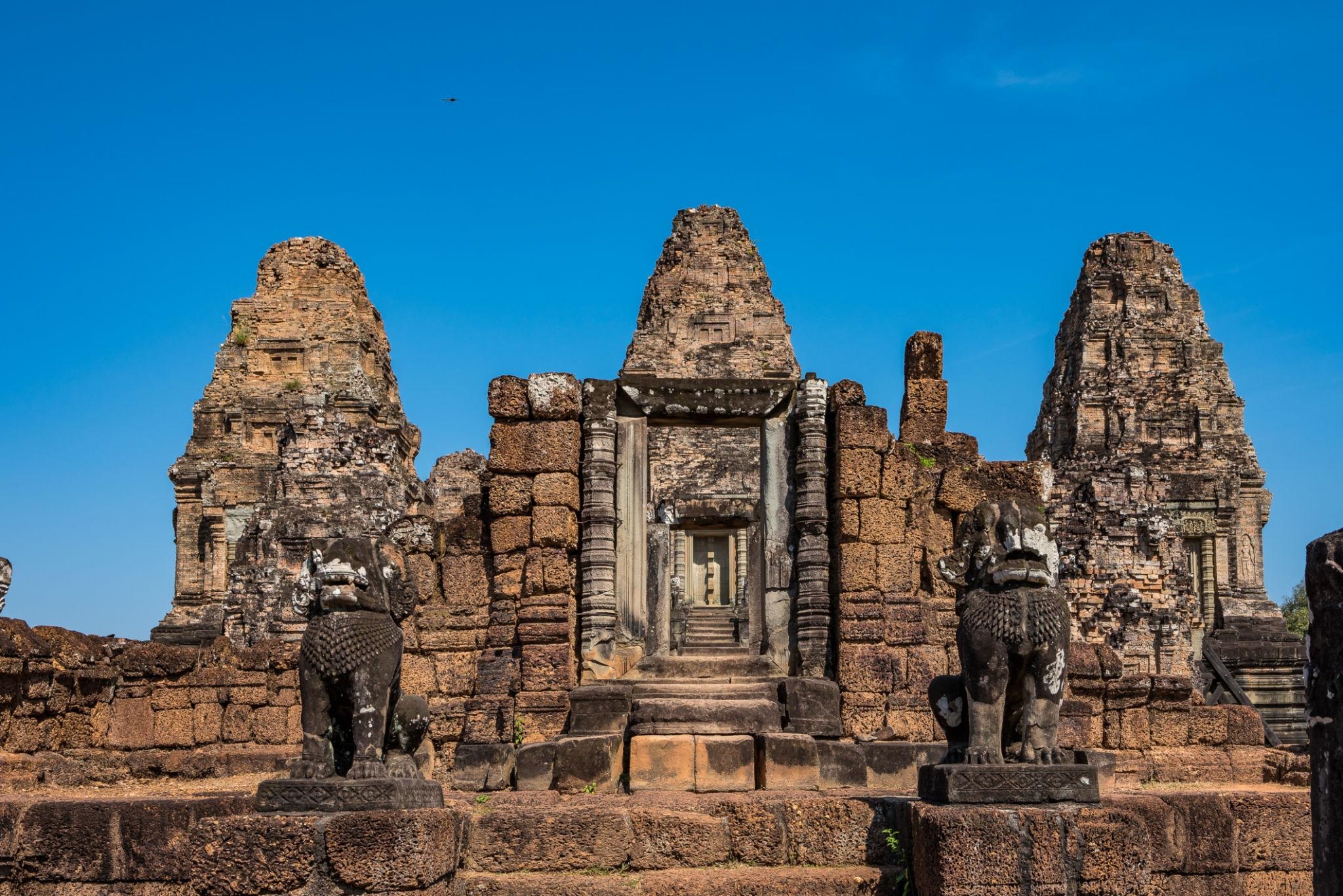
Phimeanakas has a distinctive three-level pyramid form.
The lower structure is mainly constructed from laterite, while sandstone was used for important upper elements. At the corners are stone elephant sculptures, while lion figures guard the steep stairways.
Its design reflects the ancient Hindu concept of Mount Meru, the sacred cosmic mountain believed to be the dwelling place of the gods.
The steep staircases on the four sides make the temple particularly recognizable. However, visitors should not assume that reaching the uppermost level is always permitted. Access to the upper structure can be restricted for conservation and safety reasons.
The Legend of the Nine-Headed Naga
One of the most famous stories connected with Phimeanakas comes from Zhou Daguan, a Chinese envoy who visited Angkor in 1296–1297.
According to his account, a supernatural nine-headed naga was believed to appear in human form at the temple each night.
The Khmer king was traditionally said to meet this naga before returning to his royal palace. If the naga failed to appear, it was believed to be a warning that something was wrong with the kingdom.
Whether understood as literal belief, mythology, or a symbolic expression of royal authority, the story demonstrates how deeply Phimeanakas was connected with the spiritual legitimacy of the Khmer king.
APSARA and other historical sources continue to highlight this legend as one of the temple's defining stories.
What Makes Phimeanakas Special?
1. It was part of the Royal Palace
Phimeanakas stood within the royal enclosure rather than functioning simply as a public temple. This gives the site a different historical character from monuments such as Angkor Wat.
2. Its unusual pyramid shape
The three-tiered laterite pyramid creates a strong geometric appearance. The structure is less heavily decorated than many famous Angkor temples, allowing visitors to focus on its form and historical function.
3. The Naga legend
The story recorded by Zhou Daguan gives Phimeanakas an unusually dramatic connection with Khmer royal history.
4. A quieter Angkor experience
Compared with Bayon and Angkor Wat, Phimeanakas can feel considerably more peaceful, particularly when visited as part of the Royal Palace area.
5. Royal ponds and surrounding ruins
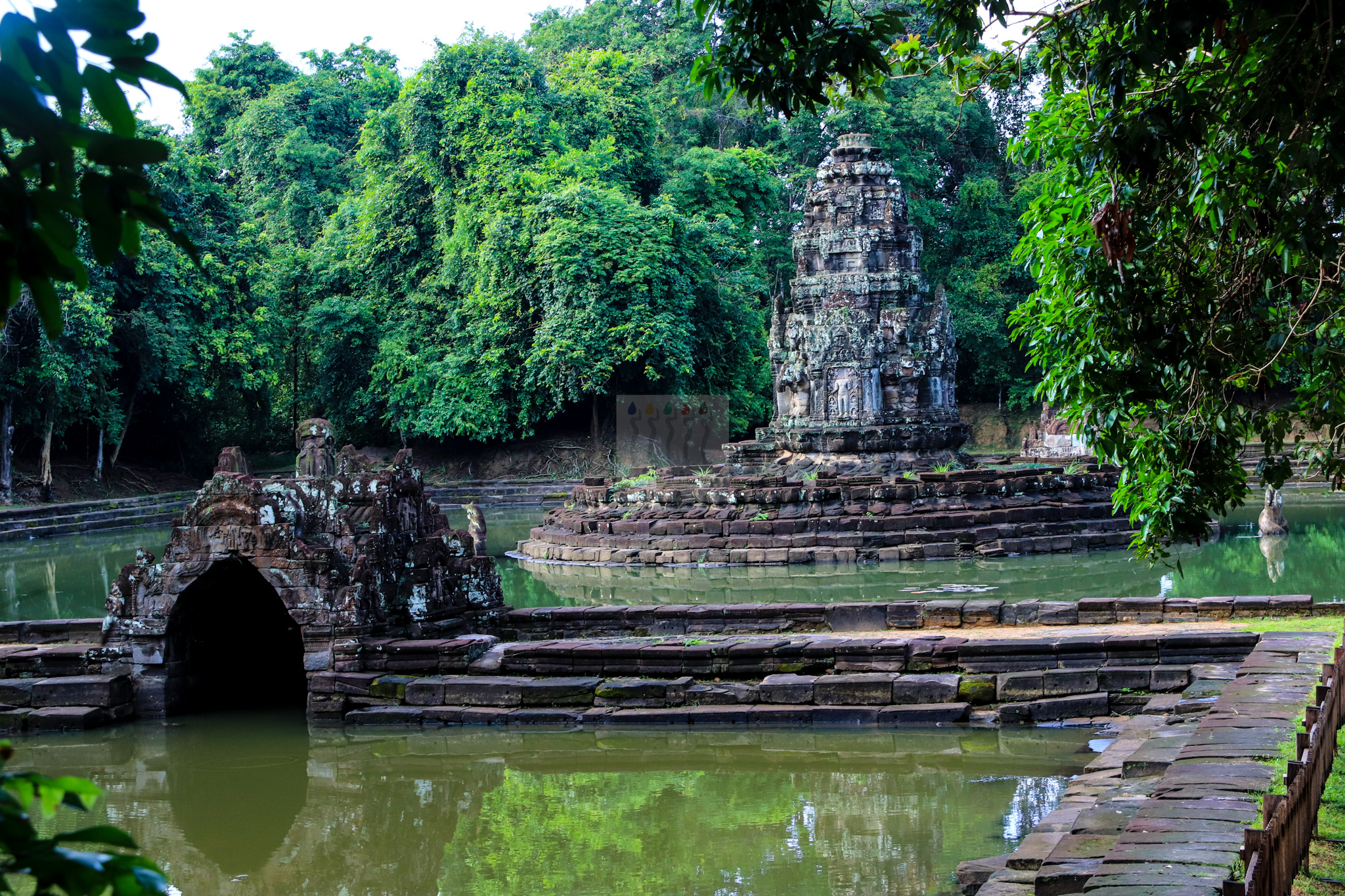
The area around the temple contains other archaeological features, including the ponds traditionally identified as Srah Srei and Srah Bros.
Location and How to Get There
Phimeanakas is located inside Angkor Thom, at the center of the ancient Royal Palace enclosure.
It is approximately 11 km from central Siem Reap, although the actual travel time depends on traffic and your starting point.
Phimeanakas Temple is normally visited as part of an Angkor Thom circuit rather than as a standalone destination.
From Siem Reap
The easiest options are:
- Tuk-tuk: Convenient for a standard Angkor itinerary.
- Private car: More comfortable, particularly during hot or rainy weather.
- Bicycle: Possible for experienced cyclists, but consider the heat and distance.
- Tour: Useful if you want historical explanations and an organized Angkor Thom route.
Once inside Angkor Thom, Phimeanakas is reached on foot from the surrounding Royal Palace and terrace area.
Road Conditions & Accessibility
Road conditions
The main approach from Siem Reap to Angkor Thom is generally through the established Angkor Archaeological Park road network. Visitors do not need to take a remote dirt road to reach Phimeanakas.
The final approach is different: Phimeanakas itself is inside the Royal Palace enclosure, so visitors leave their vehicle and explore the archaeological area on foot.
| Section | Expected condition |
|---|---|
| Siem Reap → Angkor Thom | Paved/established tourist road network |
| Angkor Thom → Royal Palace area | Established park roads |
| Royal Palace → Phimeanakas | Walking paths within archaeological grounds |
| Temple access | Uneven stone and archaeological surfaces |
| Upper structure | Very steep steps; access may be restricted |
| Rainy season | Wet stones and muddy paths are possible |
Recommended transport
A tuk-tuk or private car with driver is the most practical choice for most visitors.
If cycling, be prepared for heat, traffic from other tourist vehicles, and a considerable amount of walking once inside the archaeological area.
During the rainy season, allow extra time because wet surfaces can become slippery.
TravelKH road tip: Conditions inside Angkor can change because of conservation work, weather, or temporary restrictions. Check with your driver, guide, or APSARA staff on the day of your visit rather than assuming that every staircase or pathway is accessible.
Opening Hours
APSARA's dedicated Phimeanakas information page lists:
7:30 AM – 5:30 PM
However, other current visitor listings show broader Angkor Archaeological Park operating hours. Because individual monuments can have different access arrangements, check the latest local guidance before visiting.
Entrance Fee
There is no separate Phimeanakas ticket for normal visits. The temple is within the Angkor Archaeological Park and is covered by the appropriate Angkor Pass.
Angkor Enterprise is the official institution responsible for Angkor ticket sales. Its current information confirms that Angkor tickets are used for visiting the temples of the archaeological park.
Official Angkor Enterprise ticket information
Best Time to Visit
Early morning
Morning is a comfortable option because temperatures are usually lower and the Royal Palace area can feel peaceful.
Late afternoon
The warm light can make the laterite structure particularly attractive for photography, although visitors should check the day's access and closing time.
Rainy season
The surrounding vegetation can look especially green, but wet stones and stairways require additional caution.
For most visitors, morning or late afternoon is preferable to the hottest part of the day.
How Long Should You Spend at Phimeanakas?
APSARA suggests approximately 20 minutes for the temple itself.
For TravelKH visitors, I recommend allowing 30–45 minutes if you want time to explore the surrounding Royal Palace area and ponds rather than simply photographing the temple.
What to See Nearby
| Nearby attraction | Approximate relationship | Why visit |
|---|---|---|
| Baphuon | Very close | Impressive temple mountain |
| Terrace of the Elephants | Nearby | Royal ceremonial terrace |
| Terrace of the Leper King | Nearby | Detailed carved sandstone terrace |
| Royal Palace area | Surrounding | Explore the former royal enclosure |
| Srah Srei | North of Phimeanakas | Ancient royal pond |
| Bayon | Short ride/walk away | Famous face towers at Angkor Thom |
Suggested Angkor Thom Itinerary
| Time | Activity |
|---|---|
| 7:00 AM | Enter Angkor Thom |
| 7:15 AM | Explore Bayon |
| 8:15 AM | Visit Baphuon |
| 9:00 AM | Walk through Royal Palace area |
| 9:15 AM | Visit Phimeanakas |
| 10:00 AM | Explore Terrace of the Elephants |
| 10:30 AM | Terrace of the Leper King |
| 11:00 AM | Continue to another Angkor attraction |
The exact order can be adjusted depending on your entrance route and the day's conditions.
Visitor Tips
- Wear shoes with good grip.
- Bring drinking water, especially during the hotter months.
- Wear clothing that covers the shoulders and knees when visiting the Angkor temples.
- Do not climb restricted areas.
- Be careful on steep and uneven stone surfaces.
- Avoid touching fragile carvings or archaeological structures.
- Give yourself extra time if walking through the Royal Palace grounds.
- Check current access restrictions if you specifically want to climb the temple.
Frequently Asked Questions
What does Phimeanakas mean?
The name comes from Sanskrit terms associated with a divine or heavenly residence. It is commonly translated as “Celestial Palace” or “Heavenly Palace.”
Who built Phimeanakas?
Its construction spans more than one reign. APSARA's recent historical account states that it began under Rajendravarman II in the late 10th century and was completed under Suryavarman I in the early 11th century.
Was Phimeanakas a royal temple?
Yes. It was located at the center of the ancient Royal Palace and functioned as an important royal sanctuary.
Can you climb Phimeanakas?
Access to the upper levels can be restricted. Do not assume that climbing is permitted on the day of your visit. Follow the instructions of site staff.
Is Phimeanakas included in the Angkor Pass?
Yes. It is within the Angkor Archaeological Park and is normally visited using the applicable Angkor Pass.
How long does a visit take?
Around 20–45 minutes is reasonable for Phimeanakas and its immediate surroundings. Allow longer if you want to explore the Royal Palace enclosure.
Is Phimeanakas worth visiting?
Yes, particularly if you are already visiting Angkor Thom. It may not have the dramatic carvings of Bayon, but its royal history, pyramid architecture, and naga legend make it an interesting stop.
TravelKH Tip
Don't visit Phimeanakas as just another temple photo stop. Look at its location inside the Royal Palace and imagine the temple as part of the ancient royal center of Angkor. Combining it with Baphuon, the Royal Palace, and the two terraces gives you a much better understanding of how Angkor Thom functioned as a royal city.