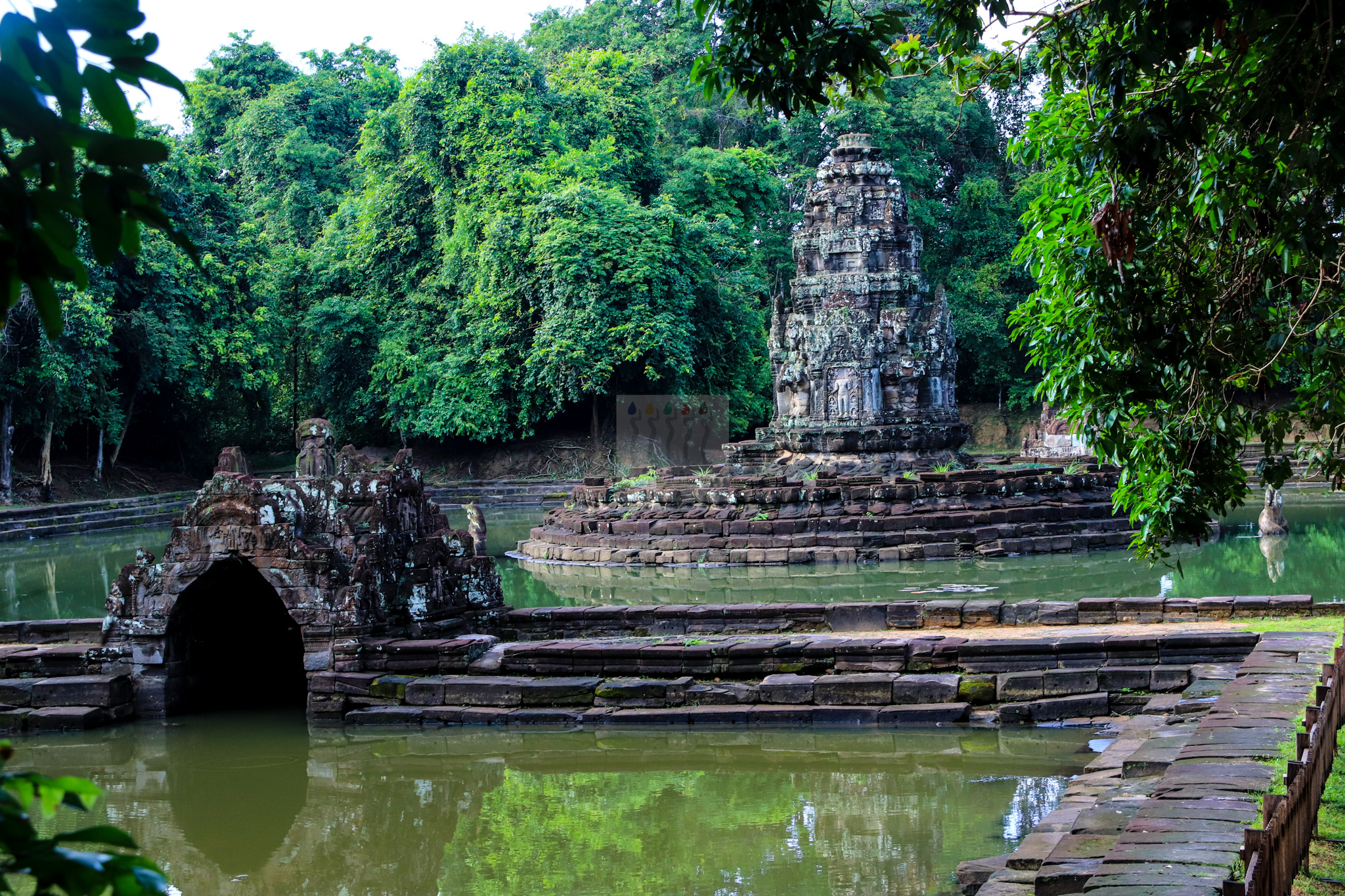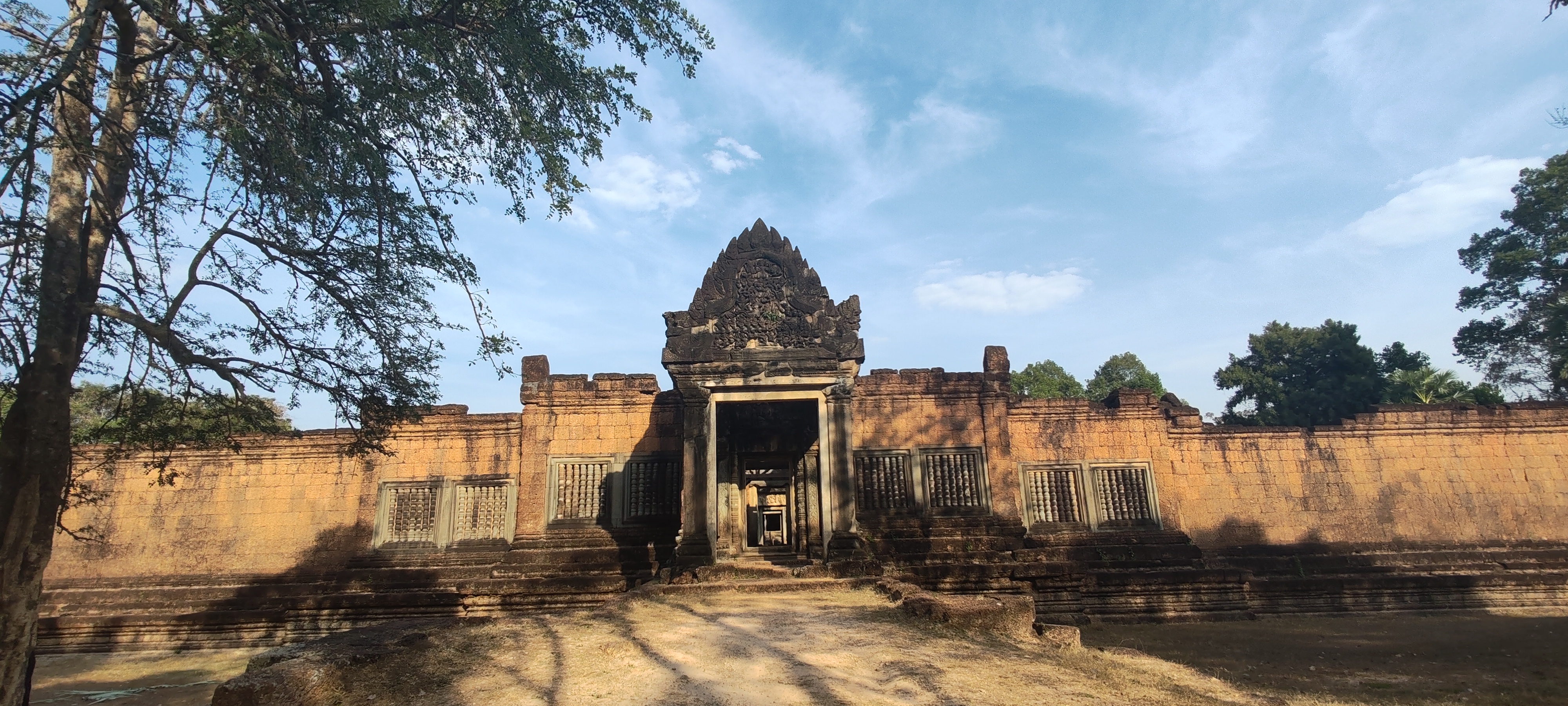

Banteay Samre (ប្រាសាទបន្ទាយសំរែ) is a beautifully preserved Angkorian temple located in the countryside east of Siem Reap. Built during the 12th century, the temple is dedicated primarily to Vishnu and is believed to have been constructed during the reigns of Suryavarman II and Yasovarman II.
Often compared with the architectural style of Angkor Wat, Banteay Samre is known for its impressive sandstone walls, elaborate bas-reliefs, towers, galleries, and remarkably complete layout.
Because it is located away from the main Angkor circuit, Banteay Samre generally offers a quieter temple experience than Angkor Wat, Bayon, or Ta Prohm.
Banteay Samre at a Glance
| Information | Details |
|---|---|
| Khmer Name | ប្រាសាទបន្ទាយសំរែ |
| English Name | Banteay Samre |
| Location | Siem Reap Province |
| Temple Type | Hindu temple |
| Main Deity | Vishnu |
| Built | 12th century |
| Architectural Style | Angkor Wat / Banteay Samre style |
| Builder | Generally associated with Suryavarman II and Yasovarman II |
| Religion | Hinduism |
| Main Material | Sandstone and laterite |
| Recommended Visit | 45–90 minutes |
| Best Time | Early morning or late afternoon |
| Angkor Pass | Required |
Why Visit Banteay Samre?
Banteay Samre is one of the best temples to visit if you want to experience Angkorian architecture away from the busiest tourist sites.
Main reasons to visit:
- Beautifully preserved architecture
- Detailed sandstone carvings
- Impressive temple walls
- Quieter than the main Angkor temples
- Strong connection to Angkor Wat's architectural style
- Interesting Hindu mythology
- Rural Cambodian scenery surrounding the temple
- Excellent photography opportunities
For travelers who have already visited Angkor Wat and Bayon, Banteay Samre provides a different perspective on Khmer architecture.
History of Banteay Samre

Banteay Samre was constructed during the 12th century, during the period when the Khmer Empire was at the height of its power.
The temple is generally associated with the reigns of King Suryavarman II, the builder of Angkor Wat, and King Yasovarman II.
It was built as a Hindu temple, with Vishnu believed to have been its principal deity.
The temple's architecture reflects the artistic developments of the Angkor Wat period, particularly its use of sandstone galleries, monumental towers, and extensive decorative carvings.
Why Is It Called "Banteay Samre"?
The name Banteay Samre is commonly translated as "Citadel of the Samre."
The Samre were an indigenous ethnic group historically associated with areas around the eastern and northern regions of the Angkor area.
The exact historical connection between the temple and the Samre people remains uncertain, but the name has become firmly associated with the monument.
Architecture
Banteay Samre has a strongly fortified appearance, with high laterite outer walls surrounding the central sanctuary.
The complex features:
- Outer enclosure
- Moat
- Gopuras
- Long galleries
- Central sanctuary
- Four towers
- Libraries
- Sandstone bas-reliefs
- Naga balustrades
The overall design resembles a miniature fortified city.
What to See
1. The Main Entrance
The eastern entrance provides an impressive approach to the temple.
Look for:
- Stone entrance towers
- Guardian figures
- Decorative lintels
- Sandstone carvings
- Long processional approach
The approach helps reveal the temple's symmetrical design.
2. Outer Enclosure
The massive outer walls give Banteay Samre its distinctive fortress-like appearance.
Unlike some open Angkor temples, the high walls create a feeling of entering a protected sacred complex.
Walk around the exterior before entering the central sanctuary to appreciate its scale.
3. Moat
A moat once surrounded the temple, reinforcing its symbolic representation as a sacred mountain surrounded by cosmic waters.
Parts of the original landscape and water system can still be appreciated around the complex.
4. Gopuras
The temple has monumental entrance structures, known as gopuras, positioned around the enclosure.
These entrances are decorated with:
- Mythological scenes
- Floral patterns
- Guardian figures
- Hindu imagery
5. Central Sanctuary
The central sanctuary is the heart of the temple.
Its towers and sandstone construction are characteristic of the Angkor Wat period.
Look carefully at:
- Decorative lintels
- False doors
- Devata figures
- Carved pediments
- Tower ornamentation
6. Bas-Reliefs & Hindu Mythology
One of the most interesting features of Banteay Samre is its extensive decorative carving.
Visitors can find scenes and figures associated with Hindu mythology, including representations of:
- Vishnu
- Shiva
- Krishna
- Rama
- Hanuman
- Nagas
- Garudas
- Devatas
Some carvings depict stories from the Ramayana and other Hindu traditions.
7. Devata & Apsara Figures
Look closely at the walls and doorways for female divine figures.
These figures are highly detailed and demonstrate the sophistication of Khmer sculptural art.
Pay attention to:
- Hairstyles
- Jewelry
- Crowns
- Clothing
- Facial expressions
8. Libraries
Banteay Samre contains structures traditionally referred to as "libraries," a common architectural feature in Angkorian temple complexes.
Although their exact original function remains debated, they form an important part of the temple's symmetrical layout.
9. Naga Balustrades
Naga serpent sculptures appear around several entrances and stairways.
The multi-headed naga was an important symbol in Khmer architecture and mythology, representing protection and the connection between the earthly and divine worlds.
Banteay Samre vs Angkor Wat
Banteay Samre is sometimes described as having an architectural character similar to Angkor Wat.
| Feature | Banteay Samre | Angkor Wat |
| Period | 12th century | Early–mid 12th century |
| Main Religion | Hinduism | Hinduism |
| Main Deity | Vishnu | Vishnu |
| Scale | Smaller | Monumental |
| Architecture | Angkor Wat-period influence | Angkor Wat style |
| Crowds | Usually lower | Very high |
| Visit Time | 45–90 min | 2–4+ hours |
If you enjoy Angkor Wat's architecture but want a quieter experience, Banteay Samre is an excellent addition to your itinerary.
Best Time to Visit
🌅 Early Morning
Best for:
- Cooler temperatures
- Softer light
- Photography
- Fewer visitors
🌇 Late Afternoon
The warm sandstone can look particularly beautiful in late afternoon sunlight.
☀️ Midday
Possible, but less comfortable because there is limited shade inside parts of the complex.
Best Season
| Season | Rating | Experience |
| November–February | ⭐⭐⭐⭐⭐ | Cool and comfortable |
| March–May | ⭐⭐⭐ | Very hot during midday |
| June–October | ⭐⭐⭐⭐ | Green landscape and fewer visitors |
The rainy season can make the surrounding countryside particularly green and photogenic.
How Long Do You Need?
Allow approximately 45–90 minutes.
If you enjoy photography, architecture, or archaeology, allow closer to 90 minutes.
How to Get There
Banteay Samre is located approximately 20 km east of central Siem Reap.
From Siem Reap
Typical transportation options include:
- Tuk-tuk
- Private car
- Tour vehicle
- Bicycle
- Motorbike
The temple can be combined with several attractions in the eastern part of the Angkor region.
Suggested Temple Route
A good itinerary can combine Banteay Samre with:
Morning
- Angkor Wat
- Srah Srang
- Ta Prohm
Afternoon
- Banteay Samre
- Pre Rup
- East Mebon
Alternatively, dedicate a half-day to the quieter temples east of Angkor.
Nearby Attractions
| Attraction | Why Visit |
| Pre Rup | Mountain temple and sunset views |
| East Mebon | Elephant sculptures and ancient architecture |
| Srah Srang | Scenic royal reservoir |
| Prasat Kravan | Unique brick bas-reliefs |
| Ta Prohm | Famous jungle-covered temple |
| Angkor Wat | Cambodia's most famous temple |
Photography Tips
Banteay Samre is excellent for architectural photography.
Best Shots
📸 Main eastern entrance
📸 Long approach to the temple
📸 Central sanctuary towers
📸 Devata carvings
📸 Lintels and pediments
📸 Naga balustrades
📸 Outer walls
📸 Temple details against the surrounding countryside
A wide-angle lens is useful for capturing the symmetry of the complex.

Accessibility
The temple contains uneven stone surfaces, stairs, and narrow passages.
Visitors with limited mobility may find some areas difficult to access.
Take care when walking on:
- Ancient stone steps
- Uneven pathways
- Narrow galleries
- Wet surfaces during the rainy season
Frequently Asked Questions
Is Banteay Samre worth visiting?
Yes. It is particularly worthwhile for travelers interested in Khmer architecture, Hindu mythology, and quieter temples.
Is Banteay Samre included in the Angkor Pass?
Yes. Banteay Samre is part of the Angkor Archaeological Park and requires a valid Angkor Pass.
How far is Banteay Samre from Siem Reap?
It is approximately 20 km from central Siem Reap, depending on the starting point.
How long should I spend there?
Around 45–90 minutes is sufficient for most visitors.
Is Banteay Samre crowded?
It generally receives fewer visitors than Angkor Wat, Bayon, and Ta Prohm, making it a good choice for travelers seeking a quieter temple experience.
Can I visit Banteay Samre without a guide?
Yes. The temple can be explored independently, although a knowledgeable guide can help explain the Hindu mythology and architectural symbolism.
TravelKH Tips
1. Combine it with the eastern temples.
Banteay Samre works particularly well with Pre Rup, East Mebon, and Prasat Kravan.
2. Don't just photograph the main entrance.
Walk around the enclosure and examine the carvings on the galleries and sanctuary.
3. Go early or late.
The temple has limited shade, so avoid the hottest part of the day.
4. Look closely at the carvings.
Many of the most interesting details are relatively small and easy to miss.
5. Bring water.
There are fewer visitor facilities than around Angkor Wat and the main Angkor Thom sites.
Banteay Samre Quick Facts
| Category | Information |
| Type | Hindu temple |
| Period | 12th century |
| Main Deity | Vishnu |
| Style | Angkor Wat period |
| Material | Sandstone & laterite |
| Location | East of Angkor |
| Distance from Siem Reap | ~20 km |
| Visit Duration | 45–90 minutes |
| Best Time | Early morning / late afternoon |
| Pass | Angkor Pass required |
Related TravelKH Guides
- Angkor Wat Temple Guide
- Angkor Thom Travel Guide
- Bayon Temple Guide
- Ta Prohm Temple Guide
- Pre Rup Temple Guide
- East Mebon Temple Guide
- Prasat Kravan Guide
- Srah Srang Guide
- Banteay Srei Temple Guide
- Best Temples in Siem Reap
- Angkor Pass Guide
- Siem Reap Travel Guide
Disclaimer: Temple access, visitor rules, opening hours, ticket requirements, and conservation areas may change. Check the latest information from the official Angkor authorities before visiting.