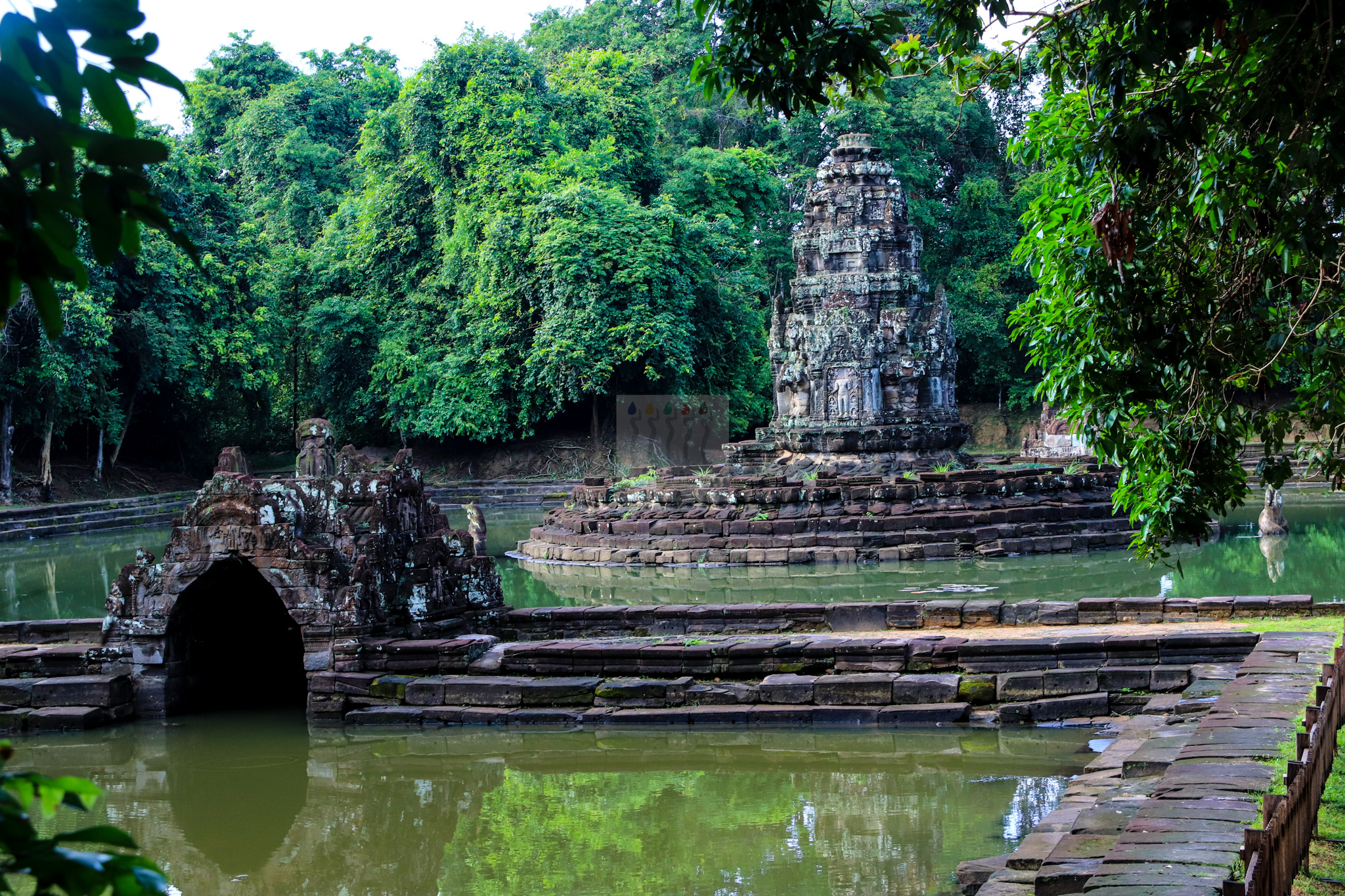
Preah Khan (ប្រាសាទព្រះខ័ន) is one of the largest and most fascinating temples in the Angkor Archaeological Park. Built by King Jayavarman VII in the late 12th century, the temple served as a Buddhist monastery, university, and royal city, housing thousands of residents, scholars, and monks.
Today, Preah Khan is admired for its sprawling layout, intricate carvings, and atmospheric blend of ancient stone structures intertwined with towering trees. Unlike some of Angkor's more heavily restored monuments, parts of the temple have been left in a semi-natural state, giving visitors a glimpse of how early explorers first encountered Angkor.
Quick Facts
| Information | Details |
|---|---|
| Khmer Name | ប្រាសាទព្រះខ័ន |
| English Name | Preah Khan Temple |
| Meaning | "Royal Sword" |
| Built | Late 12th century (c. AD 1191) |
| Builder | King Jayavarman VII |
| Religion | Originally Mahayana Buddhism, later adapted for Hindu worship |
| UNESCO Site | Angkor Archaeological Park |
| Location | Approximately 7 km north of Angkor Thom, Siem Reap |
| Time to Visit | 1.5–2.5 hours |
| Angkor Pass Required | Yes |
History of Preah Khan
Preah Khan was commissioned by King Jayavarman VII after his victory over the Cham Kingdom. The temple was dedicated to his father and became one of the most important religious and administrative centers of the Khmer Empire.
Historical inscriptions describe Preah Khan as a thriving complex supported by thousands of villagers and staffed by priests, teachers, dancers, and officials. It functioned as much more than a temple—it was effectively a small city with educational, religious, and administrative roles.
The temple reflects the height of the Khmer Empire's architectural and cultural achievements during the reign of Jayavarman VII.
Architecture
Preah Khan covers approximately 56 hectares, making it one of the largest temple complexes in Angkor.
Architectural highlights include:
- Four monumental entrance gates
- Long sandstone corridors
- Multi-level courtyards
- Beautifully carved lintels
- Libraries
- Shrines
- Hall of Dancers
- Ancient tree roots embracing temple walls
- Decorative guardian statues
Its maze-like design encourages exploration, with new courtyards and passageways revealed around almost every corner.
What to See
Bas-relief Statue of Queen Indradevi (with huge Gemstone on forehead)
Indradevi is the queen of Khmer King Jayavarman 7. Most visitors didn't get to see the statue, but it'll be worth looking. To find it, enter the eastern or western gates and follow the dim, narrow stone corridors until you reach the smaller chapels.
Hall of Dancers
One of the temple's most famous structures, featuring elegant carvings of apsaras (celestial dancers) and intricate decorative details.

Giant Tree Roots
Massive silk-cotton and strangler fig trees have grown around sections of the temple, creating dramatic scenes that are popular with photographers.
Ancient Carvings
Visitors can admire:
- Devatas (female guardian figures)
- Garudas
- Nagas (serpents)
- Floral motifs
- Hindu deities
- Buddhist imagery
Why Visit Preah Khan?
Many travelers consider Preah Khan one of the highlights of Angkor because it offers:
- Rich historical significance
- Fewer crowds than Angkor Wat
- Outstanding photography opportunities
- Impressive architecture
- A combination of restored and unrestored sections
- A unique "lost temple" atmosphere
Best Time to Visit
The ideal times are:
- Early morning (7:30–9:30 AM) for cooler temperatures and fewer visitors.
- Late afternoon (3:30–5:00 PM) for softer light and a quieter atmosphere.
How Long Should You Spend Here?
Most visitors spend:
- Quick visit: 1 hour
- Typical visit: 1.5–2 hours
- Photography enthusiasts: Up to 3 hours
Getting There
Preah Khan is included in most Small Circuit or Grand Circuit Angkor tours.
Transportation options include:
- Tuk-tuk
- Private car
- Bicycle
- Guided tour
- Motorbike (where permitted)
Visitor Tips
- Wear comfortable walking shoes, as you'll cover uneven stone paths.
- Bring water, sunscreen, and insect repellent.
- Dress respectfully, covering shoulders and knees, as the temple remains a sacred site.
- Start early to avoid the midday heat.
- Stay on marked paths and avoid climbing on fragile structures.
Nearby Attractions
You can easily combine Preah Khan with:
- Neak Pean
- Ta Som
- East Mebon
- Pre Rup
- Angkor Thom
- Bayon Temple
Frequently Asked Questions
Is Preah Khan included in the Angkor Pass?
Yes. A valid Angkor Pass is required to enter Preah Khan, as it is part of the Angkor Archaeological Park.
Is Preah Khan the same as Preah Vihear?
No. Preah Khan is located within the Angkor Archaeological Park near Siem Reap, while Preah Vihear Temple is a separate UNESCO World Heritage Site on the Cambodia–Thailand border.
Is Preah Khan suitable for families?
Yes. Families often enjoy exploring its wide courtyards and atmospheric ruins, though parents should supervise children on uneven steps and stone pathways.
Can I visit without a guide?
Yes. Informational signs are available throughout the site, but hiring a licensed guide can provide valuable historical context and help you appreciate the symbolism and stories behind the carvings.

TravelKH Tip
If you have time to visit only a few temples beyond Angkor Wat, make Preah Khan one of them. Its blend of history, architecture, and jungle scenery creates one of the most memorable experiences in the Angkor Archaeological Park.