
China and Cambodia are two Asian countries with rich histories, strong family traditions and deep respect for cultural heritage. Although they share some values, such as respect for elders, family responsibility and social harmony, their customs, communication styles and everyday lifestyles can be quite different.
For Chinese people visiting Cambodia, Cambodian people travelling to China, or foreigners living and working between the two countries, understanding these cultural differences can help avoid misunderstandings and build better relationships.
Cambodia has also been influenced by Chinese culture for centuries. Chinese-Cambodian communities have contributed to the country's food, language, festivals, business and family traditions. However, Cambodian Khmer culture and mainland Chinese culture remain distinct in many ways.
This guide explores the differences between Chinese and Cambodian culture in family life, communication, dining, relationships, business, festivals and daily customs.
Note: China and Cambodia are culturally diverse. Customs differ by region, ethnic group, religion, generation, family and personal preference. This article describes some common cultural patterns, not rules that apply to everyone.
1. China vs. Cambodia: Cultural Differences at a Glance
| Cultural Aspect | Chinese Culture | Cambodian Khmer Culture |
|---|---|---|
| Main cultural influences | Confucian traditions, regional customs, Buddhism, Taoism and modern society | Theravada Buddhism, Khmer traditions, family customs and local beliefs |
| Respect for elders | Strong emphasis on filial responsibility and seniority | Strong emphasis on respect for parents, elders and senior people |
| Family structure | Family responsibility is important; practices vary between urban and rural areas | Family and extended-family relationships are often central to daily life |
| Communication | Often indirect in sensitive or formal situations | Often indirect to maintain politeness and harmony |
| Greeting | Handshake, verbal greeting or other gestures depending on situation | Sampeah, handshake or verbal greeting depending on relationship |
| Dining | Shared dishes, chopsticks and regional dining customs | Shared dishes, rice, spoons, forks and sometimes chopsticks |
| Religion | Buddhism, Taoism, folk traditions, Christianity, Islam and non-religious lifestyles | Theravada Buddhism is the dominant religion, alongside other beliefs |
| Traditional clothing | Hanfu-inspired styles, qipao, regional clothing and modern dress | Sampot, krama and traditional Khmer formal clothing |
| Major traditional celebrations | Chinese New Year, Qingming, Mid-Autumn Festival and others | Khmer New Year, Pchum Ben, Water Festival and other celebrations |
| Business relationships | Relationships, trust, hierarchy and reputation can be important | Relationships, trust, respect, hierarchy and reputation can be important |
Both cultures place importance on family, respect and social relationships, but the way these values are expressed can differ.
2. Family Culture: China vs. Cambodia
Family is an important part of both Chinese and Cambodian society.
Chinese family culture
Traditional Chinese family values are strongly influenced by Confucian ideas, particularly filial piety, which emphasizes respect for parents and responsibility toward family members.
In some Chinese families, children may be expected to:
- Respect and care for their parents.
- Maintain contact with relatives.
- Support elderly family members.
- Consider family expectations when making major decisions.
- Preserve the family's reputation.
In some families, parents may be closely involved in decisions about education, career, marriage and where their children live.
However, modern Chinese families are changing. Many young adults in large cities make their own decisions about relationships, careers and lifestyles.
Cambodian family culture
In Cambodian Khmer culture, family relationships are also highly valued.
Many Cambodian families maintain close relationships with parents, grandparents, siblings, cousins and other relatives. Family members may help one another with childcare, financial support, business activities and important life events.
Respect for parents and grandparents is commonly expressed through polite language, gestures and behaviour.
In some Cambodian families, young adults may consult their parents before making major decisions, especially concerning marriage or family responsibilities.
Key difference
Both cultures value family responsibility. However, the expectations placed on children, the role of parents in marriage decisions and the way families support one another can vary.
The most important thing to remember is that neither Chinese nor Cambodian families follow one single model.
3. Respect for Elders and Social Hierarchy
Respect for elders is a shared value in Chinese and Cambodian culture.
In China
Respect may be expressed through:
- Using appropriate titles when addressing older people.
- Giving priority to senior family members during formal gatherings.
- Consulting elders on important family matters.
- Showing respect to senior colleagues and leaders.
In traditional settings, age, family position and professional rank may influence how people interact.
In Cambodia
Respect is also expressed through language and body language.
Cambodians may use the sampeah, a traditional greeting made by placing the palms together and slightly bowing the head.
The height of the hands and the depth of the bow can vary according to the relationship and level of respect.
Cambodian people may also use respectful forms of address such as Lok or Lok Srey, depending on the situation.
What visitors should understand
In both countries, showing respect to older people can help create a positive impression.
When unsure, observe how local people greet one another and follow their lead.
4. Communication Style: Direct or Indirect?
Communication is one of the areas where cultural misunderstandings can happen.
Chinese communication
In some Chinese social and business situations, people may avoid giving a direct negative answer because they want to maintain harmony or prevent embarrassment.
Instead of saying “No,” someone might say:
- “We will consider it.”
- “Perhaps another time.”
- “It may be difficult.”
- “Let me discuss it with my team.”
These expressions may indicate hesitation or disagreement, although their meaning depends on the context.
The concept of saving face—protecting dignity, reputation and social standing—is important in many Chinese social and professional settings.
Cambodian communication
Cambodian communication can also be indirect, particularly when discussing disagreement, criticism or sensitive personal matters.
Some people may avoid openly correcting another person in front of others because it could cause embarrassment or damage a relationship.
In Cambodian workplaces, employees may hesitate to disagree publicly with a senior manager, especially if the relationship is formal.
Cambodian business guidance emphasizes politeness, patience, relationship-building and avoiding public embarrassment.
Key difference
The two cultures share some communication values, especially politeness and harmony.
However, the language, gestures, social expectations and circumstances in which indirect communication is used may differ.
A useful approach in both countries is to ask questions respectfully and allow people time to express their opinions.
5. Greeting Customs: Sampeah vs. Chinese Greetings
Cambodian sampeah
The sampeah is a traditional Cambodian greeting and gesture of respect.
It involves placing the palms together in front of the chest or face and slightly bowing the head.
The gesture may be used when:
- Greeting elders.
- Showing respect to teachers or monks.
- Meeting someone formally.
- Expressing gratitude or apology.
A handshake is also common in Cambodia, especially when greeting foreigners or in professional settings.
Chinese greetings
In mainland China, a handshake is common in business and formal introductions.
People may also greet one another verbally, using phrases such as:
- 你好 (Nǐ hǎo) – Hello.
- 您好 (Nín hǎo) – Hello, a more polite form.
- 早上好 (Zǎoshang hǎo) – Good morning.
Traditional Chinese greeting gestures, such as the fist-and-palm salute, may appear during festivals, martial arts events or ceremonial occasions.
Practical advice
If you are visiting Cambodia, learning the sampeah is a thoughtful way to show respect.
If you are visiting China, a polite verbal greeting and a handshake in formal situations are generally appropriate.
6. Food Culture: Chinese Cuisine vs. Cambodian Khmer Cuisine
Food is an important part of both cultures, especially during family gatherings and celebrations.
Chinese food culture
China has many regional cuisines, including:
- Sichuan cuisine.
- Cantonese cuisine.
- Hunan cuisine.
- Shandong cuisine.
- Jiangsu cuisine.
- Fujian cuisine.
Chinese meals often include several shared dishes placed in the centre of the table.
Rice, noodles, dumplings, vegetables, seafood and meat are common, but ingredients and flavours differ greatly between regions.
Chopsticks are widely used, particularly for shared dishes.
Cambodian food culture
Cambodian Khmer cuisine commonly includes:
- Rice.
- Freshwater fish.
- Prahok.
- Amok.
- Samlor.
- Khmer noodles.
- Fresh vegetables and herbs.
Cambodian meals often include several dishes shared by family members, with rice serving as a central staple.
Spoons and forks are widely used for everyday meals. Chopsticks are commonly used for noodle dishes.
Similarities
Both cultures often enjoy eating together rather than treating every meal as an individual experience.
Sharing food can express hospitality, family connection and friendship.
Differences
Chinese cuisine is extremely diverse, and some regional dishes use strong spices, fermented ingredients or cooking techniques that may be unfamiliar to Cambodian diners.
Cambodian Khmer cuisine often features fresh herbs, fermented fish, rice and a distinctive balance of sour, salty, sweet and savoury flavours.
Neither cuisine is uniform, and food preferences differ greatly from person to person.
7. Dating and Marriage: China vs. Cambodia
Dating and marriage expectations have changed significantly in both countries.
Dating in China
In modern China, dating practices vary widely between generations and locations.
In major cities, young adults may meet through:
- Universities.
- Workplaces.
- Friends.
- Dating applications.
- Social events.
Some families may still place importance on marriage, financial stability, housing and family compatibility.
Parents may become involved in marriage discussions, particularly when a relationship becomes serious.
Dating in Cambodia
In Cambodia, modern dating is increasingly common, particularly among younger people in urban areas.
Couples may meet through friends, school, work, social media or dating applications.
Traditional expectations can still influence relationships, especially when families become involved.
Some Cambodian families may expect a relationship to be serious before marriage discussions begin.
Wedding traditions
Chinese weddings may include customs such as:
- Tea ceremonies.
- Red wedding decorations.
- Auspicious dates.
- Gift exchanges.
- Banquets.
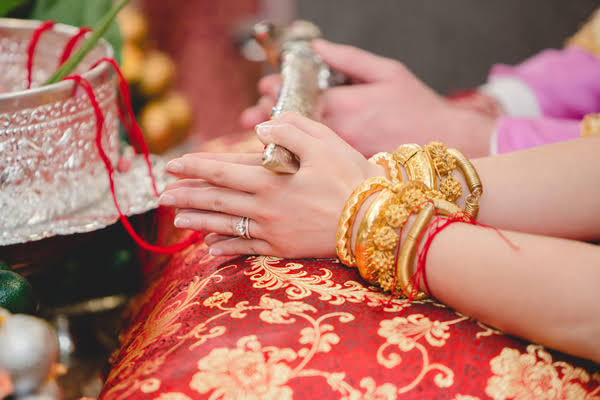
Traditional Khmer weddings may include:
- Groom's procession.
- Gift or dowry presentations.
- Hair-cutting ceremony.
- Blessing ceremonies.
- Wrist-tying rituals.
- Wedding banquet.
Chinese-Cambodian families may combine traditions from both cultures.
The exact wedding agenda depends on the family's background, religion, region and personal preferences.
8. Business Culture: China vs. Cambodia
Understanding business culture is particularly useful for investors, entrepreneurs and professionals working between the two countries.
Chinese business culture
In China, business relationships may place importance on:
- Trust and personal connections.
- Respect for seniority.
- Reputation.
- Long-term cooperation.
- Careful negotiation.
- Maintaining face.
The term guanxi (关系) refers to personal relationships and networks that can help people build trust and cooperation.
In some business settings, the senior representative may lead discussions and make important decisions.
Cambodian business culture
Cambodian business relationships also place importance on trust, personal connections and respect.
Business partners may prefer to get to know one another before entering into a long-term arrangement.
Cambodian business guidance highlights relationship-building, respect for hierarchy, patience and the importance of avoiding public criticism.
Practical differences
| Business Situation | China | Cambodia |
|---|---|---|
| Building trust | Personal relationships and credibility can be important | Personal relationships and credibility can be important |
| Negotiation | May involve several rounds and senior-level approval | May require patience, relationship-building and consultation |
| Communication | Indirect communication may be used in sensitive discussions | Indirect communication may be used to maintain harmony |
| Seniority | Rank and hierarchy may influence meetings | Rank and hierarchy may influence meetings |
| Business meals | Common in relationship-building | Meals and informal gatherings can help strengthen relationships |
These are general tendencies, not fixed rules. Modern companies in both countries may have very different management styles.
9. Religion and Spiritual Beliefs
Religion is another important cultural difference.
Religion in China
China has a diverse religious and philosophical landscape.
Some people practise Buddhism, Taoism, Christianity, Islam or traditional Chinese folk religion. Others identify as non-religious.
Traditional Chinese beliefs may include ancestor veneration, respect for family ancestors and customs connected with fortune, harmony and auspicious occasions.
Religious practice varies by region and family.
Religion in Cambodia
Theravada Buddhism is the dominant religion in Cambodia and has a strong influence on Khmer culture.
Many Cambodian communities have close connections with Buddhist pagodas, monks and religious ceremonies.
Important occasions may include:
- Pchum Ben.
- Khmer New Year.
- Visak Bochea.
- Buddhist merit-making ceremonies.
Some Cambodian families also maintain traditional beliefs connected with spirits, ancestors, sacred places and protective rituals.
Similarity
Both cultures may include respect for ancestors and practices connected with family remembrance.
However, the religious meaning and the way rituals are performed can be different.
10. Festivals: Chinese New Year vs. Khmer New Year
Festivals are among the most visible cultural differences between China and Cambodia.
Chinese New Year
Chinese New Year, also known as the Spring Festival, is one of the most important traditional celebrations in Chinese culture.
Common customs include:
- Family reunion dinners.
- Red decorations.
- Giving red envelopes.
- Visiting relatives.
- Fireworks where permitted.
- Preparing traditional foods.
The festival follows the lunisolar calendar.
Khmer New Year
Khmer New Year is one of Cambodia's biggest traditional celebrations.
It usually takes place in April and marks the traditional new year.
Common activities include:
- Visiting pagodas.
- Making offerings.
- Cleaning and decorating homes.
- Playing traditional games.
- Visiting relatives.
- Preparing special foods.
Celebrating Chinese New Year in Cambodia
Chinese New Year is also widely celebrated by many Cambodian people, including Chinese-Cambodian families and people without Chinese ancestry.
Red decorations, family gatherings and festive foods can be seen in many Cambodian communities.
However, not every Cambodian celebrates Chinese New Year, and the importance of the festival differs between families.
11. Clothing and Traditional Dress
Traditional clothing reflects each country's history and cultural identity.
Chinese traditional clothing
Some well-known Chinese traditional styles include:
- Hanfu: traditional clothing associated with Han Chinese historical dress.
- Qipao or cheongsam: a fitted dress that became popular in modern Chinese fashion.
- Tang-style jackets: modern clothing inspired by traditional designs.
Traditional Chinese clothing varies by historical period and ethnic group.
Cambodian traditional clothing
Cambodian traditional clothing includes:
- Sampot.
- Sampot chang kben.
- Krama.
- Traditional silk clothing.
- Formal Khmer wedding attire.
The sampot is a traditional garment worn in different styles depending on the occasion.
The krama is a versatile Cambodian scarf used in everyday life and as part of cultural identity.
Modern lifestyle
Today, people in both China and Cambodia generally wear modern clothing in daily life.
Traditional dress is often worn during weddings, festivals, ceremonies and cultural events.
12. Education and Work Culture
Education and professional achievement are important in both countries, although expectations differ between families and individuals.
China
In many Chinese families, education has traditionally been viewed as an important path to career development and social mobility.
Competitive examinations, academic performance and professional qualifications can carry considerable importance.
Workplaces may also have formal hierarchies, although management styles vary between companies.
Cambodia
Education is also highly valued by Cambodian families.
Parents may make significant sacrifices to support their children's education and future opportunities.
In professional settings, respect for senior colleagues and relationships can be important. However, younger Cambodian professionals increasingly work in modern international environments where teamwork, individual initiative and open communication are encouraged.
Key difference
Both cultures value education and career success, but the pressures, educational systems and expectations surrounding achievement are not identical.
13. Chinese-Cambodian Culture: Where the Two Cultures Meet
Cambodia has a long history of Chinese migration and cultural exchange.
Over generations, many Chinese-Cambodian families have adapted Chinese traditions to Cambodian society.
Cultural influence can be seen in:
- Food and cooking.
- Family businesses.
- Language and vocabulary.
- Chinese New Year celebrations.
- Wedding traditions.
- Ancestor-related customs.
- Business networks.
Some Chinese-Cambodian families speak Khmer as their main language, while others maintain Chinese languages such as Teochew, Cantonese, Hokkien or Mandarin.
The identity of Chinese-Cambodian communities is diverse. Some families maintain strong Chinese cultural traditions, while others are deeply integrated into Khmer culture or combine both.
This cultural blending is an important part of Cambodia's social history.
14. What Chinese Visitors Should Know About Cambodian Culture
If you are visiting Cambodia from China, these simple tips can help you feel more comfortable.
Do
- Show respect to elders and monks.
- Learn a few Khmer greetings.
- Dress modestly when visiting pagodas.
- Remove your shoes when required.
- Ask permission before photographing people or religious ceremonies.
- Be patient when communicating across language barriers.
- Respect local customs even when they differ from your own.
Avoid
- Touching someone's head without permission.
- Pointing your feet toward a person or sacred object.
- Speaking loudly in religious spaces.
- Publicly embarrassing someone during a disagreement.
- Assuming that every Cambodian follows the same religious or family customs.
15. What Cambodian Visitors Should Know About Chinese Culture
If you are travelling to China or working with Chinese business partners, consider the following advice.
Do
- Use polite greetings.
- Respect elders and senior colleagues.
- Learn basic Chinese phrases.
- Be attentive during business introductions.
- Follow the host's lead during formal meals.
- Allow time for relationship-building.
- Ask respectfully when you are unsure about a custom.
Avoid
- Publicly criticizing a business partner.
- Assuming silence means agreement.
- Ignoring seniority during formal introductions.
- Treating China as culturally identical across every province.
- Assuming every Chinese person celebrates the same festivals or follows the same traditions.
Understanding local customs can make travel and business interactions more comfortable.
Conclusion: China and Cambodia Share Values but Express Them Differently
Chinese and Cambodian cultures have many similarities, especially in their respect for family, elders, social relationships and cultural traditions.
Both cultures may value harmony, reputation and maintaining respectful relationships. However, the details of their customs, communication styles, religious practices, food culture and family expectations can be quite different.
China's cultural traditions are shaped by a vast and diverse society with many regional and ethnic influences. Cambodian Khmer culture is strongly influenced by Theravada Buddhism, traditional Khmer customs and family life, while also reflecting centuries of cultural exchange with neighbouring countries and Chinese communities.
The best way to understand the difference is not to ask which culture is better, but to recognize that people may express respect, love, hospitality and responsibility in different ways.
For travellers, expats and businesspeople, learning these differences can help build stronger friendships, avoid misunderstandings and appreciate the cultural richness of both China and Cambodia.
Disclaimer
This article provides a general cultural comparison for educational and travel purposes. Cultural practices vary by region, ethnic group, religion, generation, family and individual. The descriptions should not be used to stereotype Chinese or Cambodian people. Visitors and businesspeople should observe local customs and ask respectfully when uncertain.