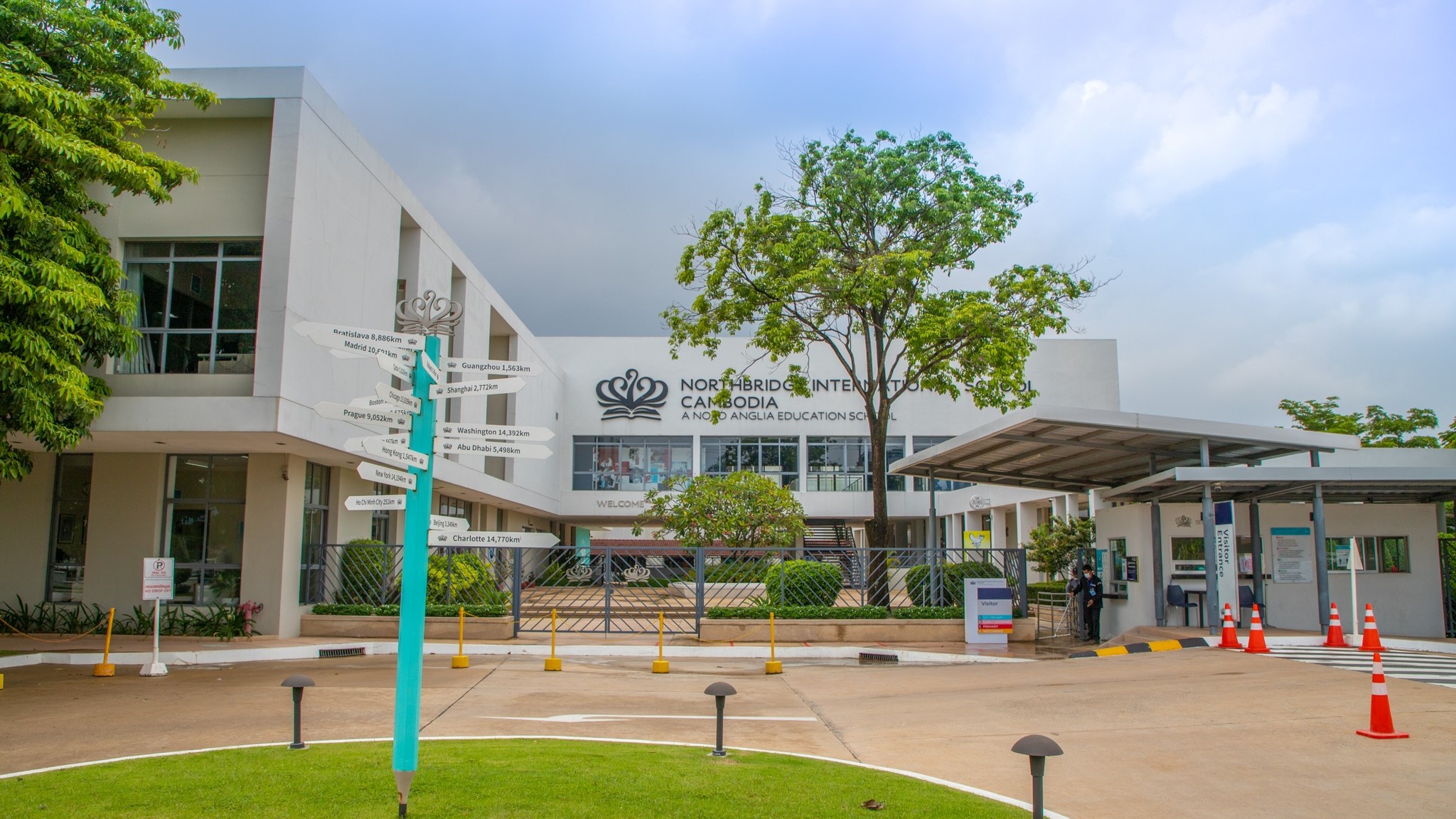
Cambodia is home to families from many countries, and foreign children can pursue their education while living in the Kingdom. Parents relocating to Cambodia can consider several options, including local public schools, private Cambodian schools, bilingual schools and international schools.
However, the enrollment process is different depending on the type of school. Public schools generally follow Cambodia’s national curriculum and teach primarily in Khmer, while private and international schools may offer English-language or other international curricula.
This guide explains how foreign parents can enroll their children, which documents they may need, and what to consider before choosing a school in Cambodia.
1. Can foreign children attend school in Cambodia?
Yes, foreign families can explore schooling options in Cambodia. Private and international schools openly accept applications from students of different nationalities, subject to their admission requirements, available places and assessment procedures.
For public schools, parents should contact the local school and the relevant education authority to confirm whether a foreign child can be admitted and what documents or conditions apply.
Cambodia's Law on Education establishes the country's public and private education system. It also states that Khmer is the official language and a fundamental curriculum subject in public general-education schools. The law guarantees free public education for at least nine years to Cambodian citizens; it does not establish the same free-education entitlement for foreign children.
In practical terms, foreign parents should not assume that a public-school place or free tuition is automatically available to them.
2. Types of schools available to foreign children
Parents can consider four main options.
A. Cambodian public schools
Public schools follow the Cambodian national curriculum and generally teach in Khmer.
They may be worth exploring for families who:
- Plan to live in Cambodia for several years.
- Want their children to learn Khmer and integrate into the local community.
- Prefer a local education environment.
- Have children who already speak or are prepared to learn Khmer.
Important considerations:
- Most classroom instruction is in Khmer.
- The school may need to assess the child's age and previous education.
- Admission of foreign children should be confirmed with the individual school and local education authority.
- Do not assume that foreign students receive the same free-education entitlement as Cambodian citizens.
B. Private Cambodian schools
Private Cambodian schools can provide a more structured admission process and may offer additional language options, depending on the institution.
Some schools combine the Cambodian national curriculum with English-language instruction or other educational programmes.
This option may suit families who want their children to experience Cambodian education while receiving additional language support.
C. International schools
International schools are a popular option for expatriate families, particularly those who want their children to continue an overseas curriculum.
Depending on the school, programmes may include:
- International Baccalaureate (IB).
- Cambridge International curriculum.
- British curriculum.
- American curriculum.
- Canadian curriculum.
- Other international or bilingual programmes.
International schools generally assess students based on age, previous academic records, language ability and available grade-level places.
D. Bilingual schools
Bilingual schools combine Khmer with another language, commonly English.
They may be suitable for children who want to maintain their home language while developing Khmer language skills and becoming familiar with Cambodian culture.
Parents should check how much teaching takes place in each language and which qualifications the school offers.
3. How to enroll a foreign child in a Cambodian public school
The public-school enrollment process may vary by province, district and individual school. Parents should confirm the current requirements before preparing the application.
A practical process is as follows.
Step 1: Find a public school near your residence
Start by identifying a government primary or secondary school in the area where your family lives.
Visit the school directly and explain that you would like to enroll a foreign child.
Ask the school:
- Whether it accepts foreign students.
- Which grades have available places.
- Whether the child must speak Khmer.
- Whether an assessment or interview is required.
- Which documents must be submitted.
- Whether any fees or other contributions apply.
Step 2: Contact the local education authority
If the school cannot confirm the admission requirements, contact the relevant education office.
Cambodia's education administration operates at national, provincial or municipal, district or Khan, and school levels.
The local education authority can help clarify the applicable enrollment procedure and whether additional approval or documentation is needed.
Step 3: Prepare the documents
The school may request documents such as:
- Child's passport and valid immigration documents.
- Birth certificate.
- Parents' passports or identification documents.
- Proof of residential address in Cambodia.
- Previous school reports or academic records.
- Transfer or leaving certificate from the previous school.
- Recent passport-size photographs.
- Vaccination or health records.
This is a preparation checklist, not a confirmed nationwide document list for foreign applicants. Ask the school for its official requirements.
Step 4: Attend an assessment or interview
Depending on the child's age and previous education, the school may assess:
- Khmer language ability.
- Reading and writing.
- Mathematics.
- Previous academic level.
- General readiness for the proposed grade.
A child who has never studied in Khmer may need additional language support.
Step 5: Confirm admission and grade placement
If the school accepts the application, confirm the assigned grade, start date, required materials, uniform and any applicable payments.
Ask for written confirmation of the child's enrollment.
4. How to enroll a foreign child in a private or international school
Private and international schools usually have a more clearly defined admissions process. Many accept applications throughout the year, although availability depends on the grade and school calendar.
The following is a typical process.
Step 1: Choose a suitable school
Before applying, compare schools based on:
- Curriculum and language of instruction.
- Location and daily transportation.
- Tuition and additional fees.
- Class size and student support.
- School calendar and holidays.
- Recognition of qualifications.
- Transfer arrangements if your family relocates again.
If your child may return to your home country, check whether the curriculum and academic records will support a smooth transfer.
Step 2: Contact the admissions department
Most international schools have an admissions team that can explain the application process.
Parents should request:
- Current tuition and fee schedules.
- Available places for the child's age or grade.
- Application deadlines.
- Required documents.
- Placement-test requirements.
- Whether mid-year enrollment is possible.
Some schools allow applications throughout the academic year, but a place is not guaranteed.
Step 3: Submit the application and supporting documents
Commonly requested documents include:
| Document | Purpose |
|---|---|
| Child's passport | Identity and nationality verification |
| Parents' passports | Parent or guardian identification |
| Birth certificate | Confirmation of age and identity |
| Previous school reports | Academic history and grade placement |
| Transfer certificate | Confirmation of previous school attendance, if applicable |
| Vaccination records | Student health information |
| Passport-size photos | School records and identification cards |
| Recommendation letter | Feedback from the previous school, if required |
| Application form | Official school admission request |
Some schools require documents in English. If your child's records are in another language, ask whether a certified translation is necessary.
Step 4: Complete the assessment or interview
Depending on the school and grade, your child may be asked to complete:
- English-language assessment.
- Mathematics assessment.
- Reading and writing assessment.
- Khmer-language assessment for bilingual programmes.
- Student interview.
- Parent interview.
The purpose is to determine whether the child is ready for the selected grade and curriculum.
Not every school uses the same assessment method. Some assess students through previous report cards and recommendations instead.
Step 5: Receive the admission decision
After reviewing the application and assessment results, the school will communicate whether the child has been accepted, waitlisted or not offered a place.
If accepted, request written confirmation and review the enrollment agreement.
Step 6: Pay the required fees and complete registration
Before the child starts school, parents may need to pay:
- Application or registration fee.
- Enrollment deposit.
- Tuition fees.
- School development or resource fees.
- Uniform and textbook costs.
- Transportation or meal fees, if required.
Ask for a complete breakdown of compulsory and optional costs before making payment.
5. Examples of international schools in Cambodia
The following schools publish admission information for prospective families. They are examples rather than an endorsement or a complete list.
Phnom Penh
- International School of Phnom Penh (ISPP) — IB curriculum. Admissions information
- Canadian International School of Phnom Penh (CIS) — Canadian and international educational programmes. Admissions information
- Southbridge International School Cambodia (SISC) — international and Khmer education programmes. Admissions requirements
- Paragon International School Cambodia — international and bilingual education options. Application process
- Australian International School Phnom Penh (AISPP) — Australian and international educational programmes. Admissions information
Siem Reap
- International School of Siem Reap (ISSR) — contact the school directly for its current admission requirements and available grade levels.
Parents living outside Phnom Penh should also investigate schools in their own province. Availability of international curricula and specialist learning support may be more limited outside major cities.
6. How much does it cost to send a foreign child to school in Cambodia?
School fees vary significantly depending on the school, curriculum, grade level and facilities.
Public schools are generally the lowest-cost option for eligible Cambodian citizens, but foreign families should confirm admission eligibility and any applicable charges rather than assume free enrollment.
Private and international schools set their own fee structures. Parents should request the latest fee schedule directly from each school.
| Cost category | What to check |
|---|---|
| Application fee | One-time, often non-refundable |
| Registration fee | Initial enrollment charge |
| Tuition | Monthly, termly or annual payment |
| Learning materials | Books, technology and classroom resources |
| Uniform | School and sports uniforms |
| Transportation | School bus or private transport |
| Meals | Lunch and other food arrangements |
| Activities | Sports, trips and extracurricular programmes |
Budget tip: Compare the full annual cost, not only the advertised tuition fee. Registration, transportation, meals and learning materials can increase the total significantly.
7. Does a foreign child need a Cambodian visa to study?
A school acceptance letter and immigration permission are separate matters.
Foreign children staying in Cambodia must have an appropriate immigration status. Parents should not assume that a school admission letter automatically provides a visa or residence permission.
Before the child travels or begins a long-term stay, parents should:
- Confirm the appropriate entry visa and stay arrangements with Cambodian immigration authorities or a Cambodian embassy.
- Check whether the child's immigration status can be maintained alongside the parent's status.
- Confirm extension requirements and the documents needed for the child.
- Keep copies of passports, visas and school enrollment records.
Visa arrangements can depend on the child's nationality, the parent's immigration category and the family's circumstances.
For official entry information, consult the Cambodia e-Visa website. For longer-term family arrangements, seek confirmation from the relevant Cambodian immigration authority before making travel plans.
8. What should parents consider before choosing a school?
Choosing a school is an important decision, especially when a family is relocating internationally.
Consider these points before committing.
Language: Will your child be able to understand lessons and communicate with teachers and classmates?
Curriculum: Will the school programme be recognized or transferable if your family moves to another country?
Grade placement: Does the school consider the child's age, previous school records and academic ability?
School location: Is the daily journey manageable? Consider traffic, school-bus availability and your work schedule.
Student support: Ask whether the school provides English-language support, learning assistance or counselling.
School fees: Understand the full annual cost and payment schedule.
Admission availability: Some grades may have waiting lists, especially at popular international schools.
9. Frequently asked questions
Can a foreign child study in a Cambodian public school for free?
Cambodia's Law on Education guarantees at least nine years of free public education to Cambodian citizens. It does not expressly extend that free-education guarantee to foreign children. Foreign parents should ask the local public school and education authority whether admission is possible and whether charges apply.
Can a child study in Cambodia without speaking Khmer?
Yes, if the child is admitted to a school that teaches in a language the child understands. Many international schools teach primarily in English or offer language support. Khmer-language ability is much more important when considering a public school following the national curriculum.
Can foreign children enroll in the middle of the school year?
Some private and international schools accept applications throughout the year, depending on available places and grade level. Public-school mid-year enrollment should be confirmed directly with the local school.
Do international schools require previous school records?
Many do. Schools may request report cards, transcripts, transfer documents and recommendations to determine the child's academic level. Requirements vary by institution.
Can parents enroll their children before moving to Cambodia?
Yes. Parents can contact schools, arrange campus visits and submit applications before relocating. Some schools accept applications up to a year in advance, while others confirm places closer to the start of the academic year.
Can a foreign child attend school while staying in Cambodia on a tourist visa?
Parents should not assume that a tourist visa is suitable for a long-term family stay. School admission does not determine immigration status. Confirm the appropriate visa and extension arrangements with Cambodian immigration authorities before the child relocates.
10. Final advice for foreign families
Foreign children have several potential education options in Cambodia, from local public schools to private bilingual and international institutions.
For families who want their children to learn Khmer and experience the local education system, a public or Cambodian private school may be worth exploring. For families who prefer an international curriculum or need English-language instruction, an international school may be a more suitable choice.
The best approach is to contact schools directly, prepare academic and identity documents early, compare the full cost of enrollment and confirm the child's immigration arrangements before relocating.
Disclaimer: This article provides general educational and relocation information, not legal or official admission advice. Public-school admission policies, foreign-student eligibility, documentation requirements, tuition and immigration rules may vary and can change. Always verify the latest requirements directly with the school, the relevant Cambodian education authority and Cambodian immigration authorities before making decisions.