
Moving to Cambodia can be an exciting opportunity for foreign professionals, entrepreneurs and retirees. However, relocating alone is very different from bringing your spouse and children to live with you.
If you are planning to work, establish a business or settle in Cambodia, you may be wondering how your family can join you, what visas they need and how to arrange their long-term stay.
Cambodia has visa arrangements that can accommodate eligible family members of foreigners staying in the country, particularly spouses and children of individuals holding an appropriate Ordinary Visa extension.
However, family members do not automatically receive permission to live in Cambodia simply because the principal applicant has a valid visa. Each family member must meet the applicable immigration requirements.
This guide explains how to bring your family to Cambodia, including visa options, supporting documents, application procedures, schooling, accommodation and important considerations before relocating.
1. Can Foreigners Bring Their Families to Cambodia?
Yes. Foreigners living in Cambodia can generally arrange for eligible family members, including their spouse and children, to accompany them.
The Council for the Development of Cambodia (CDC), in its Handbook on Investing in Cambodia, identifies the spouses and children of eligible foreigners within the EB (Business) visa extension framework.
This is particularly relevant for:
- Foreign employees working for Cambodian companies.
- Foreign business owners and entrepreneurs.
- Foreign investors.
- Eligible self-employed professionals.
- Other foreigners whose immigration status supports family arrangements.
Family members may be able to obtain corresponding extensions of stay based on the principal applicant's circumstances, subject to immigration approval and supporting documents.
Important: Cambodia's family immigration arrangements should not be assumed to be a universal or automatic dependent visa. The exact application route and documents should be confirmed with the General Department of Immigration.
2. Which Visa Should You Use When Bringing Your Family?
The appropriate visa depends on the principal applicant's immigration status and the purpose of the family's stay.
Ordinary Visa (E)
The Ordinary Visa (E) is generally the starting point for foreigners who intend to stay in Cambodia for purposes beyond short-term tourism.
It is initially issued for a 30-day stay and can be extended under eligible categories.
EB Extension – Business and Employment
The EB extension is commonly used by foreigners working or conducting business in Cambodia.
It is also particularly relevant to spouses and children accompanying eligible EB holders.
For example:
- A foreign manager works for a Cambodian company.
- The manager holds a valid EB extension.
- The manager's spouse and children relocate to Cambodia.
- The family applies for the appropriate immigration arrangements based on the principal applicant's status.
Other Extension Categories
Foreigners staying in Cambodia for other reasons may have different immigration arrangements.
| Extension category | Main purpose | Family consideration |
|---|---|---|
| EB | Business and employment | Spouse and children are recognized in the EB framework |
| ER | Retirement | Confirm individual family eligibility with immigration |
| ES | Education and study | Family members should confirm their own immigration route |
| EG | General or job-seeking purposes | Confirm whether family extensions are available |
Do not assume that a spouse or child automatically qualifies for the same extension category as the principal applicant.
3. What Documents Are Required to Bring Your Family to Cambodia?
Preparing the correct documents is one of the most important parts of relocating with your family.
Although the final checklist depends on your circumstances, the following documents may be requested.
A. Principal Applicant's Documents
The main applicant may need to prepare:
- Valid passport.
- Current Cambodian visa.
- Valid Extension of Stay (if already in Cambodia).
- Employment contract or business documentation.
- Valid work permit and foreign employment card, where applicable.
- Cambodian residential address.
- Company support letter, where required.
B. Spouse's Documents
For a husband or wife joining the principal applicant, prepare:
- Valid passport.
- Marriage certificate.
- Passport-sized photograph, if requested.
- Copy of the principal applicant's passport.
- Copy of the principal applicant's valid visa or extension.
- Additional supporting documents requested by immigration.
C. Children's Documents
For dependent children, prepare:
- Individual valid passports.
- Birth certificates.
- Passport-sized photographs, if requested.
- Copies of the parents' passports.
- Copies of the principal applicant's visa or extension.
- School enrolment documents, if applicable.
D. Document Authentication and Translation
If your marriage certificate or birth certificates were issued outside Cambodia, ask the Cambodian authorities whether they must be:
- Authenticated by the issuing country's authorities.
- Legalized or accompanied by an Apostille, where applicable.
- Translated into Khmer.
- Certified by an approved translation service.
Do not assume that an ordinary photocopy or an untranslated foreign document will be accepted.
Confirm the required authentication procedure before travelling.
4. How to Bring Your Spouse to Cambodia
If you are working or operating a business in Cambodia and want your spouse to join you, the following steps provide a general guide.
Step 1: Confirm your own immigration status
Make sure you hold an appropriate Cambodian visa and extension of stay.
For many foreign employees and business owners, this means an Ordinary Visa with an eligible EB extension.
Step 2: Prepare your marriage certificate
Obtain an official marriage certificate or other accepted proof of marriage.
If the document was issued overseas, check whether authentication, legalization or translation is necessary.
Step 3: Contact the Cambodian immigration authorities
Ask about the appropriate immigration arrangement for your spouse.
The authorities may request documents from both the principal applicant and the accompanying family member.
Step 4: Arrange your spouse's entry visa
Your spouse must have the appropriate permission to enter Cambodia.
Confirm the correct visa category and application channel before booking travel.
Step 5: Apply for the relevant extension
After arrival, follow the immigration procedure confirmed by the authorities.
The spouse's extension may be assessed based on the principal applicant's immigration status and supporting documentation.
5. How to Bring Your Children to Cambodia
Families relocating with children should plan their immigration arrangements and education before moving.
Children generally need their own passports and individual immigration documentation.
Documents for Children
Prepare the following:
| Document | Purpose |
|---|---|
| Child's passport | Identity and travel |
| Birth certificate | Proof of parent-child relationship |
| Parents' passports | Identification |
| Principal applicant's visa | Supporting immigration status |
| Marriage certificate | May support family relationship documentation |
| School acceptance letter | If applicable |
| Passport photographs | If requested |
For children travelling with only one parent, check whether additional parental consent or custody documents are required.
Can Children Study in Cambodia?
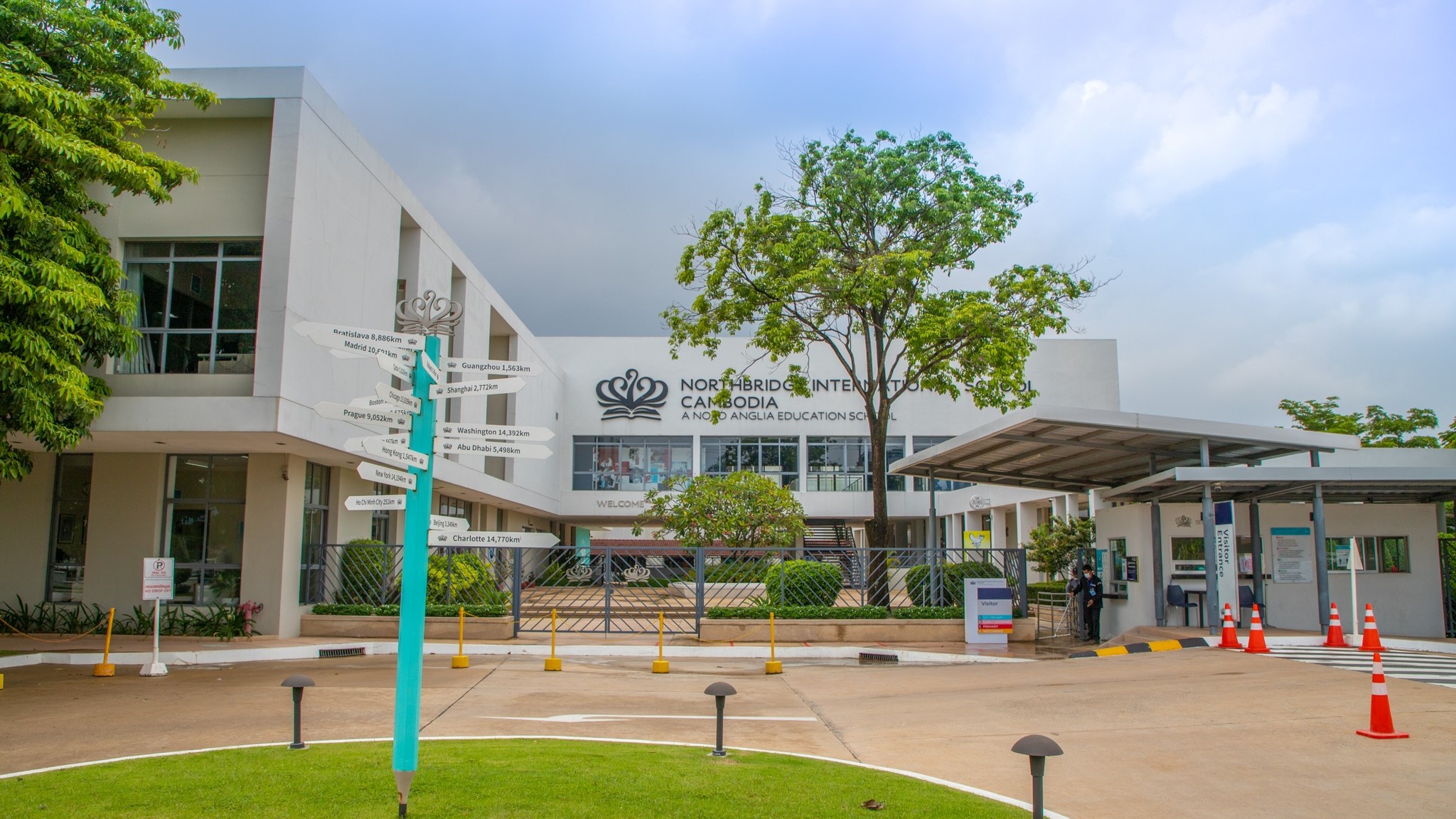
Yes. Foreign children can attend international schools and other eligible educational institutions in Cambodia.
Popular education destinations include Phnom Penh and Siem Reap.
Before enrolling your child, consider:
- School curriculum.
- Language of instruction.
- Tuition fees.
- School transportation.
- Location and distance from home.
- Admission requirements.
- Academic calendar.
Parents should also confirm whether school attendance affects the child's immigration arrangements.
6. Can Your Spouse Work in Cambodia?
This is an important question for families planning to relocate.
A spouse who receives permission to stay in Cambodia as an accompanying family member should not automatically assume that they have permission to work.
If your spouse intends to take employment, they must check the applicable visa and labour authorization requirements.
Depending on the circumstances, this may involve:
- Obtaining an appropriate immigration status.
- Securing the required employer documentation.
- Meeting foreign labour quota requirements, where applicable.
- Obtaining a work permit and foreign employment card.
For official work authorization information, visit the Ministry of Labour's Foreign Work Permit Management System:
7. How Much Does It Cost to Bring Your Family to Cambodia?
The total cost depends on the number of family members, visa arrangements, document authentication, travel expenses and lifestyle.
The following is a planning checklist rather than an official government fee schedule.
| Expense | What to budget for |
|---|---|
| Individual entry visas | Applicable visa fee for each family member |
| Visa extensions | Fees based on the extension category and duration |
| Document authentication | Embassy, legalization or Apostille costs, if required |
| Document translation | Certified translation fees |
| Air tickets | International travel for each family member |
| Accommodation | Rental deposit and monthly rent |
| Schooling | Admission fees and tuition |
| Health insurance | Family medical coverage |
| Transportation | Daily commuting and school transport |
Example: A Family of Four
Suppose a foreign employee plans to relocate with their spouse and two children.
The family should consider:
- Four individual travel and immigration arrangements.
- Authentication and translation of family documents.
- Air tickets for all family members.
- A suitable apartment or house.
- School admission and tuition.
- Health insurance and medical expenses.
- Transportation and daily living expenses.
The actual cost will depend heavily on the family's country of origin, visa eligibility and preferred lifestyle.
8. Where Should Foreign Families Live in Cambodia?
Choosing the right location can make a significant difference to family life.
Three popular destinations for foreign families are Phnom Penh, Siem Reap and Sihanoukville.
Phnom Penh
Phnom Penh is generally the most convenient option for families looking for international schools, hospitals, corporate offices and a wide range of residential properties.
Popular residential areas include:
- BKK1.
- Tonle Bassac.
- Toul Kork.
- Sen Sok.
- Chroy Changvar.
Siem Reap
Siem Reap is attractive to families who prefer a smaller city and a more relaxed environment.
Advantages include:
- A relatively compact city.
- Access to international and private education options.
- Tourism and hospitality employment opportunities.
- Access to Angkor Archaeological Park.
- A slower pace of life compared with Phnom Penh.
Sihanoukville
Sihanoukville may suit families working in tourism, logistics, port operations and other coastal industries.
Families should compare school availability, healthcare services and residential options before choosing this location.
9. What Should You Prepare Before Moving Your Family?
Moving your family internationally requires more preparation than arranging a visa.
Use the following checklist before departure.
Immigration and Documents
- Check passport validity for every family member.
- Confirm the appropriate visa category for each person.
- Prepare marriage and birth certificates.
- Check authentication and translation requirements.
- Obtain employment and supporting company documents.
- Confirm the extension application procedure.
Housing and Accommodation
- Arrange temporary accommodation.
- Research long-term rental properties.
- Check proximity to schools and workplaces.
- Understand rental deposits and utility costs.
- Confirm the landlord's cooperation with applicable foreigner accommodation registration.
Education
- Research international schools.
- Contact schools about admissions.
- Prepare previous academic records.
- Check school transportation.
- Understand tuition and additional fees.
Healthcare
- Arrange suitable family health insurance.
- Research hospitals and clinics.
- Bring relevant medical records.
- Prepare prescriptions and necessary medication.
Daily Living
- Arrange airport transportation.
- Obtain Cambodian SIM cards.
- Research banking options.
- Arrange transportation for work and school.
- Learn basic Khmer expressions.
10. Cambodia e-Arrival: What Families Need to Know
Foreigners entering Cambodia should also prepare for the country's electronic arrival declaration.
The Cambodia e-Arrival system allows travellers to submit relevant arrival information before entering the country.
Families should check the latest requirements and complete the required information for each traveller.
The official portal is:
The Cambodian government recommends submitting the e-Arrival information within seven days before arrival.
This is an arrival declaration, not a visa or permission to stay long-term.
11. Frequently Asked Questions (FAQs)
1. Can I bring my wife or husband to Cambodia if I work there?
Yes. Eligible foreign employees and other EB extension holders may arrange immigration permission for their spouse, subject to supporting documents and approval by Cambodian immigration authorities.
2. Can I bring my children to Cambodia?
Yes. Eligible accompanying children may be included in family immigration arrangements. Each child needs their own passport and appropriate immigration documentation.
3. Does my spouse need a separate visa?
Yes. Your spouse needs their own valid immigration permission to enter and remain in Cambodia. The appropriate entry visa and subsequent extension should be confirmed with immigration authorities.
4. Can my family stay in Cambodia for one year?
Potentially, yes. The duration depends on the principal applicant's status, the family members' eligibility and the extensions approved by immigration.
5. Can my spouse work after joining me in Cambodia?
Not automatically. Permission to stay as an accompanying family member does not itself provide work authorization. A separate assessment of immigration and labour requirements is necessary.
6. Do my children need separate passports?
Generally, yes. Each child should have an individual valid travel document and the necessary immigration permission.
7. Can I bring my family if I am a business owner in Cambodia?
Eligible foreign business owners may arrange for their spouse and children to accompany them under the applicable EB extension framework, subject to supporting business and family documentation.
8. Can I bring my family if I am studying in Cambodia?
Possibly, but family members should not assume that they automatically qualify for the student's ES extension. Each family member's immigration route should be confirmed separately with Cambodian immigration authorities.
9. Can I bring my family if I am retired in Cambodia?
You should contact immigration authorities to confirm the available arrangements for your spouse and children. The principal applicant's ER extension does not automatically establish the family's eligibility for the same extension.
Conclusion
Bringing your family to Cambodia is possible, but successful relocation requires more than obtaining your own visa.
Foreign professionals and business owners should prepare the appropriate immigration documents for their spouse and children, confirm eligibility for family extensions and arrange housing, schooling and healthcare before moving.
The most important step is to confirm the correct immigration route for every family member with the General Department of Immigration before making travel arrangements.
With proper planning, Cambodia can offer foreign families opportunities to live, work, study and build a new life in the Kingdom.
Disclaimer
This article is provided for general informational and educational purposes only. It does not constitute legal, immigration or professional advice.
Cambodian immigration regulations, visa categories, family eligibility, supporting documents, fees and application procedures may change without prior notice. Readers must verify all information with the General Department of Immigration, the Ministry of Foreign Affairs and International Cooperation, or the relevant Cambodian Embassy before making immigration or travel arrangements.
Family members are not automatically granted residency or work authorization through the principal applicant. All applications are subject to the applicable requirements and approval of Cambodian authorities.
TravelKH.com is an independent information platform and is not affiliated with or endorsed by the Cambodian government or its immigration authorities.
Official government resources:
- Cambodia e-Visa: https://www.evisa.gov.kh/
- Cambodia Ministry of Foreign Affairs and International Cooperation: https://www.mfaic.gov.kh/
- Council for the Development of Cambodia: https://cdc.gov.kh/
- Cambodia e-Arrival: https://www.arrival.gov.kh/
- Foreign Work Permit Management System: https://www.fwcms.mlvt.gov.kh/