
Cambodia's private education sector offers a growing range of choices for local and international families. From English-medium primary schools and international high schools to private universities offering business, technology, medicine and international degree programmes, students have more options than ever.
Phnom Penh has the largest concentration of international and private education institutions, while Siem Reap, Battambang, Sihanoukville and other provinces also offer private schools and universities.
This guide introduces five recommended options for primary education, five for high school and five private universities in Cambodia. It compares their educational pathways, areas of focus and what students and parents should consider before applying.
Important: There is no single official national ranking that compares every private primary school and high school in Cambodia. The school shortlists below are editorial recommendations based on curriculum, grade coverage, educational pathways and published institutional information. The university shortlist uses the 2026 uniRank private-university ranking as a reference, not as a measure of teaching quality.
1. Top 5 private primary schools in Cambodia
Primary education is an important stage for developing children's language, literacy, mathematics, communication and social skills.
Parents can choose between Cambodian national education, bilingual programmes and international curricula such as British, American, Canadian and International Baccalaureate (IB).
The following schools are worth considering, particularly for families looking for international or English-medium education.
1. International School of Phnom Penh (ISPP)
Location: Phnom Penh
Curriculum: International Baccalaureate (IB)
Website: https://www.ispp.edu.kh/
The International School of Phnom Penh is one of Cambodia's established international schools. It provides an IB education pathway, including the Primary Years Programme (PYP), Middle Years Programme (MYP) and Diploma Programme (DP).
The school serves students from early childhood through Grade 12.
Why consider ISPP?
- Internationally oriented learning environment.
- IB curriculum from primary through secondary education.
- Multicultural student community.
- Suitable for families seeking an international education pathway.
Best suited for: Families who want a continuous IB education and may relocate internationally in the future.
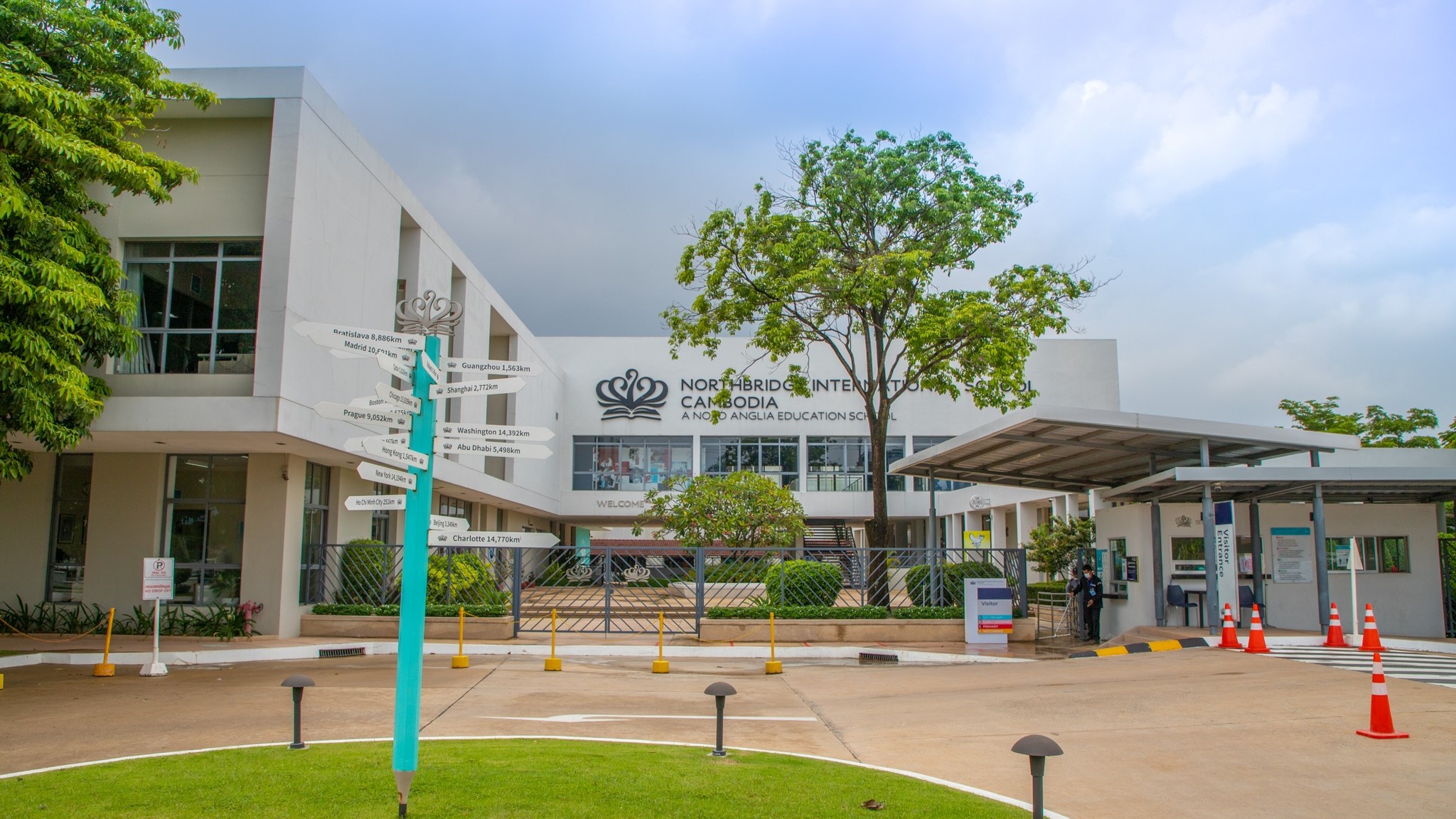
2. Northbridge International School Cambodia (NISC)
Location: Sen Sok, Phnom Penh
Curriculum: International Baccalaureate (IB)
Website: https://www.nordangliaeducation.com/nisc-cambodia
Northbridge International School Cambodia is part of the Nord Anglia Education network. It offers education from early learning through secondary school and the IB Diploma Programme.
Its primary programme focuses on academic development, communication, creativity and wider learning skills.
Why consider Northbridge?
- International school network.
- IB learning pathway.
- Large campus environment.
- Multilingual learning opportunities.
- Primary and secondary education on one campus.
Best suited for: Families seeking an international school environment with a continuous education pathway.
3. Canadian International School of Phnom Penh (CIS)
Location: Koh Pich and other Phnom Penh campuses
Curriculum: Canadian and international programmes
Website: https://www.cisp.edu.kh/
Canadian International School of Phnom Penh provides Canadian curriculum pathways and international education programmes.
Its school structure includes elementary, middle school and high school divisions. The school also offers IB programmes as part of its educational pathway.
Why consider CIS?
- Canadian educational pathway.
- International student community.
- Primary through high school education.
- Opportunities for students interested in continuing education in Canada or other countries.
Best suited for: Families interested in Canadian education or an international curriculum.
4. Paragon International School Cambodia
Location: Phnom Penh
Curriculum: Cambodian and international programmes
Website: https://paragonisc.edu.kh/
Paragon International School offers a bilingual and international education environment. Its programmes combine international learning approaches with Cambodian education and language elements.
The school is part of the Paragon Education network, which also operates Paragon International University.
Why consider Paragon?
- Combination of international and Cambodian education.
- Khmer language and cultural learning.
- International curriculum options.
- A potential pathway for students who want both local and international educational exposure.
Best suited for: Families who want international education while maintaining a connection to Cambodian language and culture.
5. iCAN British International School
Location: Tonle Bassac, Phnom Penh
Curriculum: British National Curriculum and International Primary Curriculum (IPC)
Website: https://www.ican.edu.kh/
iCAN British International School focuses on early years and primary education. Its primary programme uses the International Primary Curriculum alongside the English National Curriculum for areas such as literacy and numeracy.
Why consider iCAN?
- English-medium learning.
- British educational framework.
- International Primary Curriculum.
- Central Phnom Penh location.
- Primary-focused learning environment.
Best suited for: Families looking for an English-medium British-style primary education in central Phnom Penh.
2. Top 5 private high schools in Cambodia
High school education prepares students for university admission, international examinations and future careers.
Parents should pay particular attention to the qualification students receive after graduation. A school may offer an international curriculum, but students should confirm how its final qualification is recognized by universities in Cambodia and overseas.
1. International School of Phnom Penh (ISPP)
Location: Phnom Penh
Curriculum: IB Middle Years Programme and IB Diploma Programme
Website: https://www.ispp.edu.kh/
ISPP offers a continuous IB pathway through secondary education. Its Diploma Programme prepares students for higher education applications in Cambodia and internationally.
Key features:
- IB secondary education.
- International learning environment.
- University preparation.
- Wide range of academic and extracurricular opportunities.
Best suited for: Students planning to apply to international universities or continue through the IB system.
2. Northbridge International School Cambodia (NISC)
Location: Sen Sok, Phnom Penh
Curriculum: IB Middle Years Programme and IB Diploma Programme
Website: https://www.nordangliaeducation.com/nisc-cambodia
Northbridge offers secondary education within the Nord Anglia international school network. Students can progress from the middle years into the IB Diploma Programme.
Key features:
- International curriculum.
- IB Diploma pathway.
- Multicultural student community.
- International university preparation.
Best suited for: Students who want an IB education and international university opportunities.
3. Canadian International School of Phnom Penh (CIS)
Location: Phnom Penh
Curriculum: Canadian curriculum and IB programmes
Website: https://www.cisp.edu.kh/
CIS provides middle and high school education through its Canadian educational pathway and international programmes.
The school is worth considering for families who want an education system connected to Canadian academic standards.
Key features:
- Canadian curriculum pathway.
- International education environment.
- High school division.
- International university preparation.
Best suited for: Students interested in studying in Canada or pursuing other international university pathways.
4. Shrewsbury International School Phnom Penh
Location: Sen Sok, Phnom Penh
Curriculum: British National Curriculum, IGCSE and A Levels
Website: https://shrewsbury.edu.kh/
Shrewsbury International School Phnom Penh has opened its new Sen Sok campus, offering British-style education from early years through secondary school.
The school's academic pathway includes IGCSE and A Level qualifications, which are widely used for university admission internationally. The school also states that its A Level qualification is equivalent to Cambodia's BAC II.
Key features:
- British National Curriculum.
- IGCSE and A Level pathways.
- Large purpose-built campus.
- British educational heritage.
- Secondary and university preparation.
Best suited for: Families who prefer the British education system and students planning to pursue A Levels.
5. CIA FIRST International School
Location: Phnom Penh
Curriculum: American and Cambodian education pathways
Website: https://www.ciafirst.edu.kh/
CIA FIRST International School provides an international education pathway alongside Cambodian educational programmes.
Its high school division serves students from Grade 9 through Grade 12. The school describes its international high school diploma as recognized by Cambodia's Ministry of Education, Youth and Sport as equivalent to the national Grade 12 diploma, and by WASC as equivalent to an American high school diploma.
Parents should request the current qualification and accreditation documentation directly from the school.
Key features:
- American and Cambodian education pathways.
- High school education through Grade 12.
- International and local qualification options.
- University preparation.
Best suited for: Families who want to compare American-style education with Cambodian national education.
3. Top 5 private universities in Cambodia
Cambodia has a growing private higher education sector. Students can study business, information technology, engineering, law, international relations, health sciences and other subjects.
For this section, the five universities are selected using the 2026 uniRank private-university ranking. uniRank ranks institutions using web-based indicators, not direct assessments of teaching quality, graduate employment or academic outcomes.
1. Paragon International University
Location: Phnom Penh
Website: https://www.paragoniu.edu.kh/
Language of instruction: English
Paragon International University is an English-medium private university offering undergraduate and graduate programmes.
Its academic areas include:
- Architecture and Interior Architecture.
- Civil and Industrial Engineering.
- Computer Science.
- Digital Arts and Design.
- Banking and Finance.
- Business Administration.
- Economics.
- International Relations.
- International Trade and Logistics.
- Mathematics and Data Science.
The university reports full institutional accreditation from the Accreditation Committee of Cambodia (ACC).
Why consider Paragon?
- English-medium university education.
- Engineering and technology programmes.
- Business and social science programmes.
- International academic connections.
- Institutional accreditation.
Best suited for: Students interested in technology, engineering, business and internationally oriented education.
2. The University of Cambodia (UC)
Location: Phnom Penh
Website: https://www.uc.edu.kh/
Language of instruction: English and Khmer programme options
The University of Cambodia is a private higher education institution offering associate, bachelor's, master's and doctoral programmes.
Its academic areas include:
- Business and Management.
- Law.
- Education.
- Media and Communications.
- Science and Technology.
- Social Sciences.
- International Relations.
- Public Administration.
- Foreign Languages.
The university offers both English-based and Khmer-based study options in selected programmes.
Why consider UC?
- Broad range of academic disciplines.
- Undergraduate and postgraduate programmes.
- English and Khmer learning options.
- Established private university.
- Institutional accreditation.
Best suited for: Students interested in business, law, social sciences, public administration and communications.
3. Paññāsāstra University of Cambodia (PUC)
Location: Phnom Penh
Website: https://www.puc.edu.kh/
Language of instruction: English and Khmer options, depending on programme
Paññāsāstra University of Cambodia offers programmes across several academic fields, including business, education, law, communication, sciences and engineering.
Its programmes include:
- Business Administration.
- Accounting.
- Marketing.
- Finance and Banking.
- Architecture and Urban Planning.
- Civil Engineering.
- Law.
- Tourism and Hospitality Management.
- Education.
- Media and Communications.
The university also operates an Institute of Foreign Languages.
Why consider PUC?
- Wide range of academic programmes.
- Business and management education.
- Language learning opportunities.
- Undergraduate and postgraduate study.
- Scholarship opportunities.
Best suited for: Students looking for business, management, education, law or language-related programmes.
4. American University of Phnom Penh (AUPP)
Location: Phnom Penh
Website: https://www.aupp.edu.kh/
Language of instruction: English
AUPP is a private university offering American-style higher education and international academic pathways.
Its programmes include:
- Business Administration.
- Information Technology Management.
- Law.
- International Relations and Diplomacy.
- Architecture.
- Graduate programmes in business and law.
AUPP offers selected dual-degree programmes through partnerships with the University of Arizona and Fort Hays State University in the United States.
The university reports full institutional accreditation for 2019–2028.
Why consider AUPP?
- American-style university education.
- English-medium programmes.
- Dual-degree opportunities in selected programmes.
- Business, law and technology studies.
- International university partnerships.
Best suited for: Students who want an American-style education and international degree pathways.
5. University of Puthisastra (UP)
Location: Daun Penh, Phnom Penh
Website: https://www.puthisastra.edu.kh/
Main areas: Health sciences, technology and business
The University of Puthisastra is particularly known for its focus on health sciences and technology.
Its academic areas include:
- Medicine.
- Dentistry.
- Pharmacy.
- Nursing and Midwifery.
- Health Sciences and Biotechnology.
- Information Technology.
- Business and Entrepreneurship.
The university also offers scholarship opportunities based on eligibility and its published application conditions.
Why consider UP?
- Strong focus on health sciences.
- Medical and healthcare-related programmes.
- Technology and business education.
- Scholarship opportunities.
- International academic collaboration.
Best suited for: Students interested in medicine, dentistry, pharmacy, nursing, health sciences and technology.
4. Comparison: Top private education options in Cambodia
| Education level | School or university | Main educational pathway |
|---|---|---|
| Primary | ISPP | IB |
| Primary | Northbridge | IB |
| Primary | Canadian International School | Canadian / IB |
| Primary | Paragon International School | Cambodian / International |
| Primary | iCAN British International School | British / IPC |
| High school | ISPP | IB Diploma |
| High school | Northbridge | IB Diploma |
| High school | Canadian International School | Canadian / IB |
| High school | Shrewsbury | IGCSE / A Levels |
| High school | CIA FIRST | American / Cambodian |
| University | Paragon International University | Engineering, IT, Business |
| University | The University of Cambodia | Business, Law, Social Sciences |
| University | Paññāsāstra University | Business, Education, Law |
| University | AUPP | American-style Business, IT, Law |
| University | University of Puthisastra | Health Sciences, IT |
5. How much does private education cost in Cambodia?
Private education fees vary widely. International schools generally cost more than local private schools, while university tuition depends on the programme, degree level and number of credits.
Parents and students should request the latest fee schedule directly from each institution.
Before enrolling, check the following costs:
Primary and high school
- Application and registration fees.
- Annual or termly tuition.
- Uniforms and learning materials.
- School transportation.
- Meals and extracurricular activities.
- Examination fees.
University
- Application and admission fees.
- Foundation-year tuition, if required.
- Tuition per semester or academic year.
- Laboratory and practical training fees.
- Examination and graduation fees.
- Accommodation and transportation.
Do not compare schools based only on tuition. A school with a lower advertised fee may have additional compulsory charges.
6. What should parents and students check before choosing a private school?
Choosing an education provider requires more than comparing facilities or reputation.
Consider these important factors:
- Curriculum: Confirm whether the school follows the Cambodian, British, American, Canadian or IB system.
- Accreditation: Ask for current accreditation and authorization documents.
- Language: Check whether teaching is in English, Khmer, French or another language.
- University pathways: Confirm whether the final qualification is accepted by the universities your child may apply to.
- Student support: Ask about language support, counselling and learning assistance.
- School location: Consider daily transportation and traffic.
- Total cost: Request a full fee schedule.
- Transfer policy: Ask how the school handles students transferring from another country or curriculum.
For universities, students should also check whether the specific degree programme is accredited or recognized for the profession they intend to pursue. Institutional recognition alone does not automatically establish professional licensing eligibility.
7. How to apply to a private school or university in Cambodia
Although admission requirements vary, the process generally follows these steps.
For primary and high schools
- Select a school and curriculum.
- Contact the admissions department.
- Arrange a campus visit if possible.
- Submit the application form.
- Provide previous school reports and identity documents.
- Complete any required assessment or interview.
- Receive the admission decision.
- Pay the required registration and tuition fees.
For universities
- Choose a university and degree programme.
- Review the entry requirements.
- Prepare the high school diploma or equivalent qualification.
- Submit academic transcripts and identification documents.
- Complete any required entrance or English-language assessment.
- Apply for scholarships if eligible.
- Receive the admission offer.
- Complete registration and payment.
International students should also check their immigration and visa arrangements separately from school or university admission.
8. Frequently asked questions
Are private schools in Cambodia open to foreign children?
Many international and private schools accept students of different nationalities. Admission depends on age, academic records, language ability, available places and the school's individual requirements.
Are international schools more expensive than local private schools?
Generally, international schools can be more expensive because of their curriculum, facilities, staffing and international examination pathways. However, fees vary significantly, so parents should compare actual fee schedules.
Can students transfer from a Cambodian private school to a school overseas?
Yes, transfers are possible, but acceptance depends on the receiving school's curriculum, academic records and grade-placement policy. Parents should keep complete transcripts and examination certificates.
Can foreign students attend private universities in Cambodia?
Foreign students can apply to private universities, subject to each institution's admission requirements. They may need academic certificates, translated documents and proof of English proficiency.
Which private university is best for medicine in Cambodia?
The University of Puthisastra is one institution to investigate for medicine and other health sciences. Students should compare the specific programme's accreditation, clinical training arrangements, facilities and professional recognition before enrolling.
Which schools offer an IB curriculum in Cambodia?
Examples include the International School of Phnom Penh, Northbridge International School Cambodia and Canadian International School of Phnom Penh. Parents should verify the specific IB programmes currently authorized at each school.
9. Final thoughts
Cambodia offers a growing range of private education options for children, teenagers and university students.
For international primary and secondary education, families can compare IB, British, Canadian, American and bilingual programmes. At university level, students can explore private institutions specializing in business, engineering, information technology, law and health sciences.
The most suitable school is not necessarily the most expensive or highest-ranked. Parents and students should consider the curriculum, accreditation, teaching environment, total cost and future education plans before making a decision.
Disclaimer: This article is for general educational information only. School rankings and recommendations are editorial and should not be treated as official government rankings. Curricula, admission requirements, fees, accreditation and available programmes may change. Always verify current information directly with the school or university and the relevant Cambodian education authorities before enrolling. For university programmes, check both institutional accreditation and the recognition of the specific qualification.