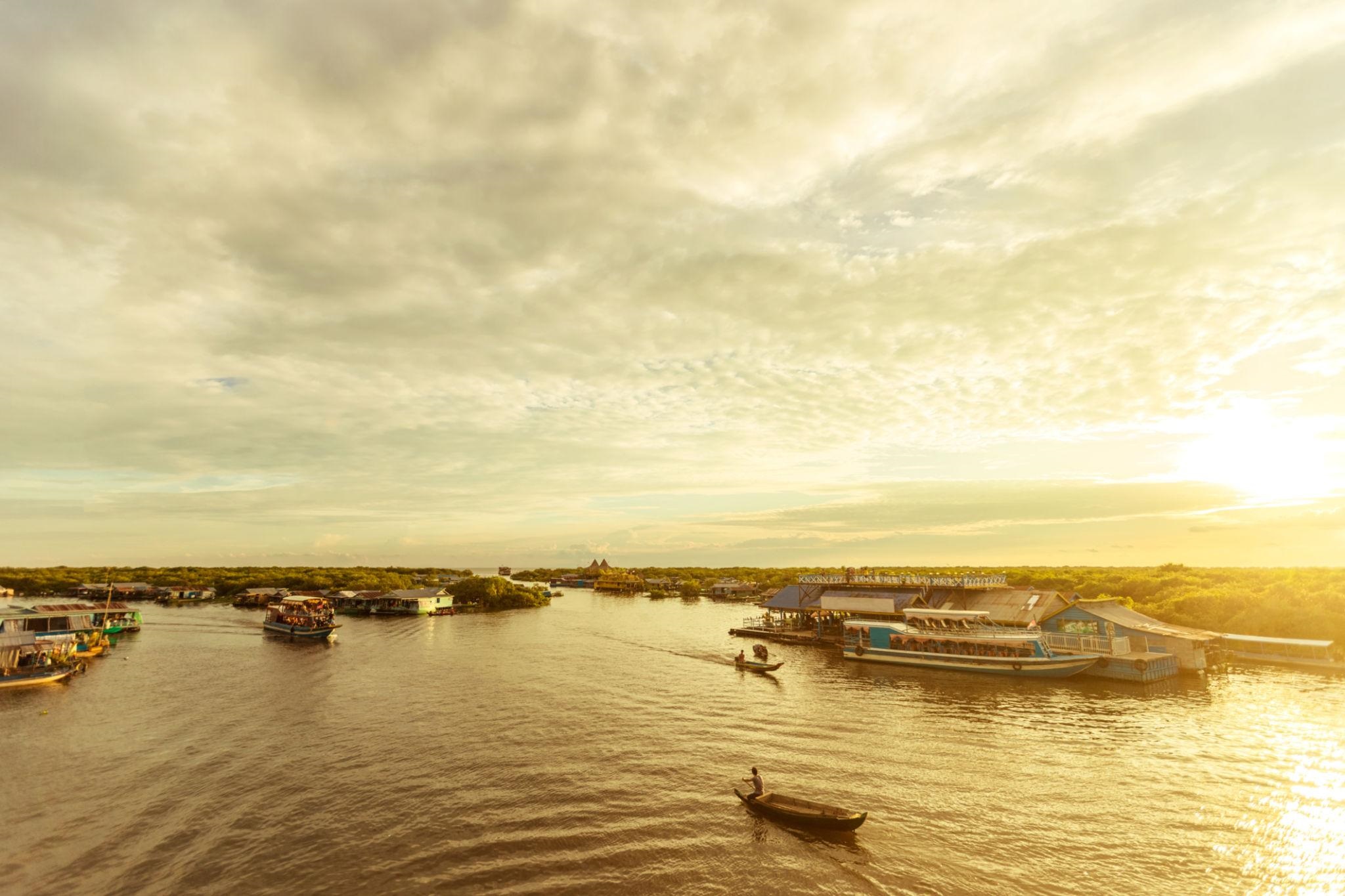
If you want to experience traditional lakeside life in Cambodia, Kampong Khleang Floating Village is a destination worth exploring.
Located on the edge of Tonlé Sap Lake, approximately 55 km from Siem Reap, Kampong Khleang is a large community where fishing, seasonal flooding, and daily life are closely connected. Its tall stilt houses, floating homes, boats, and expansive lake scenery make it one of the most interesting countryside excursions in Siem Reap Province.
Compared with closer destinations such as Kampong Phluk and Chong Kneas, Kampong Khleang requires a longer journey. However, the extra travel time can reward visitors with a quieter experience and a better opportunity to understand how a large community lives around Southeast Asia's largest freshwater lake.
Quick Facts About Kampong Khleang
| Information | Details |
|---|---|
| Destination | Kampong Khleang Floating Village |
| Alternative spelling | Kompong Khleang |
| Khmer name | កំពង់ឃ្លាំង |
| Location | Kampong Khleang Commune, Siem Reap Province |
| Nearby lake | Tonlé Sap Lake |
| Distance from Siem Reap | Approximately 50–55 km |
| Road travel time | Around 1–1.5 hours, depending on route and conditions |
| Main attractions | Stilt houses, floating homes, fishing community, Tonlé Sap Lake |
| Recommended visit | Half day to full day |
| Main activities | Boat sightseeing, village walks, photography, cultural experiences |
| Entrance fee | Boat and community charges vary by operator and season |
| Best season for high-water scenery | Generally August–November or December, depending on annual water levels |
| Suitable for | Cultural travelers, photographers, families, and nature lovers |
Travel times and seasonal conditions are approximate. Confirm the current departure point, boat availability, and route before traveling.
1. What Is Kampong Khleang Floating Village?
Kampong Khleang is a large permanent community located on the Tonlé Sap floodplain in Siem Reap Province.
The village is known for its tall houses built on wooden or concrete stilts, as well as floating structures that adapt to the changing lake level.
Unlike a small tourist attraction, Kampong Khleang is a working community with residents who depend on the lake for their livelihoods. Fishing is an important economic activity, while local shops, schools, religious buildings, and other facilities support everyday life.
The community is made up of several smaller settlements. One local community tourism organization describes the wider area as having more than 10,000 residents across multiple villages. Exact population figures can vary by the area being counted.
The village is particularly interesting because its appearance changes throughout the year.
2. Why Are the Houses Built on Tall Stilts?
Tonlé Sap Lake experiences dramatic seasonal changes in water level.
During the rainy season, water from the Mekong system flows into the lake, causing it to expand significantly. In the dry season, the water gradually retreats.
To adapt to these conditions, residents have built homes on tall supports. Some houses stand several metres above the ground, allowing families to remain in the same location as the surrounding water rises and falls.
During the rainy season
- Water rises around the houses.
- Boats become an important way to travel through the community.
- Some roads and paths become submerged.
- The village appears to float above the lake.
During the dry season
- Water levels recede.
- Tall supporting stilts become clearly visible.
- Some areas can be explored on foot.
- Fishing and other activities may take place along exposed sections of the lakebed.
This seasonal transformation is one of the most fascinating aspects of Kampong Khleang.
3. What Makes Kampong Khleang Special?
A large traditional lakeside community
Kampong Khleang is one of the largest stilted village communities around Tonlé Sap in Siem Reap Province.
Its scale gives visitors a different experience from smaller floating-village destinations. Rather than seeing only a short line of houses, visitors can explore a much larger settlement with homes, shops, religious buildings, and community facilities.
Impressive stilt houses
The tall houses are one of the village's most recognizable features.

During the dry season, the long supporting structures become particularly visible, creating a distinctive landscape. During high-water periods, the houses appear surrounded by water.
Fishing and local livelihoods
Fishing is central to the local economy. Visitors may see fishing boats, nets, fish-processing activities, and residents preparing for their daily work.
The lake also supports livelihoods connected to fish trading and traditional food production.
Floating homes and waterways
Beyond the stilted settlement, visitors may see floating homes and other structures that move or adapt to changing water levels.
A boat trip helps visitors understand how the village connects with the wider lake.
A quieter visitor experience
Kampong Khleang is farther from Siem Reap than Kampong Phluk and Chong Kneas. It generally receives fewer casual visitors than the closer destinations, making it appealing to travelers seeking a more relaxed countryside experience.
Crowds can still vary depending on the season and tour schedule.
4. Where Is Kampong Khleang Floating Village?
Kampong Khleang is located approximately 50–55 km east or southeast of Siem Reap city, depending on the route and destination point.
The journey involves traveling through rural areas before reaching the community and its boat departure area.
Google Maps: Search for "Kompong Khleang Floating Village" and confirm the correct village entrance or community boat departure point with your driver.
How to get there
| Transportation | Suitable for | Travel advice |
|---|---|---|
| Private car | Couples and families | Comfortable for the countryside journey |
| Private van | Groups and families | Convenient for a longer excursion |
| Tuk-tuk | Budget travelers | Agree on the round-trip fare and waiting time |
| Guided tour | First-time visitors | Useful for transport, local explanations, and boat arrangements |
| Motorbike | Experienced riders | Check road and weather conditions before departure |
For most visitors, arranging a private vehicle or guided tour from Siem Reap is the easiest option.
Unlike destinations closer to the city, Kampong Khleang requires more travel time. Make sure your transportation arrangement includes the return journey.
5. Road Conditions & Accessibility
The road journey to Kampong Khleang passes through rural parts of Siem Reap Province. Conditions may differ depending on the season and the specific route used.
Road surface and vehicle recommendations
- Main route: The journey follows roads east or southeast from Siem Reap toward the Tonlé Sap floodplain.
- Rural approach: Expect narrower local roads as you get closer to the village.
- Final access: The actual boat departure point may change depending on the water level. During some periods, vehicles can reach closer to the community; during others, a boat transfer is needed earlier.
- Suitable vehicles: A standard car, van, or tuk-tuk may be suitable under normal conditions. Confirm the final access route before departure.
- Walking: Some visits include walking through parts of the village, depending on water levels and the tour arrangement.
Rainy-season risks
Heavy rain may create muddy or slippery sections along rural access roads.
When the lake rises, some roads and village access points may become submerged. Boat operators may use a different departure location or route.
Dry-season access
During the dry season, the water level drops considerably. Visitors may be able to reach more of the village by road or on foot, while the boat route to the lake can become longer or narrower.
Some sections may be difficult to navigate by boat when water is shallow.
Travel advice: Ask your driver or local boat operator about the latest road conditions, boat departure point, and route before leaving Siem Reap. Do not assume the same access arrangement applies throughout the year.
6. Kampong Khleang Boat Tour and Entrance Fee
A boat trip is the main way to explore the village waterways and the surrounding Tonlé Sap landscape.
There is no Angkor Pass requirement for Kampong Khleang. Visitors arrange boat services separately through local operators or tour companies.
Prices vary depending on the season, boat size, number of passengers, route, and whether transportation and a guide are included.
A local guide published in October 2026 gives an indicative boat cost of around US$20 per person for its tours. Other operators may quote a different rate or charge per boat.
Estimated travel budget
| Expense | Planning guidance |
|---|---|
| Village boat trip | Ask for a current per-person or per-boat quotation |
| Private tuk-tuk | Depends on negotiation, waiting time, and route |
| Private car or van | Depends on vehicle and tour package |
| Local guide | Optional; price depends on arrangement |
| Food and drinks | Budget separately |
| Additional lake activities | Confirm whether they are included in the boat price |
Before paying, confirm:
- Is the boat price per person or per boat?
- How many passengers can the boat carry?
- Does the route include the village and open lake?
- Is a local guide included?
- Are there additional community or tourism fees?
- How long is the trip?
- Does the price include transportation from Siem Reap?
Avoid relying on a price quoted for another village or another season. Ask for the full cost before boarding.
7. Best Time to Visit Kampong Khleang
Kampong Khleang can be visited throughout the year, but the experience changes significantly with the water level.
Rainy season: August–November
This is generally a good period to experience the village surrounded by water.
Visitors may see:
- Boats traveling through village waterways.
- Homes appearing to float above the lake.
- Floating structures and fishing boats.
- More extensive flooded areas.
- A larger water landscape around the community.
Water levels often rise toward the end of the rainy season, but the exact timing and height vary each year.
Dry season: December–May
During the dry season, the lake gradually retreats.
Visitors may see:
- Tall stilt houses standing above exposed ground.
- Village roads and paths becoming accessible.
- Residents carrying out more activities on land.
- A different perspective of the fishing community.
The route to the open lake may become longer because of lower water levels.
Seasonal comparison
| Period | What to expect | Recommended for |
|---|---|---|
| August–September | Water rising and waterways becoming more accessible | Seasonal lake scenery |
| October–November | Generally high water levels | Seeing the village surrounded by water |
| December–January | Water gradually receding | Experiencing the seasonal transition |
| February–April | Lower water levels and more exposed land | Seeing the full height of stilt houses |
| May–July | Dry-to-wet season transition | Visitors interested in changing landscapes |
These are general seasonal patterns. Recent rainfall and actual lake conditions are more important than fixed calendar dates.
8. Things to Do at Kampong Khleang
Take a boat trip through the village
A boat journey is the main activity for visitors.
Depending on the water level, you may travel through waterways between houses, pass floating structures, and continue toward the open lake.
The route can change throughout the year, so ask your boat operator what you will see on the day.
Explore the stilt-house community
When conditions allow, a village walk provides another perspective on everyday life.
You may see local homes, small shops, fishing-related activities, and community facilities.
Walk respectfully and avoid entering private property without permission.
Observe traditional fishing activities
Fishing is an important part of the community's economy.
You may see boats returning with catches, nets being prepared, or fish being processed. Activities depend on the season and the day's fishing schedule.
Visit the floating section
Some boat routes include areas with floating houses and community facilities.
These structures demonstrate how residents adapt their homes and services to the changing lake environment.
Enjoy the Tonlé Sap landscape
A boat trip beyond the village can provide a wider view of Tonlé Sap.
The lake is particularly impressive during periods of high water, when the surrounding landscape becomes a broad expanse of water.
Experience a local sunset
An afternoon visit may allow you to enjoy sunset over the lake.
Check the return schedule and weather conditions before choosing a late trip.
9. How Long Should You Spend at Kampong Khleang?
Because Kampong Khleang is farther from Siem Reap than Kampong Phluk, it is worth allowing enough time for the journey and boat experience.
| Activity | Estimated time |
|---|---|
| Drive from Siem Reap | 1–1.5 hours each way |
| Ticketing and boarding | 15–30 minutes |
| Village boat trip | Depends on route; allow around 1–2 hours |
| Village walk | 30–60 minutes, if available |
| Additional lake exploration | Depends on tour |
| Total visit | Approximately 4–6 hours or longer |
A half-day visit is suitable for the main village experience. If you want to explore the surrounding countryside, enjoy a sunset, or take a longer boat trip, consider a full-day excursion.
10. Suggested Half-Day Itinerary
Morning itinerary
| Time | Activity |
|---|---|
| 7:30 AM | Depart from your hotel in Siem Reap |
| 8:45 AM | Arrive at the village or boat departure point |
| 9:00 AM | Begin the village boat trip |
| 9:30 AM | Explore the stilt-house and floating-house areas |
| 10:15 AM | Continue toward Tonlé Sap Lake, depending on water conditions |
| 11:00 AM | Return to the village |
| 11:30 AM | Enjoy a short village visit or local refreshments |
| 12:00 PM | Travel back to Siem Reap |
This is an example schedule. Actual travel and boat times depend on the departure point, route, and seasonal water level.
11. Kampong Khleang vs Kampong Phluk: Which Should You Visit?
Both destinations offer an opportunity to explore communities around Tonlé Sap Lake, but the experience is different.
| Comparison | Kampong Khleang | Kampong Phluk |
|---|---|---|
| Distance from Siem Reap | Around 50–55 km | Around 30 km |
| Community scale | Larger community | Smaller community |
| Visitor experience | More remote and generally quieter | More convenient for a shorter trip |
| Main attraction | Large stilt-house community and lake experience | Stilt houses and seasonal flooded forest |
| Boat experience | Village and lake routes | Village and lake routes, with optional flooded forest ride when conditions allow |
| Travel time | Longer | Shorter |
| Best for | Travelers seeking a larger community experience | Travelers with limited time or interested in flooded forest |
TravelKH recommendation: Choose Kampong Khleang if you have more time and want to explore a larger, more remote lakeside community. Choose Kampong Phluk if you prefer a shorter journey and want the option of a seasonal flooded-forest boat ride.
12. Responsible Tourism: How to Visit Respectfully
Kampong Khleang is a living community. Visitors should respect residents and their everyday activities.
Here are some simple ways to travel responsibly:
- Ask permission before taking close-up photographs of residents.
- Avoid photographing children without permission from their guardians.
- Use local boat operators and guides where possible.
- Avoid leaving rubbish in the village or lake.
- Do not enter private homes or buildings without permission.
- Avoid giving money or gifts directly to children as a substitute for supporting established community programs.
- Follow local instructions around schools, pagodas, and other community spaces.
Supporting local services and businesses can help tourism contribute to the community.
13. What to Bring
- Sunscreen and sunglasses
- Hat or cap
- Drinking water
- Insect repellent
- Camera or phone
- Waterproof bag
- Comfortable walking shoes
- Cash in small denominations
- Light raincoat during the rainy season
- Modest clothing if visiting a pagoda or school
There may be limited shade on the boat, so bring sun protection.
14. Nearby Attractions to Combine With Kampong Khleang
Kampong Khleang is located farther from Siem Reap's main temple circuit, but you can combine the trip with other destinations depending on your route and available time.
| Attraction | What makes it interesting | Suggested time |
|---|---|---|
| Beng Mealea Temple | Atmospheric temple ruins surrounded by forest and large stone structures | 1.5–2 hours |
| Koh Ker Archaeological Site | Ancient Khmer capital with a distinctive pyramid temple | Half day or longer |
| Bakong Temple | Important early Angkorian temple in the Rolous Group | 45–60 minutes |
| Preah Ko Temple | Brick temple towers with early Khmer architectural details | 30–45 minutes |
| Lolei Temple | Historic temple within the Rolous Group | 30–45 minutes |
| Tonlé Sap Lake | Explore Cambodia's largest freshwater lake and its seasonal landscape | Depends on boat trip |
Beng Mealea and Koh Ker are separate excursions and should not be added casually to a short village visit. Check road distances and admission requirements before planning a combined route.
Frequently Asked Questions
Is Kampong Khleang worth visiting?
Yes. It is a good choice for visitors interested in traditional lakeside communities, stilt houses, fishing activities, and the seasonal landscape of Tonlé Sap Lake.
How far is Kampong Khleang from Siem Reap?
It is approximately 50–55 km from Siem Reap. The road journey usually takes around 1–1.5 hours, depending on the route and road conditions.
Is Kampong Khleang the largest floating village in Cambodia?
It is commonly described as one of the largest floating or stilted village communities on Tonlé Sap, and as one of the largest in Siem Reap Province. Claims about the single largest village depend on how the community boundaries are defined.
What is the best month to visit?
October and November are often good months for high-water scenery, although the actual water level varies each year. The dry season is also interesting if you want to see the tall supporting structures beneath the houses.
Can I visit Kampong Khleang during the dry season?
Yes. The community is inhabited throughout the year. During the dry season, visitors can see more of the tall stilts and may be able to walk through sections of the village. Boat routes may change because of shallow water.
How much does a boat tour cost?
Prices vary by operator, route, and season. Some local tour operators quote approximately US$20 per person, while others may charge by boat or offer packages that include transportation and a guide. Confirm the full price before booking.
Is Kampong Khleang better than Kampong Phluk?
It depends on your interests. Kampong Khleang is larger and farther from Siem Reap, making it attractive for visitors seeking a more remote community experience. Kampong Phluk is closer and is especially known for its flooded forest boat ride during suitable water conditions.
Can I visit without a tour guide?
Yes. You can arrange transportation independently and organize a local boat trip. However, a guide can explain the community's history, fishing activities, and seasonal changes.
Is Kampong Khleang suitable for children?
Yes, but children need supervision around boats, water, and uneven paths. Confirm whether suitable life jackets are available before boarding.
Can I combine Kampong Khleang with Beng Mealea?
Yes, it may be possible with a full-day private itinerary. However, the total driving time and route should be planned carefully. Confirm the current road conditions and temple admission requirements.
TravelKH Tip
If you want to understand the lifestyle around Tonlé Sap Lake, do not rush through Kampong Khleang just to take photographs.
Spend time observing the stilt houses, fishing activities, boats, and everyday life. If possible, visit with a knowledgeable local guide who can explain how the community adapts to the lake's changing water levels.
For a more memorable experience, consider an afternoon visit that includes a boat trip and sunset, but confirm the return schedule before departure.