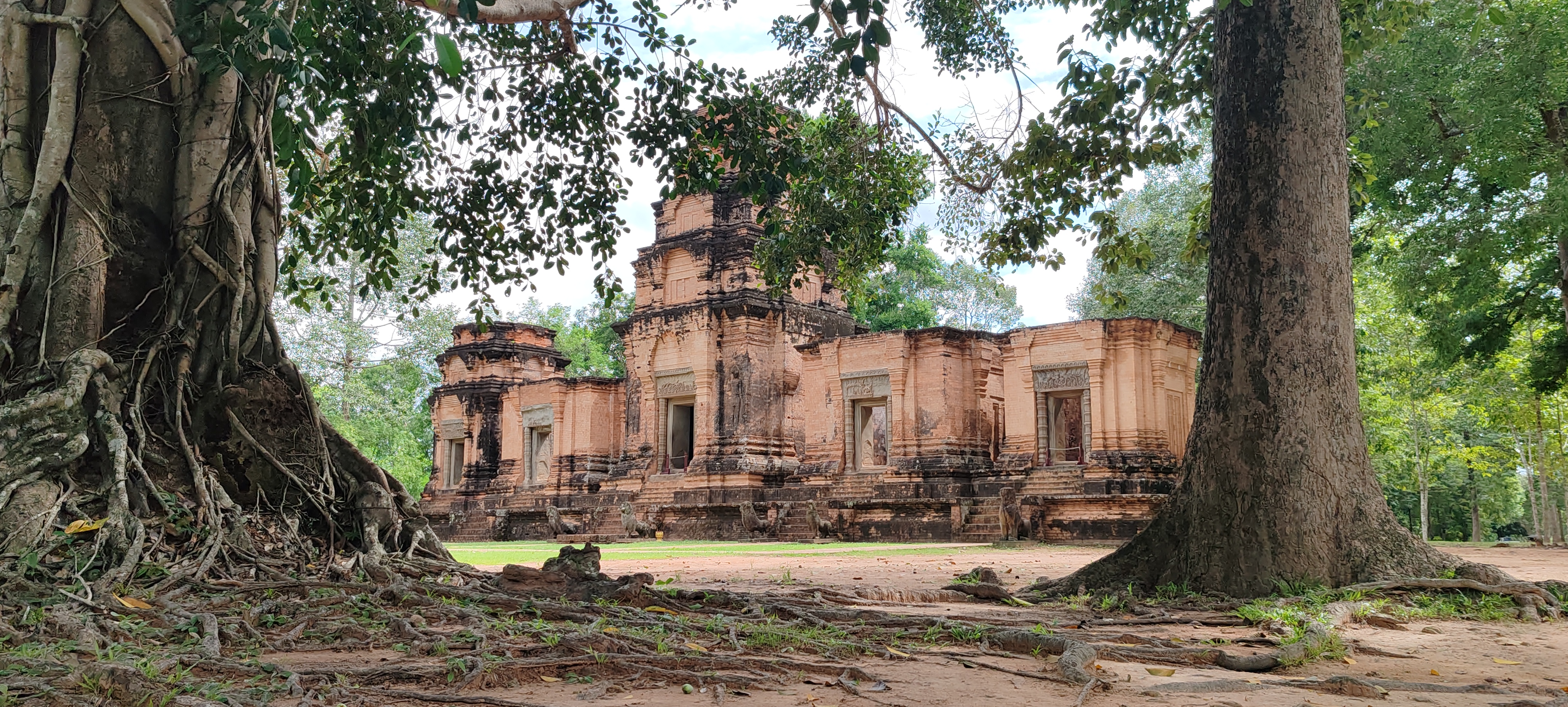

Located just south of Srah Srang within the Angkor Archaeological Park, Kravan Temple (Prasat Kravan) is one of Angkor's most distinctive Hindu temples. Although modest in size, it is internationally recognized for its rare brick bas-reliefs of Vishnu, making it unlike any other temple in the Angkor complex.
If you're interested in Khmer architecture, Hindu mythology, or lesser-known temples with remarkable craftsmanship, Kravan Temple deserves a place on your itinerary.
Quick Facts
| Information | Details |
|---|---|
| Khmer Name | ប្រាសាទក្រវ៉ាន់ |
| English Name | Kravan Temple (Prasat Kravan) |
| Location | Angkor Archaeological Park, south of Srah Srang |
| Built | 921 CE |
| Religious Affiliation | Hinduism |
| Dedicated To | Vishnu |
| Architectural Style | Early Angkorian |
| Main Building Material | Brick |
| Number of Towers | Five |
| UNESCO Site | Yes (within Angkor Archaeological Park) |
| Recommended Visit | 20–40 minutes |
History
Prasat Kravan was completed in 921 CE and dedicated to the Hindu god Vishnu, as recorded in inscriptions found on its doorjambs. Although built during the reign of King Harshavarman I, historians believe the temple was commissioned by high-ranking court officials rather than by the king himself. Some historical sources also suggest that construction may have continued into the early reign of King Ishanavarman II.
The temple's original Sanskrit name has been lost over time. Its modern Khmer name, "Prasat Kravan," refers to the kravan plant (Artabotrys odoratissimus), a fragrant flowering vine native to Southeast Asia.
Centuries after its construction, the temple became overgrown by vegetation until it was cleared in the 1930s by French archaeologists Henri Marchal and Georges Trouvé. Between 1962 and 1966, the monument underwent extensive restoration by the École Française d'Extrême-Orient (EFEO). Replacement bricks added during this restoration are marked with the letters "CA" (Conservation Angkor), which can still be seen today.

Architecture
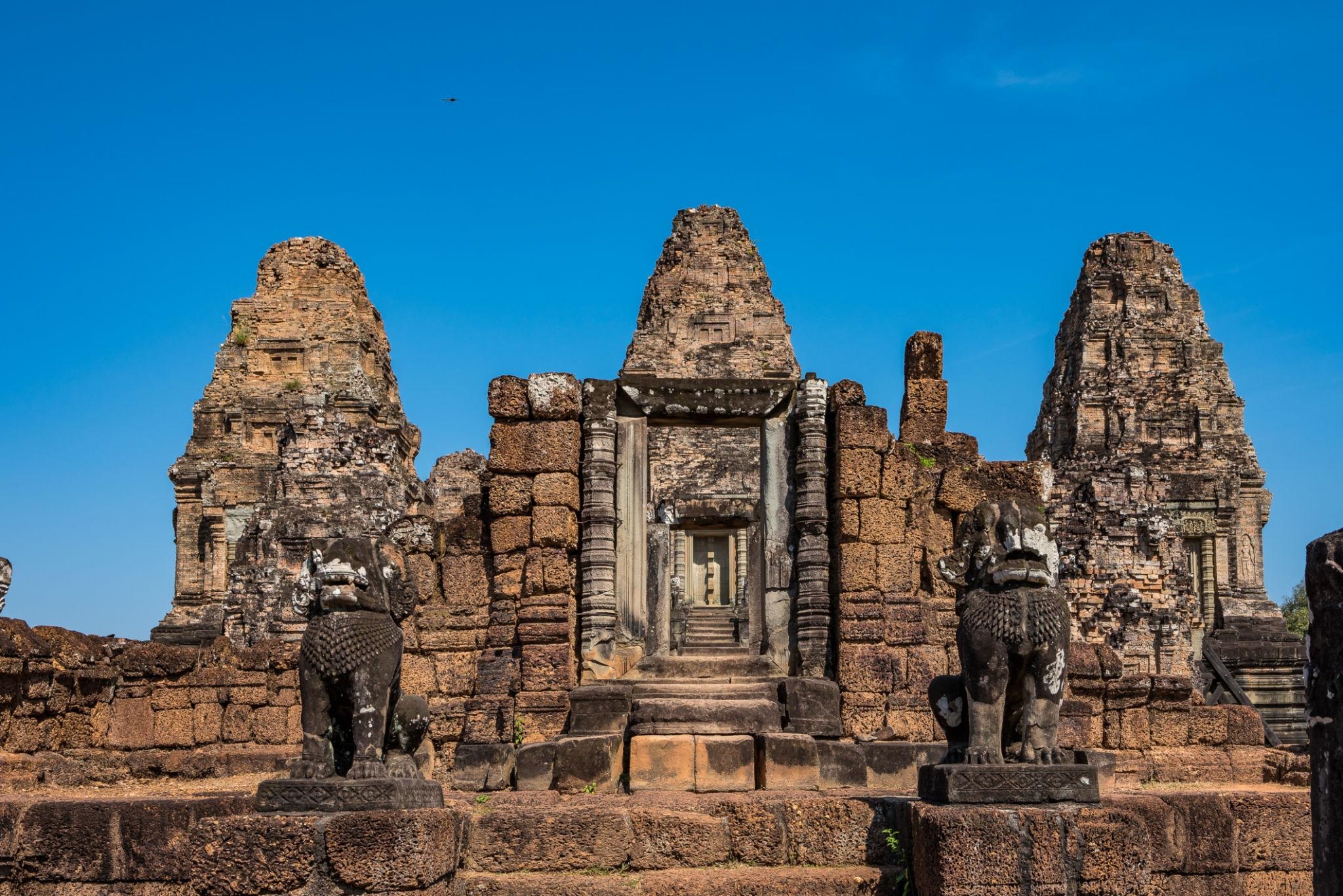
Kravan Temple consists of five reddish brick towers built on a single raised terrace and aligned in a north–south row, all facing east. The towers are positioned closely together, creating a simple yet elegant composition that reflects the Early Angkorian architectural style.
Unlike the later sandstone temples of Angkor, Prasat Kravan showcases the remarkable skill of Khmer builders working with brick. The walls were constructed with extremely tight joints using only a thin vegetal binder instead of thick mortar, a technique that has helped the structure endure for more than 1,100 years.
What Makes Kravan Temple Special?
1. Unique Brick Bas-Reliefs
The temple's greatest treasure lies inside its sanctuaries.
The central tower contains three extraordinary brick bas-reliefs depicting the Hindu god Vishnu:
- Vishnu seated on Garuda, his mythical eagle mount.
- Vishnu in his Vamana (Dwarf) incarnation, taking the legendary three strides to reclaim the universe.
- An unusual eight-armed Vishnu, surrounded by hundreds of miniature devotees beneath a crocodile- or lizard-like figure whose symbolism remains uncertain.
These sculptures are carved directly into brick walls rather than sandstone, making them among the rarest examples of Khmer religious art.
2. Beautiful Lakshmi Reliefs
Inside the northernmost tower are two impressive bas-reliefs of Lakshmi, the goddess of prosperity and Vishnu's consort.
One relief presents Lakshmi in a traditional pose holding lotus flowers, while another portrays her with both Shiva's trident and Vishnu's discus, possibly symbolizing harmony between Shaivism and Vaishnavism.

3. A Peaceful Alternative to Larger Temples
Because most tour groups focus on Angkor Wat, Bayon, and Ta Prohm, Kravan Temple remains relatively quiet.
Visitors can appreciate its architecture and artwork without large crowds, making it a rewarding stop for photographers and history enthusiasts.
Why Visit Kravan Temple?
- Admire one of Angkor's finest examples of brick architecture.
- See the world-famous brick bas-reliefs of Vishnu.
- Learn about Cambodia's early Hindu heritage.
- Experience a quieter temple away from the busiest tourist sites.
- Easily include it on the Angkor Small Circuit.
Visitor Information
Recommended Visit: 20–40 minutes
Best Time to Visit:
- Early morning for cooler weather and softer light.
- Late afternoon for warm golden tones on the brick towers.
What to Bring:
- Comfortable walking shoes
- Drinking water
- Sun protection
- Camera (avoid flash inside the sanctuaries if photography is permitted)
Nearby Attractions
Kravan Temple is conveniently located near several major landmarks within Angkor Archaeological Park:
- Angkor Wat
- Banteay Kdei
- Srah Srang
- Ta Prohm
- Thommanon
- Chau Say Tevoda
Its location makes it an easy stop while exploring the Small Circuit.
Frequently Asked Questions
Is Kravan Temple included in the Angkor Pass?
Yes. Entry is included with a valid Angkor Pass.
How long does a visit take?
Most visitors spend between 20 and 40 minutes exploring the temple.
Why is Kravan Temple famous?
It is renowned for its exceptionally rare brick bas-reliefs of Vishnu and Lakshmi, masterpieces that are unique within the Angkor temple complex.
Is it suitable for photographers?
Yes. The five red brick towers, peaceful surroundings, and warm natural light make it an excellent location for architectural and cultural photography.